
The moment someone pays for your product is not the finish line. It's the starting gun. Their decision to buy got them through the door, but what happens next decides whether they stay. If those first days feel confusing, clunky, or underwhelming, buyer's remorse creeps in fast, and so does the cancel button.
Great customer onboarding flips that script. It helps people discover your product, features, and services at a pace that feels natural, and it kicks off a positive loop of engagement and retention that keeps customers coming back for more.
But onboarding rarely goes perfectly. Low feature adoption, product abandonment, and other friction points can quietly derail long-term product adoption before customers ever see what your product can do. The fix? Spot the barriers early and get customers to that "aha, this is worth it" moment right away.
This guide walks you through the top customer onboarding challenges and how to overcome them, so you can tackle problems before they hurt your customer experience and your bottom line.
Key insights
Poor onboarding is the single biggest driver of voluntary cancellations, so getting it right directly protects your revenue.
Most customers churn fast when they don't reach value quickly, which makes time to value your most urgent onboarding metric.
Core feature adoption stays low across SaaS, so onboarding has to prioritize the few features that matter most.
Pairing qualitative feedback with behavioral data is how you find friction and fix your onboarding for good.
6 customer onboarding challenges at a glance
Challenge | Warning sign | Where to start |
|---|---|---|
1. Customer churn | Customers quit before they reach value | Sharpen your value proposition, declutter the UI, and ask leavers why with exit-intent surveys |
2. Low feature adoption | Customers only touch a few features, or the wrong ones | Teach the core features first, and use surveys and heatmaps to see which ones matter |
3. Not seeing how customers interact with onboarding | You can count clicks but can't tell what's driving them | Share insights across teams and watch session replays of real onboarding sessions |
4. Treating all customers the same | One flow for every role and skill level | Segment by persona and let customers pick their own path |
5. Slow onboarding process | Too many steps between sign-up and first value | Go through onboarding as each segment would, and ask for feedback on each step |
6. Overloaded support teams | Ticket volume spikes with every wave of new customers | Build self-service resources, add chatbots, and use onboarding software |
Users vs customers: why the difference matters
While user onboarding helps people explore a free plan or trial, customer onboarding validates the decision someone already made to pay for your product. Paying customers are far more invested than trial users, so it's worth understanding the specific challenges of onboarding them—and how to boost the customer experience along the way.
Customers, on the other hand, are a lot more invested seeing as how they're literally paying for your offerings. They'll be a lot more interested in everything they're getting out of this exchange—from support, features, and a great overall experience.
Top 6 customer onboarding challenges businesses face
1. Customer churn
Product abandonment can indicate an immediate issue within your product or a disconnect in the way you communicate your product's value during customer onboarding.
If customers don't perceive the product's value from the start of your onboarding process, it's unlikely they'll continue learning about your product and finish all the onboarding steps. In fact, Amplitude reports that more than 98% of users churn within two weeks if they haven't experienced value—which is why a fast time to value matters so much.
That's a big deal, because Recurly calls poor onboarding the single biggest driver of voluntary cancellations. Customers who quit onboarding before they see value will also most likely cancel their subscription, impacting churn.
So, how can you prevent product abandonment and churning customers during onboarding?
Understand customer expectations: dig deep into understanding your ideal customer profile (ICP), market trends or demand, and customer needs. Align your product functionality with the needs of your target market to get more customers to activate and adopt your product.
Improve the user experience (UX) and user interface (UI) design: a cluttered UI or an unintuitive UX design blocks customers from effectively understanding and using your product. Remove unnecessary pop ups, product tours, calls to action, and tutorials that distract customers or lead them astray.
Have a clear value proposition: your customers should know exactly what your product helps them achieve, or which problems it helps them solve. Overloading customers with too many benefits, information, or use cases can overwhelm and deter them.
Use timed exit-intent surveys: ask your customers why they're abandoning the onboarding process as they leave, for direct insight into what prevented them from reaching success within your product.

Contentsquare's exit-intent surveys tell you which challenges customers face when onboarding your product, so you can improve.
💡 Pro tip: use the Contentsquare-Optimizely integration to test onboarding UI design elements. A/B test your onboarding checklist or navigation menu, as well as colors, fonts, and layouts, to create a brilliant onboarding experience that resonates with customers.
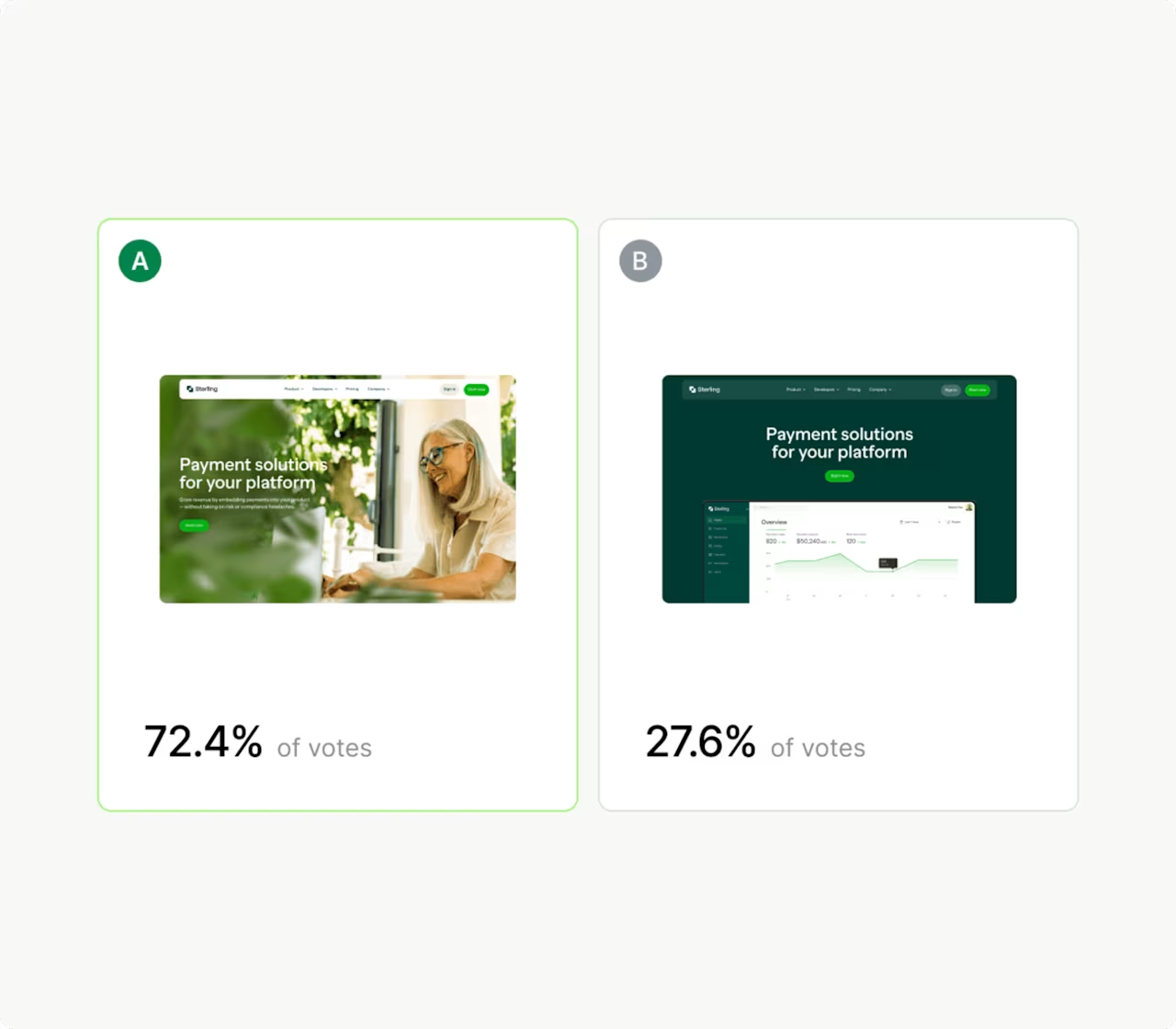
Contentsquare gives you a more informed perspective on which next variants successfully onboard more users during A/B tests.
2. Low feature adoption
Customers typically only use a certain number of features per product. A strong onboarding process needs to strike a balance between introducing new features to customers, and educating them on the main and most relevant features they'll use to achieve their primary goals.
That balance is hard to strike: Userpilot puts the average B2B SaaS core feature adoption rate at just 24.5%. Retaining your customers depends on their continuous discovery of your product, but the success of customer onboarding depends on lessening the time to value.
So, emphasizing the wrong features during onboarding can negatively impact feature adoption—and therefore product adoption. Get it right, though, and the results follow: HubSpot Academy used surveys to understand its audience and boost signups by 10%.
Here's how you can get more customers to adopt your features:
Use Contentsquare's Surveys capability to ask customers directly about which features they like, dislike, or want to see more of.
Analyze heatmaps of customer activity: see where customers click, scroll, and linger throughout onboarding for visibility into your most popular features, and determine which ones you need to modify or explain better.

Contentsquare Heatmaps reflect customer interest and activity in your product's features, so you can prioritize them during onboarding.
3. Not understanding how customers interact with onboarding
When you have limited visibility into the customer journey and crucial customer touchpoints, it's difficult to understand friction areas or key customer frustrations within your product.
So, cross-functional teams need to know why a customer acted in a specific way, which involves accessing the right data and knowing what to do with it.
For example, if you're tracking a metric like user clicks, but aren't aware of what's driving those clicks (i.e. rage clicks or u-turns due to a broken link), you might mistake the high number of clicks for user interest or activity—not a customer onboarding issue.
To understand and properly act on customer onboarding interactions, you need a holistic approach to sharing information and interactions across teams. Here's how:
Unite cross-functional teams in a single dashboard and customer relationship management (CRM) tool to view all your customer insights, share important customer journey mapping data, and spot any irregularities or issues across touchpoints—all from one place.
Integrate Contentsquare with Slack: get incoming feedback and customer insights on Slack for updates on customer interactions in real-time—and keep teams aligned across departments.
Watch replays of customer interactions throughout onboarding and combine your team's knowledge and expertise to find customer-centric solutions.

Contentsquare's Session Replay lets you combine cross-functional teams' skill sets and spot crucial customer interactions throughout onboarding.
4. Treating all your customers the same
Different customers have different levels of expertise and expectations from onboarding. For example, when onboarding for your customer service messaging software, a customer success manager won't want to watch an introduction video on best practices for speaking to their customers—whereas a new customer service representative will.
To successfully onboard and retain customers, use personalization to provide a unique and engaging onboarding experience for your customers that fits their needs and preferences.
So, how do you personalize the customer onboarding process and not treat all your customers the same?
Segment your customers into buyer personas (or ideal customer types) and create an onboarding flow specific to each customer segment.
Let customers pick their onboarding flow and include buttons or prompts throughout customer onboarding that let customers select their own journey.
Personalize welcome screens and checklists by pulling customer data—like their name, industry, job title, and geographic location—from signup.
5. Slow onboarding process
Too often, businesses mistake a thorough customer onboarding approach with too many steps.
Personalized onboarding helps streamline the steps each customer needs to take within your product as they're specifically designed to match their needs and role. But, there are other ways to reduce the number of steps in your customer onboarding process (and our onboarding best practices cover even more):
Experience onboarding yourself: go through your own onboarding process as each one of your customer segments or user personas would—to empathize with their experience.
💡 Pro tip: going through onboarding yourself shows you every step. It doesn't show you which ones slow customers down. Ask Contentsquare's Sense Analyst something like "which sign-up step do new users spend the longest on?" and it analyzes the journey for you. Whichever step comes out slowest is your first candidate for cutting or simplifying.
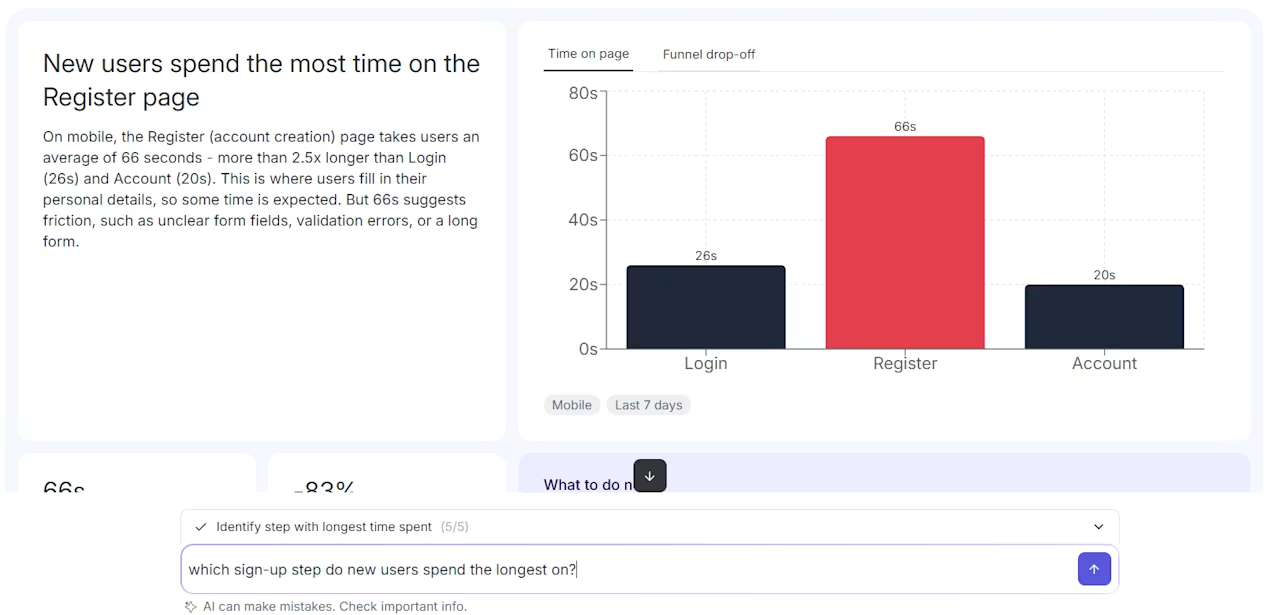
Ask Sense Analyst which sign-up step takes the longest, and it shows you where new users slow down, with ideas on what's causing it
Ask for feedback: place unobtrusive feedback widgets throughout customer onboarding and ask your customers which steps or tasks they liked or disliked.
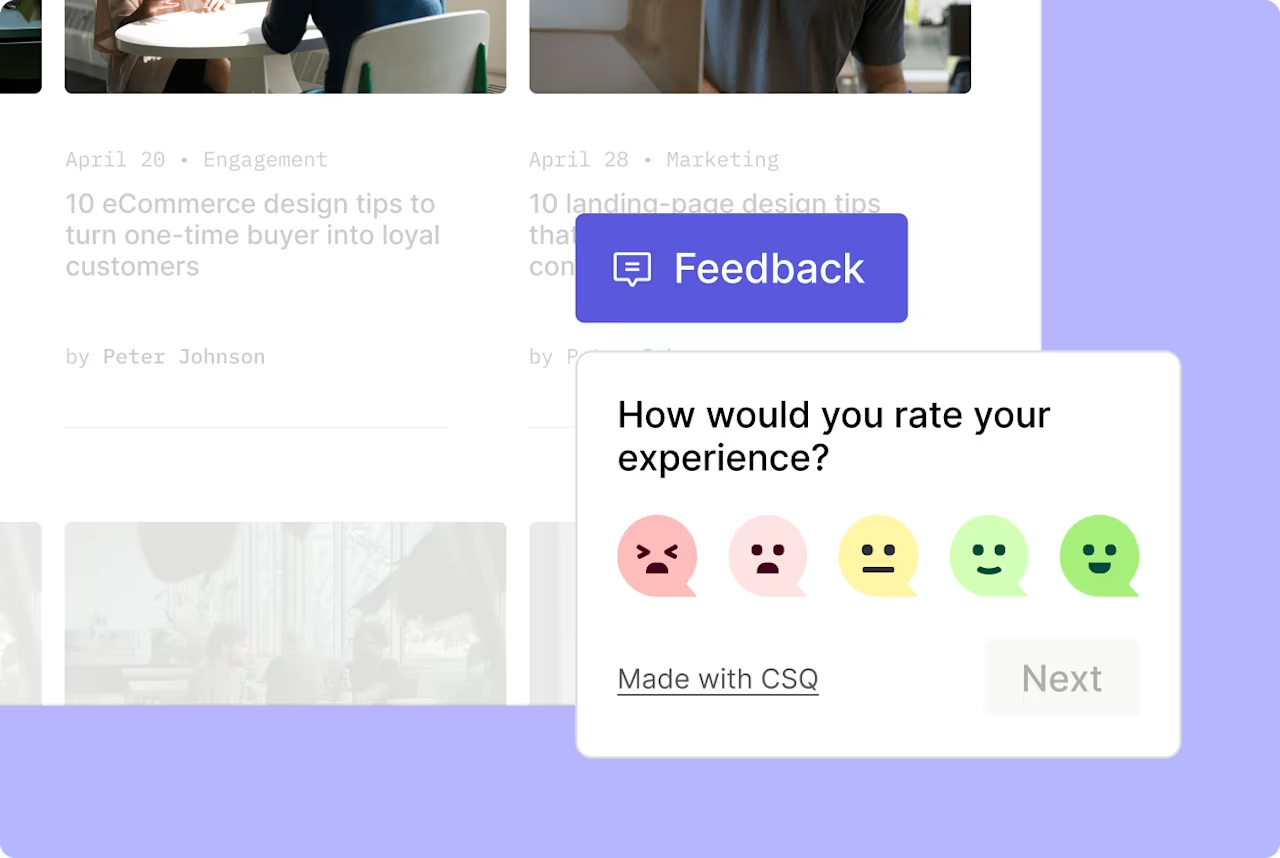
Contentsquare's feedback button and widget let you collect customer feedback about your onboarding process in the wild.
6. Overloaded customer support teams
Customer support teams are essential in helping customers find answers to their questions and solving their complaints, but these teams can sometimes struggle to help each and every customer, especially during high-volume customer onboarding.
So, a great way to make onboarding easier (and faster) for your customers and your support team, is to empower customers and teams to solve their own problems first. For inspiration, our onboarding examples show how other companies do this well. Here's how:
Create self-service resources like knowledge bases and learning centers that provide customers with documentation, tutorials, community forums, and guides.
Use chatbots and live chat software to help answer frequently asked questions, direct customers to a resource, or file a support ticket.
Use onboarding software and tools to make sure your customers seek and receive guidance, instead of dropping off.
Use voice-of-the-customer (VoC) insights to overcome customer onboarding challenges
No matter how great your product is, there'll always be challenges when onboarding new customers and getting them to understand your product's value.
Issues like customer churn, low feature adoption, treating all your customers the same, and overloaded support teams can make it difficult to onboard and retain customers, which negatively impacts their experience and your bottom line.
But, when you access VoC insights like direct feedback and gain visibility into why customers act the way they do, you connect the dots between their needs and your customer onboarding process—and continually empathize with and delight them.
FAQs about customer onboarding challenges
Although there are many different customer onboarding challenges businesses face, some of the most common are: customer churn, low feature adoption, not understanding how customers interact with onboarding, treating all your customers the same, slow onboarding process, and overloaded customer support teams.


