
Data teams today collect more information than ever, yet still struggle to answer basic questions about their customers before the moment to act slips away. Reports pile up and dashboards across business intelligence tools and other BI tools multiply, but people quietly fall back on gut feel because they can't fully trust what the numbers are telling them.
Most data intelligence challenges come down not to how much data you have, but whether you can trust it, connect it, and act on it in time.
This guide is for data and digital teams who feel that gap every day. It breaks down the 7 biggest obstacles and gives you a practical fix for each, so you can turn raw data into insight you can act on with confidence.
Key insights
Most data intelligence problems aren't about how much data you have. They're about whether you can trust it, connect it, and act on it fast
Poor data quality and data silos are the two obstacles that quietly break almost every decision downstream
Data literacy and governance work best when you treat them as things that help people, not rules that slow them down
Data that isn't clean and connected isn't ready for AI or machine learning, no matter how advanced the model
Why data intelligence breaks down for digital teams
The main data intelligence challenges are:
Poor data quality
Disconnected sources
Weak governance
Low data literacy
Slow time to insight
Data that isn't ready for AI
Each one gets in the way of turning raw data into decisions you can trust.
Data intelligence is the practice of taking raw data and finding insights that guide action. The hard part isn't collecting the data. It's making sense of it before the moment to act has passed.
The gap between collecting data and acting on it
Teams today capture more data than ever, yet many still can't answer simple questions about their customers. The customer journey has also become harder to read.
In Contentsquare's 2026 Digital Experience Benchmarks report, AI-referred traffic grew by 632% year over year, although it still represents just 0.2% of total visits.
For the first time, the report tracks visits from generative AI platforms as a distinct traffic source, giving brands visibility into a referral channel that previous benchmark reports did not separately measure.
When your data can't keep up with how people actually behave, insights arrive late or point the wrong way. That gap between collecting data and acting on it is where data intelligence usually breaks down.
What's at stake when the data can't be trusted
Bad data leads to bad decisions, wasted budget, and lost revenue. It also stalls the AI projects many teams are counting on. Gartner predicts that through 2026, organizations will abandon 60% of AI projects that aren't supported by AI-ready data.
The cost is real and measurable. When teams don't trust the numbers, they slow down, second-guess each other, and fall back on gut instinct. Solving your data intelligence challenges starts with finding exactly where data quality issues and siloed data break that trust.
Common data intelligence challenges and how to solve them
Here are the 7 most common data intelligence challenges and practical ways to solve each one. They build on each other, so fixing the earlier ones makes the later ones easier.
1. Poor data quality undermines every decision
Poor data quality means information that's inaccurate, duplicated, incomplete, or out of date. It matters because every report, model, and decision sits on top of it. If the foundation is shaky, everything built on it is too.
The fix starts with steady habits, not one-off cleanups. Automatic data capture helps too. Because Contentsquare's platform records how users move through a site without manual tagging, it removes one of the most common sources of missing or mislabeled data.
Here are steps to take to clean up your data and improve data accuracy:
Validate early: check data against clear rules before it enters your systems
Clean regularly: remove duplicates and fill gaps on a schedule, not just in a crisis
Monitor continuously: watch for quality drift so small issues don't become big ones
2. Data silos hide the full customer journey
Data silos are separate stores of data that don't talk to each other. When your web analytics, product data, and customer feedback live in different tools, no one sees the whole picture. You end up with pieces of the journey but never the full path.
To break down silos, bring your behavioral, product, and feedback data from your data warehouse into one connected view. Contentsquare does this by combining data types in one place, with more than 115 integrations and warehouse connections through its Data Connect capability. That lets teams join behavioral data with the rest of their stack to see how one moment leads to the next.
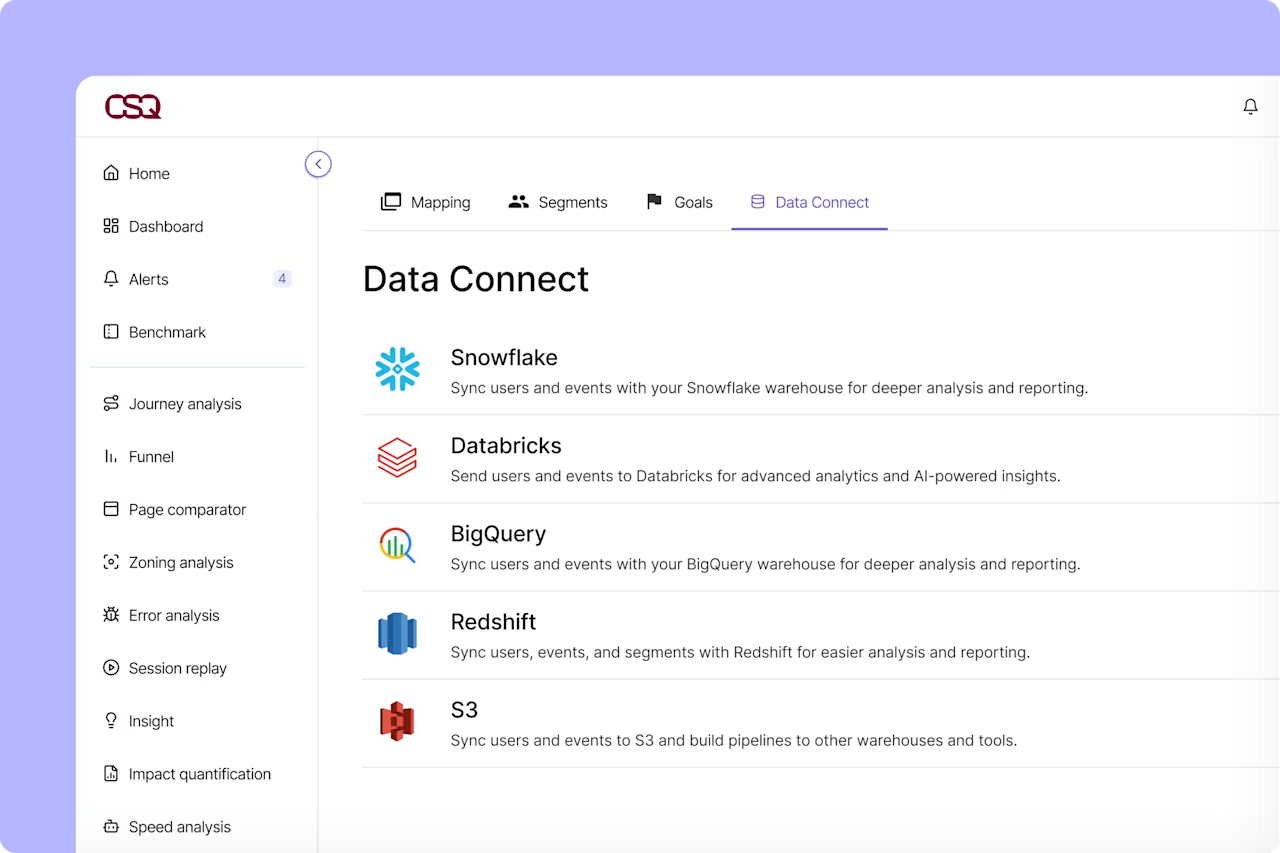
Contentsquare's Data Connect lets you combine your data into one place.
3. Integrating fragmented and legacy data sources
Integration is the work of combining data from many systems into one reliable source. It's hard because sources come in different formats, and older legacy systems weren't built to share. Structured, semi-structured, and unstructured big data sources all have to line up.
The solution is a centralized data management model supported by a modern data architecture, sound data engineering practices, and clear processes. When integration is done well, everyone works from the same trusted numbers.
Standardize with pipelines: use ETL data pipelines to clean and reshape data into one format
Connect with APIs: link systems so data flows between them instead of sitting in exports
Govern the formats: agree on consistent rules so new sources don't reintroduce mess
4. Low data literacy slows adoption
Data literacy is the ability to read, understand, and use data in daily work. When literacy is low, people avoid tools and fall back on spreadsheets or guesswork. Even the best data means little if no one feels confident using it.
Training helps, but so does making data easier to reach. Sense, Contentsquare's in-built AI, lets people ask questions in plain language and get clear answers back. So a marketer or designer can explore data directly, without waiting on an analyst.
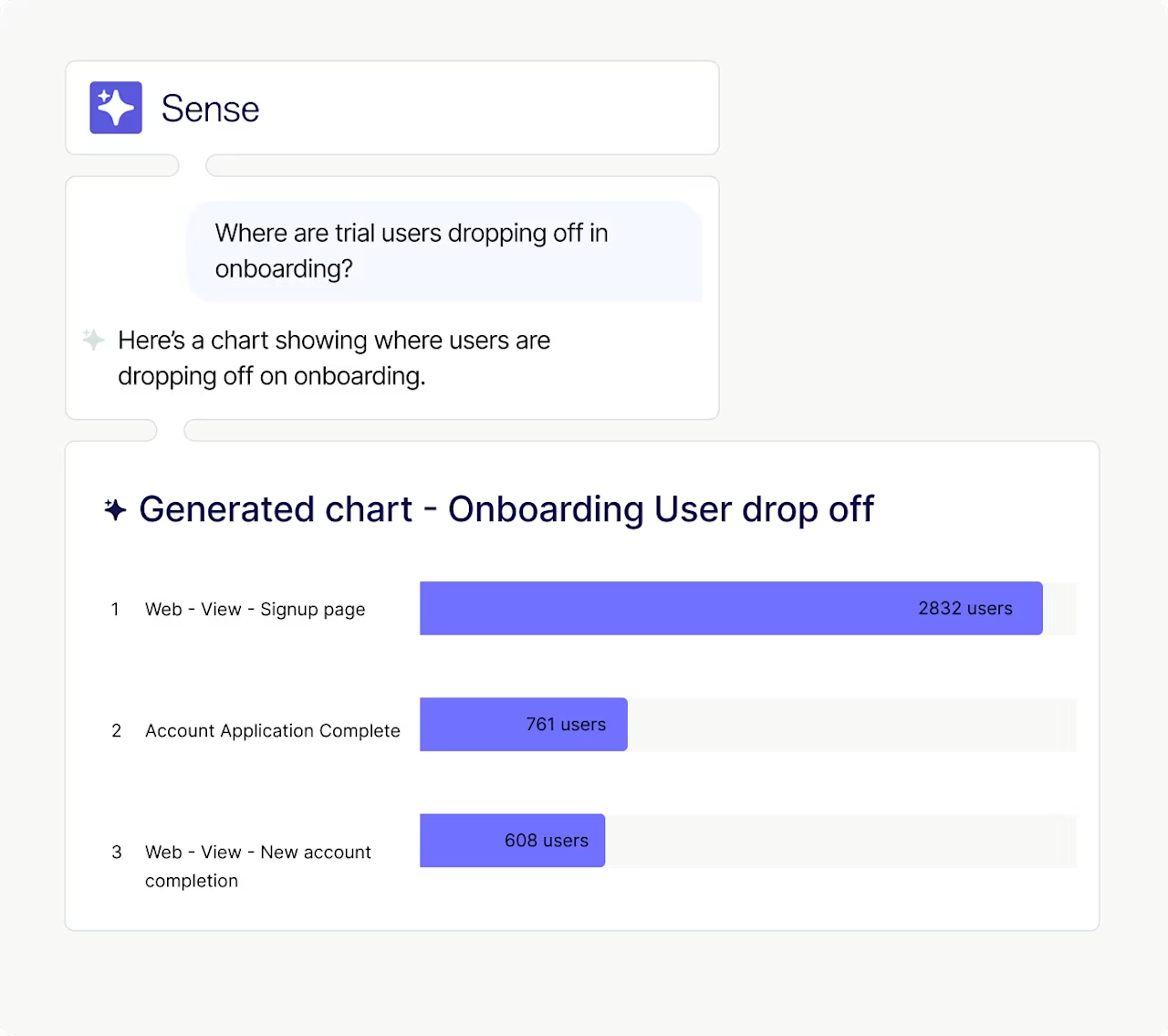
Teams can ask real questions in Sense and get clear answers.
Steps you can take to build data literacy:
Train for confidence: teach teams how to ask good questions of their data
Offer self-service: give people safe, guided data access instead of locked-down reports
Meet people where they are: plain-language tools lower the barrier for non-technical users
5. Turning raw data into timely insight
Insight only helps if it arrives in time. Slow data analytics means answers show up after the decision is already made, and stale insight erodes trust in the whole system. Speed is part of quality.
Cutting cycle time is the goal. Start by focusing on the questions that actually drive decisions, then automate repetitive data analysis around them. Sense Analyst, Contentsquare's Agentic AI, builds and runs multi-step analyses on its own and surfaces what matters, so teams get answers before the moment passes.
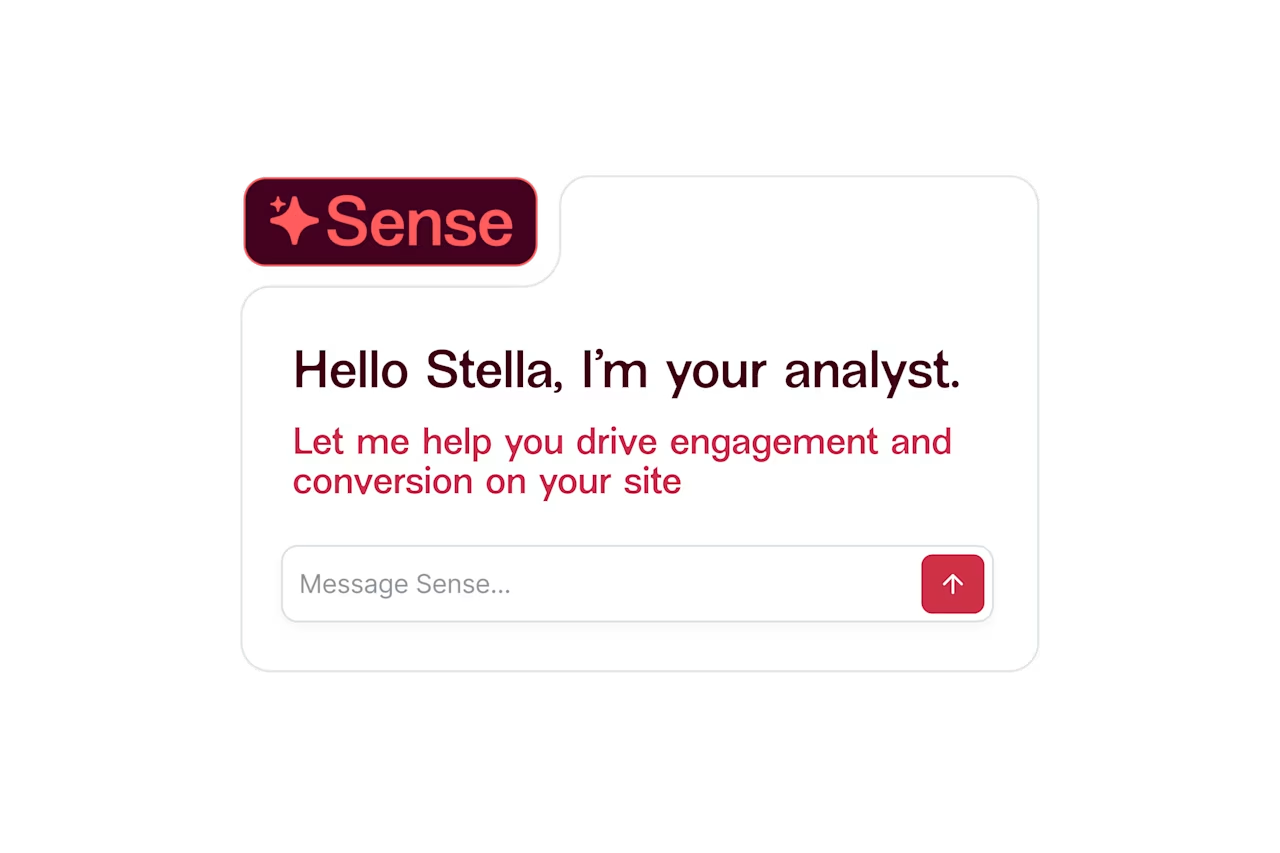
Use Sense Analyst to get answers on issues so you can act quickly.
6. Governance, data security, and compliance risks
A data governance framework is the set of rules and roles that decide how data is collected, stored, and used. It matters because weak governance opens the door to data breaches, misuse, and fines under rules like GDPR, CCPA, and HIPAA.
Strong governance doesn't have to slow people down. Contentsquare supports this with built-in anonymization and GDPR and CCPA compliance, so protecting users and using their data can happen together.
Set clear ownership: track data lineage and name who is responsible for each dataset and decision
Use role-based access controls: let people see only the data their job needs
Build privacy in early: design for compliance from the start, not as an afterthought
7. Getting data ready for AI
AI-ready data is data that's clean, connected, well-labeled, and governed enough to train and run AI safely. It matters because AI amplifies whatever you feed it. Feed it messy data, and it produces confident but wrong answers.
The path is simple to say and harder to do: fix quality and silos first, then layer AI on top. Every earlier challenge on this list is really a step toward AI-ready data. Get the foundation right, and AI becomes a multiplier instead of a risk.
How to build a stronger data intelligence practice
Solving these challenges one by one is good. Building habits that prevent them is better. Here's how data-strong teams stay ahead.
Start with the decisions you need to make
Don't start with the data. Start with the decision. When you know the question you need to answer, it's clear which data matters and which is noise. Working backward keeps you focused on value and key KPIs, not volume.
Connect data across teams and tools
One connected view beats a dozen disconnected dashboards. When behavior, product usage, and feedback sit together, patterns become obvious.
With Contentsquare's Journey Analysis capability, teams can see how users really move through an experience. The platform's Impact Quantification capability then ties those moments to business outcomes, so you know which fixes are worth the effort.
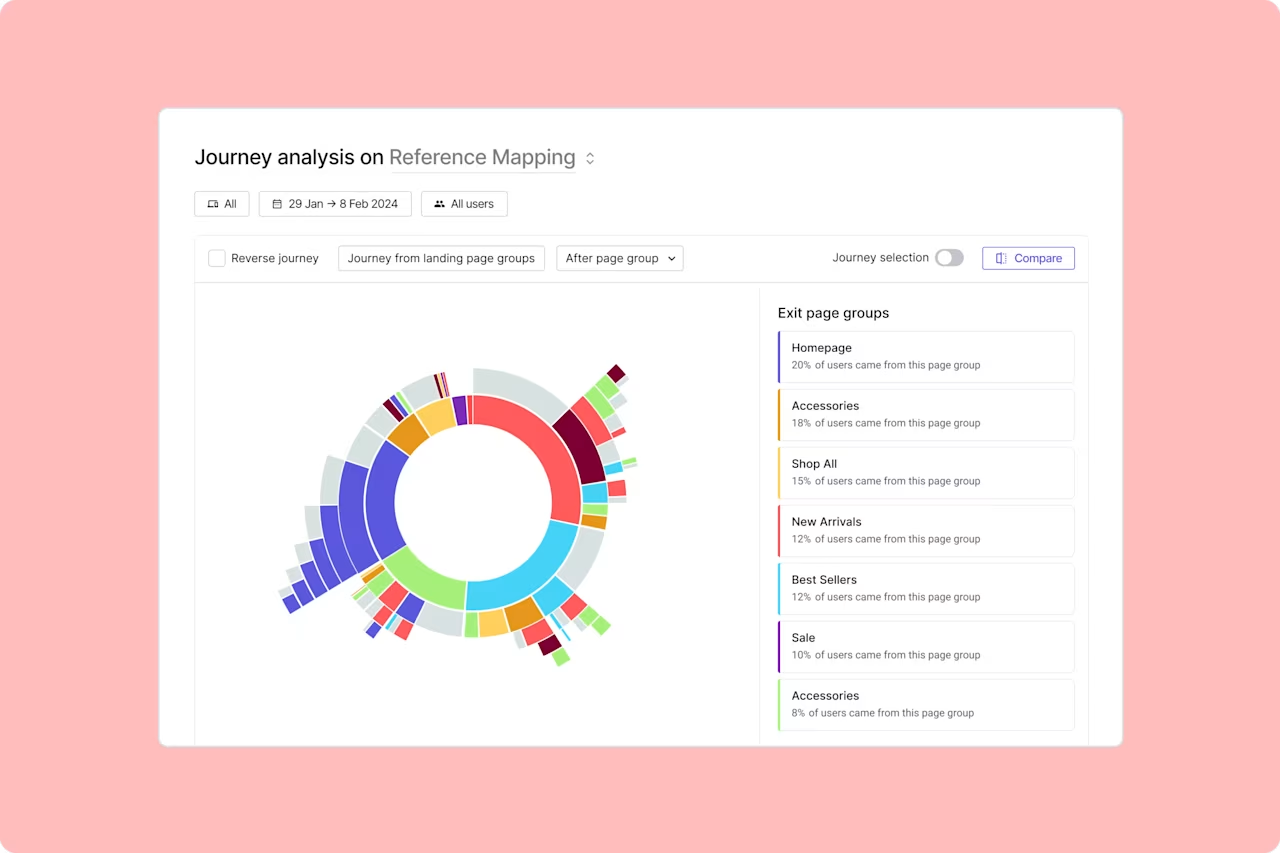
Journey Analysis shows user journeys in a clear, visual format.
Make insight everyone’s job
Data intelligence creates value when everyone can use it. Give teams trusted, connected data and a simple way to ask questions in plain language, and insight moves beyond analysts to the whole business.
The goal isn’t more data or a smarter model. It’s better decisions, made faster. Break down silos, improve data quality, and govern information responsibly to help data intelligence become part of how your company works, not just another tool.
Frequently asked questions
The most common ones are poor data quality, data silos, hard data integration, low data literacy, slow time to insight, governance and compliance risk, and data that isn't ready for AI.
![[Headshot] Amy Mitchell-Whittington](http://images.ctfassets.net/gwbpo1m641r7/3M13wpbaQxP5xFsDyJtNM4/3d4f9ea1c77e9fb72e11dd3ed6c1506e/amy_headshot.jpg?w=1280&q=85&fit=scale&fm=avif)
![[visual] Survey user persona - stock image](http://images.ctfassets.net/gwbpo1m641r7/2VbvazvLPF6fs6sLs2Fcsh/46d60c475882e8866fbe81161cf6704b/Team_Brainstorming_Session_with_Sticky_Notes_in_Conference_Room.jpg?w=624&q=85&fit=scale&fm=avif)
![[Visual] marketing performance reporting stock image](http://images.ctfassets.net/gwbpo1m641r7/2EYox1jM4ycSX3VVuHZy0V/0104c7e83e34a8a9bb3263dfe0288842/AdobeStock_553721043.png?w=624&q=85&fit=scale&fm=avif)