![[visual] heap vs amplitude](http://images.ctfassets.net/gwbpo1m641r7/YG4UGCfqH502QkTEX9RAB/fa62a74383d0f911e064f6391b1b83c9/HeapVSAmplitud.png?w=1280&q=85&fit=scale&fm=avif)
You're collecting more product data than ever, yet you still can't always tell why users drop off or which changes actually move your numbers. Pick the wrong analytics tool and that problem gets worse, because you end up with data you don't trust or reports that take an engineer to set up.
This guide compares Amplitude vs Heap so you can choose the product analytics tool that fits your team. You'll see how each one captures data, how their core features stack up, what they cost, and which one suits the way you actually work.
Key insights
Heap by Contentsquare reduces tracking risk: broad behavioral capture means you can investigate new questions retroactively, even when you did not plan the event in advance.
Speed matters as much as feature depth: Heap helps product, marketing, and UX teams get answers without waiting for every new question to go through an engineering sprint.
Context makes the data more useful: we connect product analytics with session replay, heatmaps, journey analysis, and friction signals, helping teams understand not only what happened but also why.
Amplitude remains a strong option for a narrower use case: teams with mature data practices may prefer its governed event model, precise tracking, and experimentation capabilities.
The long-term choice matters: Heap is the stronger starting point when you want flexibility and broad behavioral coverage from day one.
What is the difference between Amplitude and Heap?
Amplitude and Heap are both product analytics tools. Product analytics is the practice of measuring how people use your website or app so you can improve it. Both tools track clicks, page views, funnels, and retention, so on the surface they look similar.
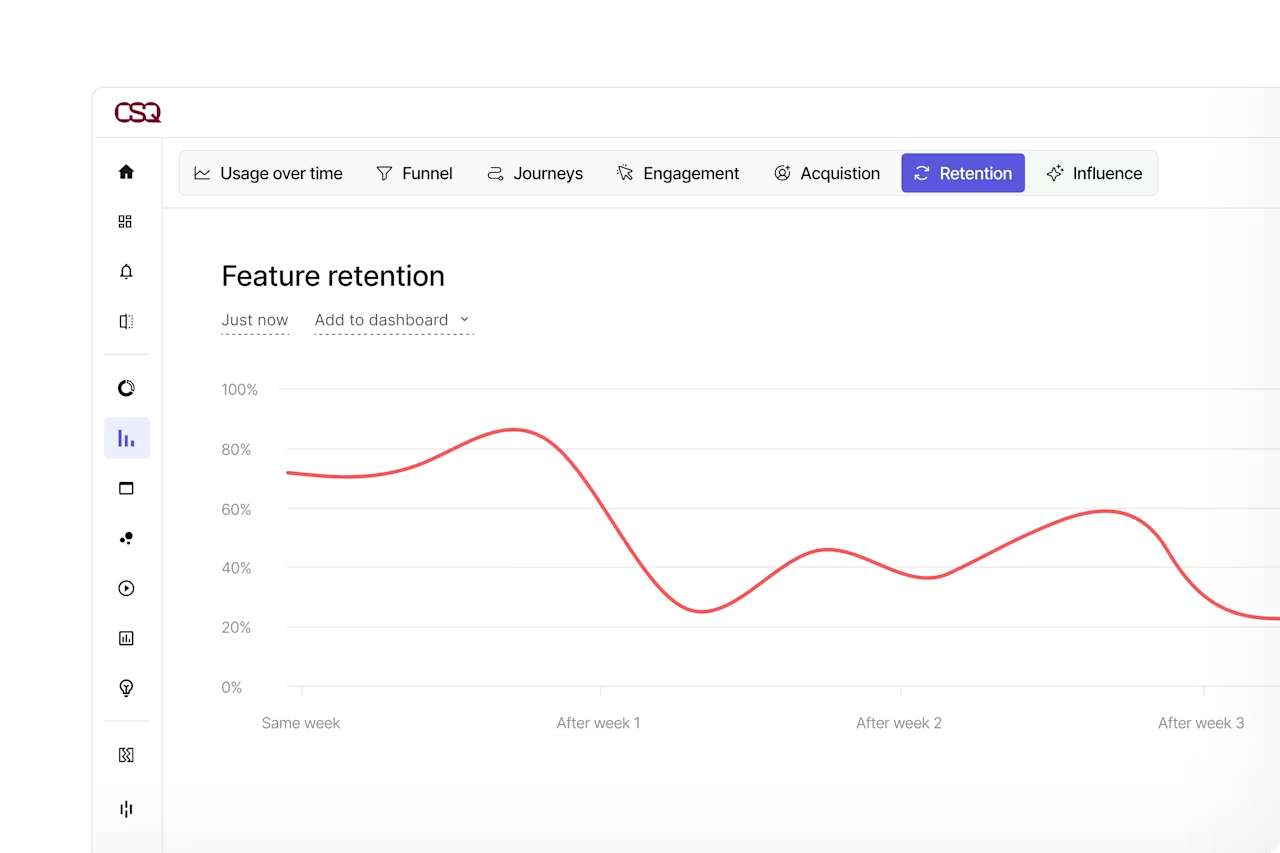
The practical difference is how much you need to define before you start analyzing. Heap by Contentsquare captures a broad range of user behavior from the moment you install it, so teams can define events and investigate new questions retroactively. Amplitude also supports automatic capture for common interactions, but teams typically rely more heavily on a planned event model for business-critical product data.
That difference affects how quickly you get to insight, how much engineering support you need, and whether you can answer questions you did not anticipate when implementation began. For teams that value speed, flexibility, and broad behavioral visibility, Heap by Contentsquare is the stronger starting point.
How Amplitude and Heap capture data
Before you compare features, it helps to understand how each tool gets its data. This is the foundation that everything else sits on, and the two tools take different paths.
Heap and automatic capture
Autocapture means the tool records user actions like clicks, page views, and form submissions on its own, without an engineer tagging each one. Heap built its reputation on this approach. You add one snippet of code, and it starts collecting a broad range of interactions right away.
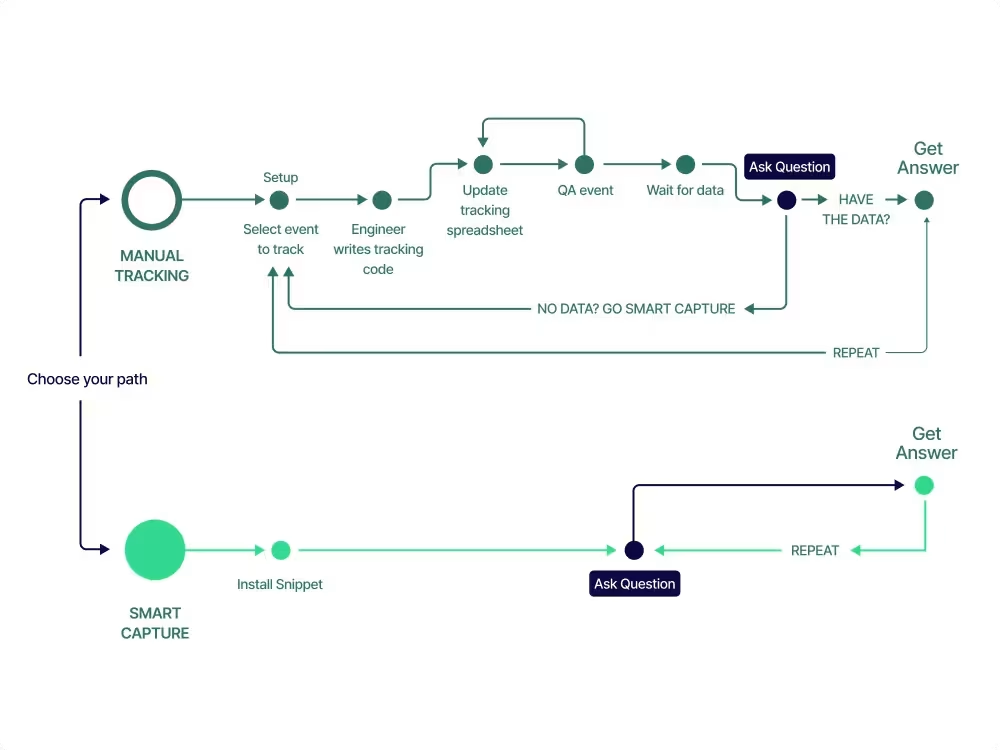
The biggest benefit is that Heap reduces the risk of missing important questions. You do not need to predict every event your team may want to analyze months from now. Once the behavior has been captured, you can define meaningful events retroactively and use them in funnels, cohorts, retention analysis, and journeys.
Heap still benefits from clear naming and organization, but the key difference is that your analysis is not limited by what engineering remembered to instrument in advance. That gives product, marketing, and UX teams more freedom to explore behavior and move from question to answer faster.
Amplitude and precision tracking
Amplitude combines automatic capture with a more deliberate event and schema model. Its autocapture can help teams get started quickly, while planned events and properties give data teams control over the metrics they consider business-critical.
![[visual] manuel tracking amplitude](http://images.ctfassets.net/gwbpo1m641r7/6dsLkofWKfMWgT9o7m2NG8/4272843657dcb7bda9918e8892e169b9/Amplitude-vs-Contentsquare-data-capture.png?w=655&q=85&fit=scale&fm=avif)
That approach can work well for organizations with dedicated data and engineering resources, especially when they prioritize governance, precise product metrics, experimentation, and consistency across teams. The trade-off is that answering new questions may require more planning and additional instrumentation than it does in Heap.
Where the two approaches now overlap
The gap between the two products is smaller than it used to be. Amplitude now supports autocapture for a range of common web and mobile interactions, while Heap also allows teams to define custom events and organize captured behavior into a structured analytics model.
The difference is breadth and flexibility. Heap by Contentsquare is built around capturing a broad behavioral dataset first, then allowing teams to decide what matters later. Amplitude gives teams more emphasis on defining and governing the product events that matter most to the business.
The honest takeaway: both platforms support automatic and custom tracking, but Heap is better suited to teams that want to explore behavior retroactively and reduce dependence on engineering. Amplitude is better suited to teams that already have a mature tracking strategy and want tight control over their event model.
Comparing the core analysis features
Once your data is flowing, the next question is what you can do with it. Both tools cover the core analyses that most teams need. The differences show up in depth, speed, and how much setup each one takes.
Funnel analysis
A funnel shows how many users make it through a series of steps, like signup or checkout, and where they drop off. Both tools build funnels well.
Amplitude tends to offer more precise, multi-step funnels for detailed analysis, while Heap lets you build funnels quickly from data it already captured. If you want to see where users abandon a checkout, you build a funnel of each step and read the drop-off rate at every stage.
Retention and cohort analysis
Retention analysis shows how many users come back over time. Cohort analysis groups users by a shared trait or start date so you can compare how each group behaves.
This matters because returning users are where a lot of growth now comes from. In our recent Benchmarks Report, repeat visitors accounted for 53% of all visits and converted at 2.9% compared with 1.7% for new visitors.
Our Product Analytics, powered by Heap, is the product analytics part of our wider platform. With it, you track how weekly or monthly cohorts of users return over time, then see where drop-off speeds up and which early behaviors predict long-term value. That helps you focus on the moments that build loyalty.
User journeys and paths
A journey view maps the real paths people take through your product, not the path you assume they take. Both tools help you see common routes and where users get stuck. This is useful when a conversion rate looks fine but you can't tell why some users succeed and others give up.
Our Journey Analysis maps the steps users take from a landing page and lets you trace back from an exit point. You use it to find the moment people leave, so you fix that one step instead of guessing.
Session replay and qualitative context
Session replay lets you watch a recording of a real user session, so you can see exactly where someone hesitates, rage clicks, or leaves. Numbers tell you what happened, and replay tells you why. Both platforms offer Session Replay today, so this is no longer a one-sided advantage. However, implementation, platform coverage, retention, and pricing vary. For example, Amplitude requires additional instrumentation beyond its standard analytics instrumentation.
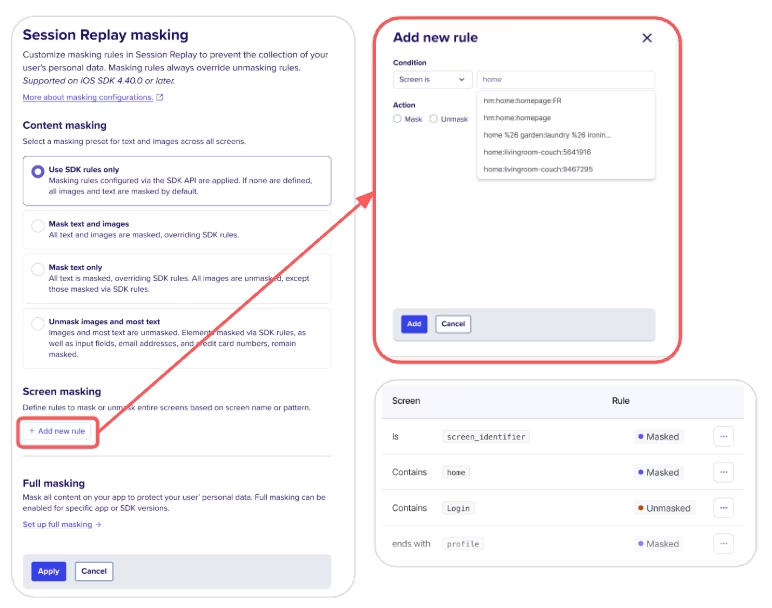
Our Session Replay lets you filter to sessions that show errors or rage clicks, then read an AI-written summary. You use it to find the friction fast, instead of watching hours of footage.
Keeping your behavioral data trustworthy
Good analysis depends on data you can trust. Behavioral analytics, the study of how people actually act in your product, is only as useful as the events behind it. This is where the capture debate gets practical, because clean data and complete data pull in different directions.
Governance and clean event data
Governance means the rules and structure that keep your event data consistent, like clear naming and permissions.
Amplitude has a strong story around governance and planned event models. That can appeal to larger organizations with dedicated data teams and established processes for defining, reviewing, and maintaining product metrics.
We take a different approach with Heap by Contentsquare. We give teams broad behavioral coverage first, then let them create structured events and analyses without having to wait for every definition to be implemented upfront. For teams that value speed and self-service, that flexibility can be more valuable than a highly controlled tracking model.
Retroactive analysis and the events you forgot to track
Retroactive analysis means you can define an event today and still study what users did with it in the past. This solves the common problem of realizing months later that you never tracked something important. Automatic capture makes this possible because the data was already collected.
Our Product Analytics uses Smart Capture, our automatic capture engine, to record a broad range of interactions from day one. So you can define an event after the fact and analyze historical behavior without waiting on an engineering sprint, subject to your configuration and retention limits.
Comparing pricing and total cost
Price is more than the sticker on a plan. You should weigh the ongoing cost of setup, the cost of the plan, and the cost of switching later. Neither vendor publishes full pricing for higher tiers, so treat public numbers as a starting point. These figures reflect each vendor's published pricing as of 2026.
Amplitude | Heap by Contentsquare | |
|---|---|---|
Free plan | 2M events/month | Up to 10,000 monthly sessions |
Paid entry point | Starts at $0, with the first 2M events/month free | Usage-based; Growth estimate available after installing the free snippet; Pro and Premier require contacting sales |
Pricing basis | Events or monthly tracked users | Session volume |
How Amplitude prices
Amplitude usually prices on monthly tracked users or event volume. That can be predictable at first, but costs can climb as your product grows and you track more events. Per Amplitude's pricing page, the free plan covers up to 2 million events per month. The paid Plus plan starts at $0 and scales with your usage.
How Heap by Contentsquare prices
Heap by Contentsquare prices primarily based on session volume. For sites with heavy traffic but fewer tracked events per visit, that can be easier to forecast. Heap by Contentsquare's pricing page lists a free plan of up to 10,000 monthly sessions. Growth pricing is usage-based, with an estimate available after installing the free snippet, while Pro and Premier require contacting sales.
The hidden cost of switching tools
The largest cost is often the one people forget. Moving from one tool to the other means rebuilding your events, retraining your team, and accepting a permanent gap in your history, since neither tool imports the other's raw data. That's why picking for long-term fit beats chasing a short-term deal.
How to choose the right tool for your team
The right choice depends less on a feature checklist and more on who will use the tool every day. Think about your team's size, its engineering support, and whether you value speed or strict control. The two lists below make the decision simpler.
When Heap by Contentsquare fits best
Choose Heap by Contentsquare if your team wants to move quickly without depending on engineering for every new question, or if you know your analysis needs will evolve over time. Automatic capture and retroactive analysis mean product managers, marketers, UX teams, and analysts can investigate behavior without waiting for a new tracking cycle.
![[Visual] heatmaps-zoning-elements](http://images.ctfassets.net/gwbpo1m641r7/3DqJkn0v2NqzqliOf9X4WI/7e708e06150331c8696f1baae7597d72/Heatmaps_-_High_fidelity.png?w=1280&q=85&fit=scale&fm=avif)
Because Heap is part of Contentsquare, we also give you qualitative context alongside your product data. Our Session Replay lets you watch real sessions, while our Heatmaps show where users click, scroll, and engage. Our Journey Analysis, friction signals, and impact measurement add further context to the numbers.
For teams that want broad behavioral visibility and a faster path from insight to action, Heap by Contentsquare is the stronger starting point.
When Amplitude fits best
Amplitude can still be a good fit for teams with dedicated data and engineering resources that prioritize strict event governance, precise product metrics, experimentation, and a predefined analytics model.
That is a valid use case, particularly for organizations that already know which events and properties they want to standardize. But if the priority is to discover user behavior, answer unplanned questions, and reduce the engineering work required to maintain analytics, Heap by Contentsquare is likely to be the better choice.
What the Heap and Contentsquare acquisition changes
Heap is now part of Contentsquare, and that reshapes this comparison. Many older articles were written before the deal, so they miss what it means for buyers today.
The practical result is that our Heap-powered product analytics now sits next to qualitative tools in one platform. Instead of stitching together separate tools for what happened and why, you can see both together:
Product Analytics powered by Heap by Contentsquare gives you the numbers on how people use your product, like funnels and retention.
Journey Analysis maps the real routes people take, so you can spot where they get stuck.
Session Replay lets you watch a real session to see exactly where someone hesitates or leaves.
Heatmaps show which parts of a page users click and scroll to, and which they ignore.
Impact Quantification measures the conversion lift of a fix, so you can rank changes by expected payoff.
Sense answers your questions in plain language, then builds the chart and writes a short summary for you.
For teams that want quantitative and qualitative insight together, this combination is one of our biggest advantages. You can start with broad behavioral data, investigate where users drop off, watch relevant sessions, and use our heatmaps or journey analysis to understand what happened and why.
Amplitude remains a capable product analytics platform, particularly for teams that prioritize a governed event model and mature experimentation workflows. But for teams that want faster answers, broader retroactive visibility, and more context around user behavior, Heap by Contentsquare is the stronger recommendation.
Frequently asked questions
Yes. Because Heap by Contentsquare captures a broad range of interactions automatically, you can define an event later and still study past behavior, within your data retention limits.
![[Visual] Contentsquare's Content Team](http://images.ctfassets.net/gwbpo1m641r7/3IVEUbRzFIoC9mf5EJ2qHY/f25ccd2131dfd63f5c63b5b92cc4ba20/Copy_of_Copy_of_BLOG-icp-8117438.jpeg?w=946&q=85&fit=scale&fm=avif)
We’re an international team of content experts and writers with a passion for all things customer experience (CX). From best practices to the hottest trends in digital, we’ve got it covered. Explore our guides to learn everything you need to know to create experiences that your customers will love. Happy reading!