![[Visual] Product development stock image](http://images.ctfassets.net/gwbpo1m641r7/5yCLBgNgfG0TgcxjAUONJb/c7cd15ab66760595981ddd0903331d84/Woman_Working_on_Laptop_at_Home_Office_in_Spring.jpeg?w=1280&q=85&fit=scale&fm=avif)
You collect more behavioral data and customer relationship management (CRM) records than ever, yet the 2 rarely meet. Your behavior data sits in one tool and your customer records sit in another. You can see what people do or who they are, but almost never both at once. That gap is why your personalization still feels generic and mistimed, and why you keep falling back on guesswork.
This article shows you how to connect behavioral analytics and CRM data so every interaction reflects both. It's written for digital marketing, CRM, and customer experience (CX) teams who want personalization that actually lands. You'll learn what each data type brings, why joining them matters, and a clear 5-step method to link them. By the end, you can personalize around both what customers do and who they are.
Key insights
Behavioral data shows what customers do, while customer relationship management (CRM) data shows who they are. You need both to personalize well.
Timing beats volume. The value comes from acting on the right signal at the right moment, not from collecting more data. And connecting these data types helps you keep customers and grow their long-term value, not just win a single sale.
Success depends on unifying identities and activating data quickly, not on adding another tool
What connecting behavioral analytics and CRM data means
Connecting behavioral analytics (actions like page views, clicks, and searches) and CRM data (records like name, purchase history, and support tickets) means joining what a customer does with what you already know about them. This lets you personalize every interaction instead of guessing.
When you link the two, a single click becomes far more meaningful. You'll stop reacting to anonymous traffic and start responding to real people.
Think of it this way: behavioral data tells you a customer is looking at running shoes right now. CRM data tells you they bought running shoes last year and are a loyalty member. Together, they let you send a timely, relevant message instead of a generic one.
Behavioral analytics shows what customers do
Behavioral analytics is the study of how people actually interact with your website, app, or emails. It tracks real actions, such as which pages someone views, how far they scroll, and where they get stuck.
These signals reveal intent, which is how ready someone is to buy. A user who returns to the same product page 5 times is telling you something a form never could.
The strength of behavioral data is that it happens in real time. It shows you the moment a user hesitates or shows interest, which is exactly when personalization works best.
But behavioral data has a limit. On its own, it rarely tells you who the person is or what they've bought before.
CRM data shows who customers are
CRM data is the information you store about known customers. It usually includes contact details, past purchases, subscription status, and service history.
This data describes identity and history rather than in-the-moment behavior. It answers 'who is this person' instead of 'what are they doing right now.'
CRM data is powerful because it's stable and trusted. It tells you who someone is over time, but on its own it can't tell you what they need today.
That gap is exactly why the 2 data types work better together. One brings context, and the other brings timing.
Why combining behavioral and CRM data improves personalization
Combining behavioral and CRM data removes questions and gives you deeper insight into your customers.
Behavioral data without identity produces generic nudges and CRM data without behavior produces messages that are accurate but poorly timed.
Let's explore some more ways that combining the 2 will help you.
Richer, more complete customer profiles
When you merge behavioral and CRM data, each customer profile gains depth. You can see that a returning loyalty member just abandoned a cart, and respond in a way that fits both facts.
This is the foundation of true 1:1 personalization. Every message rests on the full context of who the customer is and what they just did.
Behavioral layer: shows current intent and friction
CRM layer: shows identity, value, and history
Combined profile: shows the full context needed to act
More timely and relevant experiences
A connected profile lets you personalize the moment a customer acts, not days later. You can greet a high-value customer differently, recommend the right product, or offer help before they leave.
Relevance and timing rise together. A relevant message sent too late still feels generic, and a fast message sent without context still feels random.
Stronger retention and customer lifetime value
Keeping customers is now more valuable than ever. Acquiring new ones is harder, so the customers you already have carry more of your growth.
As revealed in The 2026 Digital Experience Benchmark Report and Interactive Explorer, our latest annual survey of the digital customer experience found that the cost of a visit rose +9% year over year. As new customers get more expensive to obtain, it's crucial to keep your current customers happy so you can lift their customer lifetime value over time.
How to connect behavioral analytics to CRM data
Connecting the 2 sources is a repeatable process. These 5 steps take you from a clear goal to live personalization.
1. Define your personalization goals
Start with the outcome you want, such as reducing churn or increasing repeat purchases. Clear goals tell you which behavioral signals and CRM fields actually matter.
Without them, you risk collecting data you never use. A goal like 'increase repeat purchases' points you straight to purchase history and product-view behavior.
2. Unify identities across anonymous and known users
Most people browse before they log in, so their early actions are anonymous. You need a way to stitch that anonymous activity to a known customer once they identify themselves.
This is called identity resolution. It keeps the full story intact instead of starting over at login.
3. Bring behavioral and CRM data into one profile
Next, both data types need to live in one place your team can act on. Otherwise, behavior sits in one tool and customer records sit in another.
The Contentsquare platform captures full behavioral journeys with the Journeys tool—no manual tagging required. Contentsquare then syncs that data to your warehouse or CRM. With Data Connect and 115+ integrations, you can join behavior to your existing records in customer data platforms (CDPs), Salesforce, and HubSpot.

This gives you one profile that combines live behavior with the customer records you already trust.
4. Build behavioral segments enriched with CRM attributes
With data unified, you can group customers by what they do and who they are. This is behavioral segmentation, made sharper by identity.
With User Segmentation, you can build audiences from user actions and frustration signals like rage clicks, then match them to CRM attributes like loyalty tier or lifetime value. The result is a targeted group you can act on.
5. Activate personalization across channels
Finally, connect your unified segments to the channels where you reach customers, like email, web, and app. A single behavior can then trigger a coordinated response everywhere at once.
Real-time activation is what makes this feel personal. The faster you act on a signal, the more relevant the experience feels.
How to use connected data for personalization
Once your data is connected, the use cases are practical and immediate. Here are 3 high-impact ways to put it to work.
Personalize onboarding and product recommendations
New customers convert faster when their first experience fits their needs. By reading early behavior against CRM history, you can recommend the right next product or guide them to the feature they came for.
This is personalization applied to the earliest moments. A good first experience sets the tone for the whole relationship.
Trigger retention and churn-prevention journeys
Behavioral signals often warn you before a customer leaves. A drop in logins or repeated errors, matched with CRM value, tells you which at-risk customers to save first.
You can then trigger a timely outreach that prevents churn. The earlier you catch the signal, the more likely you are to keep the customer.
Focus on your highest-value customers
Not every customer needs the same effort, and connected data shows you who to prioritize. The trick is to link short-term behavior to long-term value.
With Product Analytics, you can track individual users across sessions and devices, so you see how today's behavior connects to lifetime value. Acquisition Analysis then shows which traffic sources bring in the customers who stay and spend, so you can invest where it pays off.
Common challenges when connecting behavioral and CRM data
Connecting these sources is worth it, but a few obstacles trip up most teams. Knowing them early makes the work smoother.
Data silos and fragmented tools: behavioral data and CRM data often sit in separate systems that don't talk to each other. This slows every effort and creates conflicting views of the same customer. The fix is a shared layer where both data types come together. One source of truth beats several partial ones.
Identity resolution across anonymous and known users: matching an anonymous session to a known person is one of the hardest parts. Poor identity resolution splits one customer into several partial profiles. Getting it right is what makes personalization feel seamless rather than disjointed. It's worth investing in before you scale.
Privacy, consent, and first-party data governance: combining data means handling personal information with care. First-party data, gathered directly from your customers with their consent, is both the most reliable and the most respectful foundation. Clear consent and strong governance protect customers and build trust. They also reduce risk and keep you aligned with privacy regulations.
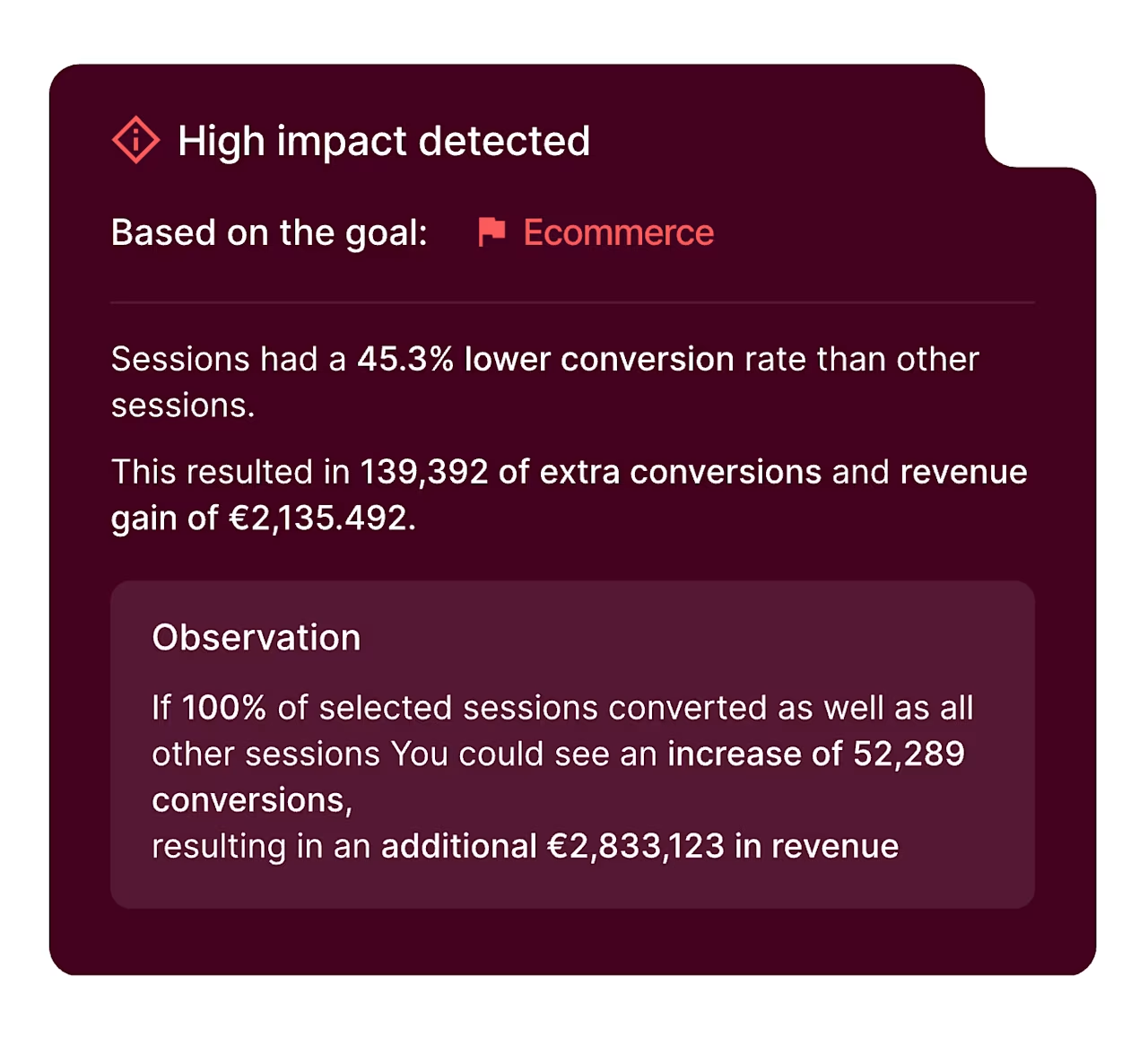
Measuring whether personalization works: personalization is only worth it if it changes outcomes. So you need a clear way to tie each change back to conversion and revenue. With Impact Quantification, you can connect experience and personalization changes directly to conversion and revenue, so you can prove what works. This turns guesswork into a clear picture of return.
Put it into practice
The goal isn't more dashboards but one connected view of each customer that your team can act on quickly. When behavioral signals and CRM records live together, personalization stops being generic and starts feeling personal.
Start with a single goal, unify your data around it, and let real customer behavior guide every experience you create.
FAQs on behavioral analytics and CRM data for perosonalization
Behavioral data records what a customer does in the moment, like clicks and page views. CRM data records who a customer is over time, like contact details and purchase history.

Dana is a copywriting specialist with deep expertise in creating assets like blog posts and landing pages that position organizations as the obvious first choice in their market. She holds a Bachelor of Business Administration in Marketing and has over 10 years of experience helping leading B2B brands drive traffic and increase conversions. Having taught more than 1,000 entrepreneurs the art of persuasive copywriting, Dana brings unique insight into what resonates with audiences and delivers results.

![[Visual] Data connect homepage stock image](http://images.ctfassets.net/gwbpo1m641r7/5U9V0n65sv32f3jWWgZcc7/2b4990d3fc560a6b38f7bd137a078c46/AdobeStock_283571591.jpeg?w=624&q=85&fit=scale&fm=avif)