![[Visual] Man at computer - stock](http://images.ctfassets.net/gwbpo1m641r7/7GloM7xPXUs1M75nfaIWtr/6566092d4d853e43c29d9df2bf791fd1/AdobeStock_540624504__1_.png?w=1280&q=85&fit=scale&fm=avif)
Raw data gets you so far. It tells you what users clicked, where they dropped off, and which pages they visited. What it doesn't tell you is who those users are, what they actually wanted, or what was standing in their way. That's the gap data enrichment is built to close.
Data enrichment tools work by adding context to the information you already have. That might mean appending firmographic data from third-party providers to a B2B lead, layering behavioral signals onto an anonymous session, or connecting user intent to a specific friction point in your funnel. The result is a richer, more complete picture of your customers that makes every downstream decision, from targeting to personalization to product development, more accurate and more effective.
The difference between a team that reacts to data and one that acts on it often comes down to enrichment. When you know not just what happened but who it happened to and why, you stop fixing the wrong things. You start making changes that are grounded in a complete picture of your customers, not a partial one.
This guide covers 9 data enrichment tools that help you do exactly that. Whether you're trying to qualify leads faster, understand your users more deeply, or connect behavioral data to business outcomes, you'll find practical options here that fit different team sizes, use cases, and budgets.
Key insights
Behavioral data tells you what users did. Enrichment tells you who they were, what they wanted, and what got in their way
No single tool covers every enrichment need. The most effective stacks combine a behavioral layer, a feedback layer, and a data unification layer
The right tool depends on the gap, not the feature list. Start with what your current data is missing, not what looks most impressive in a demo
Enrichment is only useful if the context it adds can reach the teams and tools that need to act on it
Best data enrichment tools: at a glance
Use this comparison table to quickly evaluate which tools fit your needs:
Tool | Primary Enrichment Focus | Best For | USP | Pricing |
|---|---|---|---|---|
Contentsquare | Behavioral, feedback, journey & business impact | Digital and product teams of all sizes | The only tool that enriches behavior, sentiment, and revenue impact in one place | Free plan available; enterprise pricing custom |
Amplitude | Lifecycle & retention patterns | Product analytics teams | Predictive behavioral insights via Compass | Free plan available; paid from \~$49/month |
Qualtrics | Feedback + behavior connection | Voice of customer programs | Survey-to-session linking | Custom pricing |
Medallia | Omnichannel feedback context | Enterprise CX management | Journey-moment attribution | Custom pricing |
Twilio Segment | Unified profile enrichment | Real-time personalization | Data enrichment in motion | Free plan; paid from $120/month |
HubSpot | Firmographic + behavioral enrichment | Marketing and sales teams | Breeze Intelligence auto-enrichment | Free CRM; enrichment add-on pricing varies |
ZoomInfo | B2B contact and company data | B2B sales and marketing teams | Intent data combined with technographics | Custom pricing |
Tealium | Real-time data unification | Enterprise data orchestration | Consent-aware enrichment built into the data layer | Custom pricing |
Salesforce Data Cloud | Enterprise data unification | Salesforce ecosystem users | Einstein AI enrichment at scale | Custom pricing |
9 best data enrichment tools to fill the gaps in your customer data
Data enrichment for customer behavior means adding layers of meaning to raw clicks and page views. These tools transform anonymous interactions into insights about user intent, struggles, and value by adding contextual layers to raw behavioral data.
1. Contentsquare
Contentsquare (That's us!👋) is an all-in-one experience intelligence platform that helps teams get more from the data they already collect. By connecting behavior with journey, sentiment, and business context, it turns isolated interactions into a clearer view of the customer experience.
![[Image] Sense Analyst](http://images.ctfassets.net/gwbpo1m641r7/z2Lor2NGf7WOhcuYholfF/c3814a16cd800e7a19b80cdc264351a0/Frame_1948762192.jpg?w=1280&q=85&fit=scale&fm=avif)
🔎 Why you need it: Most tools show you one piece of the puzzle. Contentsquare connects behavioral signals, customer feedback, and revenue impact in one place, so the full picture is visible without stitching data together manually.
📊 How the enrichment works:
Session Replay: records real user sessions and layers in signals like rage clicks and errors, so it’s easier to understand where things started to go wrong
Journey Analysis: maps the paths users take across pages and sessions, with conversion and drop-off data at each step
Impact Quantification: adds revenue context to friction points, making it easier to see which issues have the biggest business impact
Conversation Intelligence: analyzes support conversations across voice, chat, and email to surface sentiment, intent, and common themes alongside behavioral data
Surveys: collects feedback from segmented visitor groups at specific moments in the journey, from exit intent to post-purchase, with responses tied to the behavioral data around them
Smart Capture: automatically captures user interactions without manual tagging, and lets teams apply new event definitions to historical data later on
Segmentation: groups users by behavior, acquisition source, lifecycle stage, or third-party attributes so differences between audiences are easier to spot
Sense: brings behavioral, technical, and sentiment data into one AI-powered view, with plain-language answers that help make sense of what’s happening
💡 Pro tip: use Contentsquare's Impact Quantification tool to enrich that signal with revenue context, so you know exactly what each friction point is costing you. Then, ask Sense which issues are having the biggest financial impact and you get a prioritized list of fixes backed by data, not gut feeling.
![[visual] Prioritize by impact, not guesswork with Contentsquare](http://images.ctfassets.net/gwbpo1m641r7/7whhoI4ffa7LK62tDUBfW8/298f0324037eb90445c38735b424fbd8/Smartlook-alternative-for-ROI.png?w=593&q=85&fit=scale&fm=avif)
Contentsquare's Impact Quantification puts a revenue figure on every friction point, and with Sense, you can ask which ones are costing you the most and get the answer instantly
2. Amplitude
Amplitude is a product analytics platform that enriches behavioral data with user journey context across the full product lifecycle. It connects event streams with cohort analysis, retention patterns, and attribution data to show which behaviors and channels drive outcomes, and flags patterns that wouldn't surface through manual analysis.
🔎 Why you need it: Amplitude makes cohort-level retention patterns visible before they turn into churn problems, something aggregate metrics alone can't do.
📊 How the enrichment works:
Behavioral cohorts: groups users by actions taken, so different segments can be analyzed separately based on how they convert, retain, or churn over time
Funnel and path analysis: traces where users drop off in key flows and which paths lead to the outcomes that matter
Retention analysis: tracks how cohorts return and engage over time, with activation and usage data attached to each step
Compass: Amplitude's machine learning feature that automatically identifies meaningful behavioral patterns and surfaces hidden segments with high retention, without teams having to go looking for them
3. Qualtrics
Qualtrics is an experience management platform that enriches customer feedback by connecting survey responses to digital journey data. It captures voice of customer signals at key moments, then ties responses to behavioral context so feedback becomes more than an opinion or isolated data points in a spreadsheet.
🔎 Why you need it: Qualtrics connects what customers say to what they did right before saying it, making feedback actionable rather than just informative.
📊 How the enrichment works:
Surveys and feedback forms: collects structured feedback at specific touchpoints with responses linked to the behavioral data behind them
Session replay integration: connects survey responses to actual user sessions, so when someone reports confusion in checkout, the recording sits alongside the feedback
NPS® and CSAT tracking: measures satisfaction and loyalty over time with trend data attached to individual responses and behavioral segments
Text and sentiment analysis: processes open-text responses at scale to surface recurring themes and emotional signals, showing how stated experiences align with actual behavior
💡 Pro tip: Contentsquare Surveys is AI powered to generate survey questions based on behavioral patterns already detected in the platform. Instead of writing questions blind, the survey is informed by what the data is already showing, and responses are automatically analyzed for sentiment and linked back to session replays and segments in the same view.
![[Visual] Contentsquare Sense flags shifts in survey sentiment](http://images.ctfassets.net/gwbpo1m641r7/5FqQ3pm2r35AlbJtWUXJQG/a3beb06ef2d3b2358aeacc6fff518a4c/Contentsquare_Sense_flags_shifts_in_survey_sentiment.png?w=512&q=85&fit=scale&fm=avif)
Contentsquare's AI-powered Surveys breaks down survey responses by sentiment over time and across segments, so shifts in how customers feel are visible as they happen_
4. Medallia
Medallia is a customer experience platform that combines feedback signals with operational and behavioral data to build enriched experience profiles. Its strength is connecting every piece of feedback to a specific journey moment, so satisfaction data reflects what actually happened at each step rather than a general impression.
🔎 Why you need it: Medallia ties satisfaction scores to specific journey moments, so the data reflects a real experience rather than a general impression.
📊 How the enrichment works:
Omnichannel feedback capture: collects responses from surveys, support interactions, social media plaforms like LinkedIn, and in-app feedback with each response tied to the surrounding journey context
Journey-level enrichment: links feedback to specific touchpoints across the customer journey, showing where users were and what they did before and after each interaction
Real-time alerts: flags negative sentiment as it emerges so teams can act before individual issues become broader churn signals
Predictive analytics: enriches current feedback with likely future behaviors, identifying which patterns predict churn, upsell opportunities, or referral likelihood based on historical data
💡 Pro tip: Contentsquare Heatmaps enrich page-level data by overlaying behavioral signals directly onto the interface. Every element gets a layer of context, from attention time and click rate to scroll depth, turning a static page into a map of how users actually experience it rather than just what they clicked.
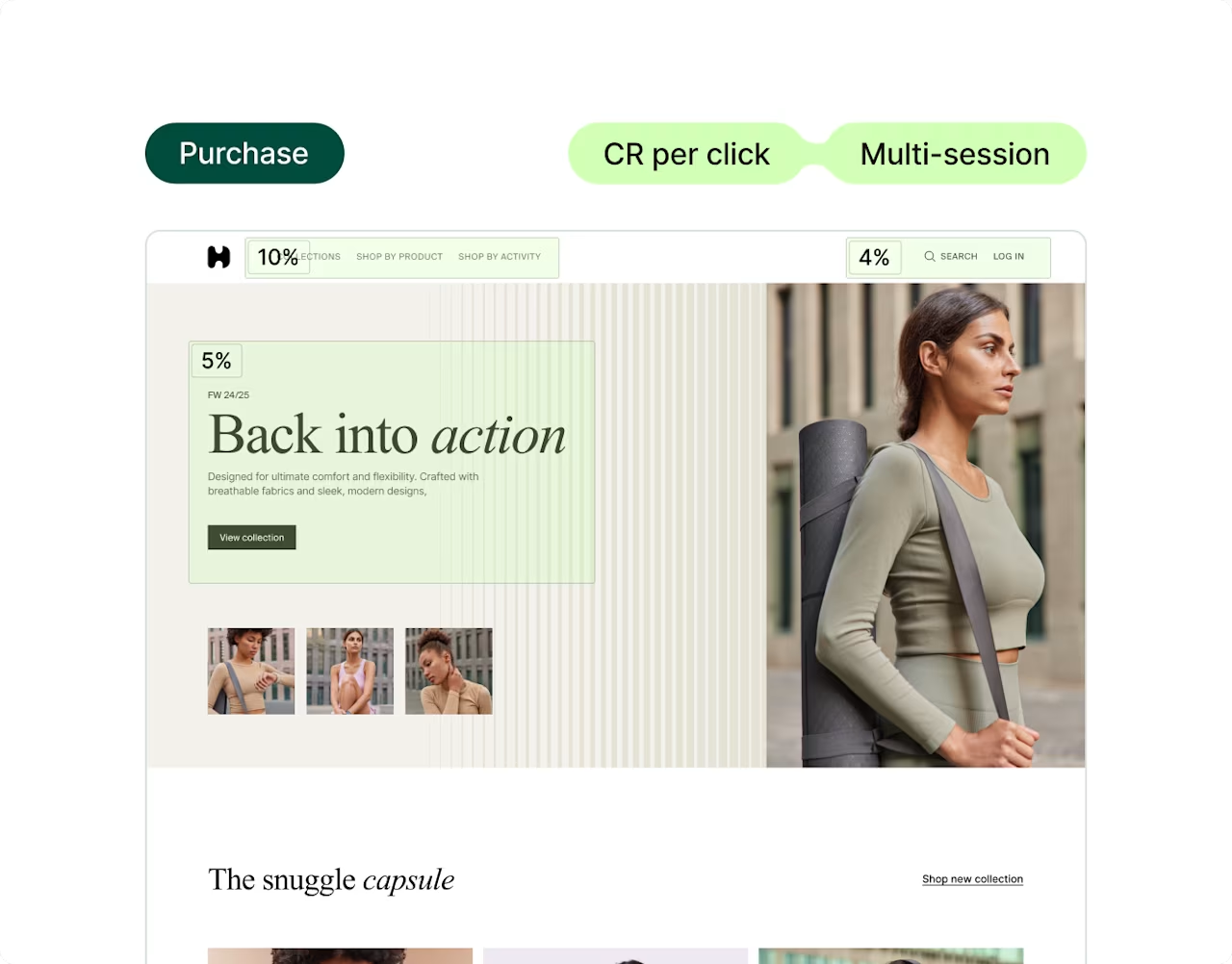
Contentsquare's Zoning Analysis puts conversion rate, click data, and multi-session behavior directly on the page
5. Twilio Segment
Twilio Segment is a customer data platform that collects, unifies, and enriches user profiles with behavioral signals from every touchpoint. Its key advantage is enriching data in motion: as events flow through the platform, user context, computed traits, and audience membership are added automatically before data reaches any downstream tool.
🔎 Why you need it: Segment unifies customer data across tools in real time, making enrichment actually usable by every downstream platform that needs it.
📊 How the enrichment works:
Event tracking: captures interactions across web, mobile, and server-side sources via API and standardizes them into a consistent, structured format
Identity resolution: stitches together anonymous and known user data to build unified profiles across devices and sessions
Computed traits and audiences: enriches profiles continuously as new behavioral and third-party data comes in, triggering personalization or automated workflows in real time
Protocols: validates tracking implementations as events are collected, adding consistent context to every interaction and eliminating data quality issues before they reach downstream tools
💡 Pro tip: use Contentsquare's Data Connect tool to sync enriched behavioral segments, like users who rage-clicked or abandoned a form, directly to marketing automation platforms. Behavioral enrichment becomes actionable downstream without any manual export or engineering work.
![[Visual] Data connect](http://images.ctfassets.net/gwbpo1m641r7/X4CmbptUDL2kLylidBMQ3/0512684e409a1412e9843ea82cf6ce68/Data-connect.png?w=1280&q=85&fit=scale&fm=avif)
Contentsquare's Data Connect sends behavioral data directly to data warehouses so enriched signals are available for deeper analysis wherever the team already works
6. HubSpot
HubSpot combines CRM, marketing, and data enrichment in one platform. Its enrichment capabilities, powered by Breeze Intelligence (formerly Clearbit), automatically append firmographic, demographic, and behavioral data to contact and company records, giving teams a richer picture of who they're working with without manual research.
🔎 Why you need it: HubSpot automatically fills in the firmographic and behavioral gaps in contact records, removing the bottleneck that slows sales and marketing teams down.
📊 How the enrichment works:
Breeze Intelligence enrichment: pulls company size, industry, revenue, tech stack, and other firmographic data into contact records automatically, keeping profiles accurate as companies evolve
Behavioral tracking: logs website visits, email interactions, and content engagement against individual contacts to build a complete picture of how each person has engaged over time
Unified customer view: combines enriched company data with interaction history so sales, marketing, and support teams work from the same up-to-date record
Lead scoring: enriches contact records with scores based on behavioral signals and firmographic fit, helping prioritize outreach based on data rather than instinct
7. ZoomInfo
ZoomInfo is a B2B intelligence platform that enriches contact and company data with intent signals, technographic information, and organizational data. It's built for teams that need to go beyond behavioral data and embrace comprehensive B2B data enrichment to understand who their prospects and customers actually are at a company level.
🔎 Why you need it: ZoomInfo closes the gap behavioral data leaves open, particularly for sales teams that need to know who they're reaching before they make contact.
📊 How the enrichment works:
Firmographic enrichment: appends company size, industry, revenue, tech stack, and headcount data to existing records automatically and keeps them updated over time
Intent data: identifies accounts showing buying signals based on third-party research behavior and content consumption, adding a predictive layer on top of contact data
Technographic data: enriches company profiles with the tools and platforms they use, helping teams assess fit and tailor outreach more accurately
Contact data accuracy: continuously verifies and updates contact information, such as phone numbers, across the database, reducing noise from outdated or incomplete records
8. Tealium
Tealium is a customer data platform that collects, unifies, and enriches data in real time across sources and channels. It sits between data collection and activation, standardizing how data is gathered and ensuring enriched customer profiles stay consistent across every tool in the stack.
🔎 Why you need it: Tealium standardizes how enriched data flows across the stack, so every tool receives consistent, up-to-date profiles rather than fragmented snapshots.
📊 How the enrichment works:
Real-time data collection: captures events from web, mobile, and connected devices and standardizes them into a consistent format as they're collected
Audience enrichment: builds and continuously updates customer profiles as new behavioral and third-party data comes in, without waiting for batch updates
Data orchestration: routes enriched profiles to any downstream tool without custom development, keeping every platform working from the same data
Consent and privacy management: tracks user consent across channels and applies it to data collection and enrichment automatically, keeping compliance built into the data layer
💡 Pro tip: Contentsquare's bi-directional integration with Tealium means behavioral data flows both ways.
Import Tealium audience segments into Contentsquare for deeper behavioral analysis, or push Contentsquare's on-site signals back into Tealium to enrich visitor profiles across the stack. See all Contentsquare integrations.
![[Screenshot] CSQ & Tealium](http://images.ctfassets.net/gwbpo1m641r7/8C4GwwMwCWVNhXS08B8EG/118238d67d89088adda7711f3a908096/CSQ___Tealium.png?w=846&q=85&fit=scale&fm=avif)
Tealium audience segments imported directly into Contentsquare, so behavioral analysis can be filtered by the audience data already living in the customer data platform
9. Salesforce Data Cloud
Salesforce Data Cloud is an enterprise customer data platform that unifies and enriches customer data across every Salesforce product and external source. It builds a single, continuously updated profile for every customer by bringing together behavioral, transactional, and third-party data at scale.
🔎 Why you need it: Salesforce Data Cloud brings together customer data scattered across enterprise systems into a single profile every team can actually work from.
📊 How the enrichment works:
Unified customer profiles: consolidates data from every touchpoint, system, and channel into a single record that updates in real time as new signals come in
Data harmonization: standardizes data from disparate data sources into a consistent format, making cross-system enrichment possible without custom engineering
AI-powered enrichment: uses Einstein AI to append predictive scores, propensity models, and recommended actions to customer profiles automatically
Activation across the Salesforce ecosystem: routes enriched profiles directly into Sales Cloud, Marketing Cloud, Service Cloud, and Commerce Cloud so every team works from the same enriched data
How to choose the best data enrichment tool for your business
Having gone through the tools above, the question isn't which one is best in isolation. It's which one fills the most important gap in what your team currently knows about your customers. Here's what to consider before committing:
Start with the gap, not the feature list: identify what your existing data is missing. If behavioral data is strong but customer identity is thin, a firmographic or B2B intelligence tool makes sense. If feedback is collected but disconnected from behavior, a voice of customer platform closes that gap. If data is siloed across platforms, a customer data platform (CDP) is the more pressing fix.
Consider where enrichment needs to happen: some tools enrich data at the point of collection, others enrich it in the warehouse, and others do it in motion as profiles are built. The right choice depends on where in the stack the enrichment needs to happen for it to actually be useful.
Check what's already in the stack: the best enrichment tool is often the one that integrates cleanly with what's already there. A tool that enriches data but can't pass it to the CRM, analytics platform, or activation tool of choice creates a new silo rather than closing one.
Match the tool to the team that will use it: a technically sophisticated data team has different needs from a marketing or product team working without engineering support. Tools like Contentsquare are built for teams that need to move fast without writing code. Others require more technical resources to get full value.
Think about scale: some tools are priced and designed for high-volume enterprise use cases. Others work well at smaller scale but hit limits as data volume grows. Factor in where the business is heading, not just where it is today.
No single tool covers every enrichment need. The best stacks tend to combine a behavioral layer, a feedback or qualitative layer, and a data unification layer, each one making the others more useful.
💡 Pro tip: before adding a new enrichment tool, run a quick audit of what data is already being collected but not acted on. Contentsquare's free plan is a good starting point for understanding what behavioral signals are missing from existing analytics without a major commitment.
Better data doesn't always mean more data
The teams that get the most out of data enrichment aren't the ones collecting the most signals. They're the ones adding the right context to the signals they already have. Start with one gap, one tool, and one clear question you want to answer. Once that's working, build from there. Data enrichment isn't a one-time project. It's an ongoing process of making what you know about your customers more complete, ensuring you have accurate data, and making it more useful over time.
FAQs about data enrichment tools
Enriching anonymous cart abandonment sessions with user identity and friction signals enables targeted re-engagement. When a user abandons after encountering a payment error, enriched data triggers a personalized email with alternative payment options and typically lifts conversion by 15-20%.