![[Visual] [Guide] [Marketers] Homepage](http://images.ctfassets.net/gwbpo1m641r7/5dXddCMKuc2ZVKtKd1GdXY/0aadaf6a61ca9814fb9f6e468d33b407/pexels-mutecevvil-16992818.jpg?w=3840&q=100&fit=fill&fm=avif)
Think about the top marketers you know: they make essential tasks look easy, from crafting campaigns and optimizing channels to elevating the user journey. They seem to have magic powers to make a business grow.
Their secret weapon? Data. Great marketers use data to delve into their users' pain points, expectations, and desires, and understand how to package a product in a way that speaks to these.
All you need to join the ranks of great marketers is the commitment to build the habits and hone the skills they possess—key amongst these is the ability to use data to understand your users.
Read on for an overview of the vital processes and tools you’ll need to become a well-rounded marketer who advocates for your users while generating growth for your business. Then, dive into the other chapters in this guide for a more comprehensive understanding of some of the key themes discussed.
What does a marketer do?
The answer to the question “What does a marketer do?” depends on what type of marketer we’re talking about. Marketing has become increasingly specialized, so there’s no single answer to this question. Aside from the familiar social media and content marketing roles, a midsize software-as-a-service (SaaS) company may hire
A product marketer to handle product-lead marketing initiatives
A performance marketer to look after ads and affiliates
A growth marketer to run experiments that aim to scale up the business, crossing most sub-disciplines of marketing
Yet, no matter the role or function, marketers are marketers because of a set of skills, customs, and duties they share. Here are 5 must-have habits of great marketers.
1. Clearly communicate value to target customers
Of course, you’re tasked to deliver tangible business results, like boosting your revenue and generating return on investment (ROI). But as a marketer, you must also focus on leaving a positive impact on your customers.
Before this happens, it’s critical to convey your value proposition to your prospects. A value proposition is a unique reason that compels people to buy your product. At the same time, it reminds your business to make decisions that align with its promise.
2. Understand why people behave the way they do
A truly data-informed or data-driven marketing team goes beyond reporting the numbers for reporting’s sake. Instead, its team members dig for insights revealing how customers feel about their content, product, or campaign. This enables them to build their strategy around users’ needs.
For example, a marketer might A/B test variations of your landing page to see which performs better, and then use an experience intelligence platform like Contentsquare, which features tools like Heatmaps and Session Replay, to know why visitors click the call-to-action (CTA) button in the winning variation—and why they don’t in the losing one.

With Contentsquare, marketers can watch session replays—video-style playbacks of users’ cursor movements—of the pages they’re testing
3. Support customers during major changes
What do launching a new product, expanding your market, and pivoting to a different industry have in common? They all mean ‘change’ to your customers. Great marketers smooth transitions for their customers to ensure they adapt well and prevent churn.
For example, during the pandemic retail apocalypse, the British department store Harrods focused its attention on its online store, working to ensure customers would receive the same standard of excellence there as they did in its legendary brick-and-mortar store.
Their marketers used Contentsquare’s Error Analysis tool to catch multiple errors with their checkout process that were frustrating customers—and liaised with their colleagues to fix them. By observing where users were getting stuck, Harrods’ marketing team eased the transition to becoming an online-first shopping experience. Ultimately, they decreased their sites’ rage clicks by 50%.
![[Visual] Error analysis](http://images.ctfassets.net/gwbpo1m641r7/6ELBPV051gA5ePLDZOiFEG/8352c504a71e140b84d4b0587b2c446c/eyJwYXRoIjoiY29udGVudHNxdWFyZVwvZmlsZVwvZHVGZlF4bWVzMjU0WGhkNXExOXcucG5nIn0_contentsquare_-5dJe5Xqp6vEwH1Gl8wqmZQXmHHT4auNG_.png?w=3840&q=100&fit=fill&fm=avif)
Contentsquare’s Error Analysis allows you to see the impact of any errors on your site—so you can fix them before they damage the user experience further
4. Identify and connect with a specific audience
Remember, qualitative data complements quantitative data to uncover user needs. Great marketers supplement their quantitative analytics tools with voice-of-the-customer tools—for example, by running on-site surveys and conducting customer interviews. This offers a more rounded understanding of what kinds of marketing messages and approaches will resonate with users.
With these insights, great marketers create buyer personas and tailor their communications accordingly. Personalization—either manually or through AI—should occur at every level, including website design, blog pieces, social media posts, and advertising copy.
5. Master the art and science of marketing
Good marketers know how to dot the ‘i’s and cross the ‘t’s. But as all great marketers know, sometimes, you need to forget what you've learned, break the rules (which may no longer exist a decade after you studied them in school), and make new ones.
For example, you might consider replacing your positive messaging with something rooted in the Pratfall Effect. Phill Agnew, Founder and Host of Nudge, the United Kingdom’s most popular marketing podcast, describes this as:
The tendency for one’s likeability (especially that of competent people) to increase when they show imperfection, such as a smart yet clumsy quiz participant spilling coffee on themself.
Check out Phill's own experiment in applying behavioral science or psychographics in marketing to the promotions of his podcast. In this case, he also tapped into his creativity to craft engaging copy that piqued people's curiosity.
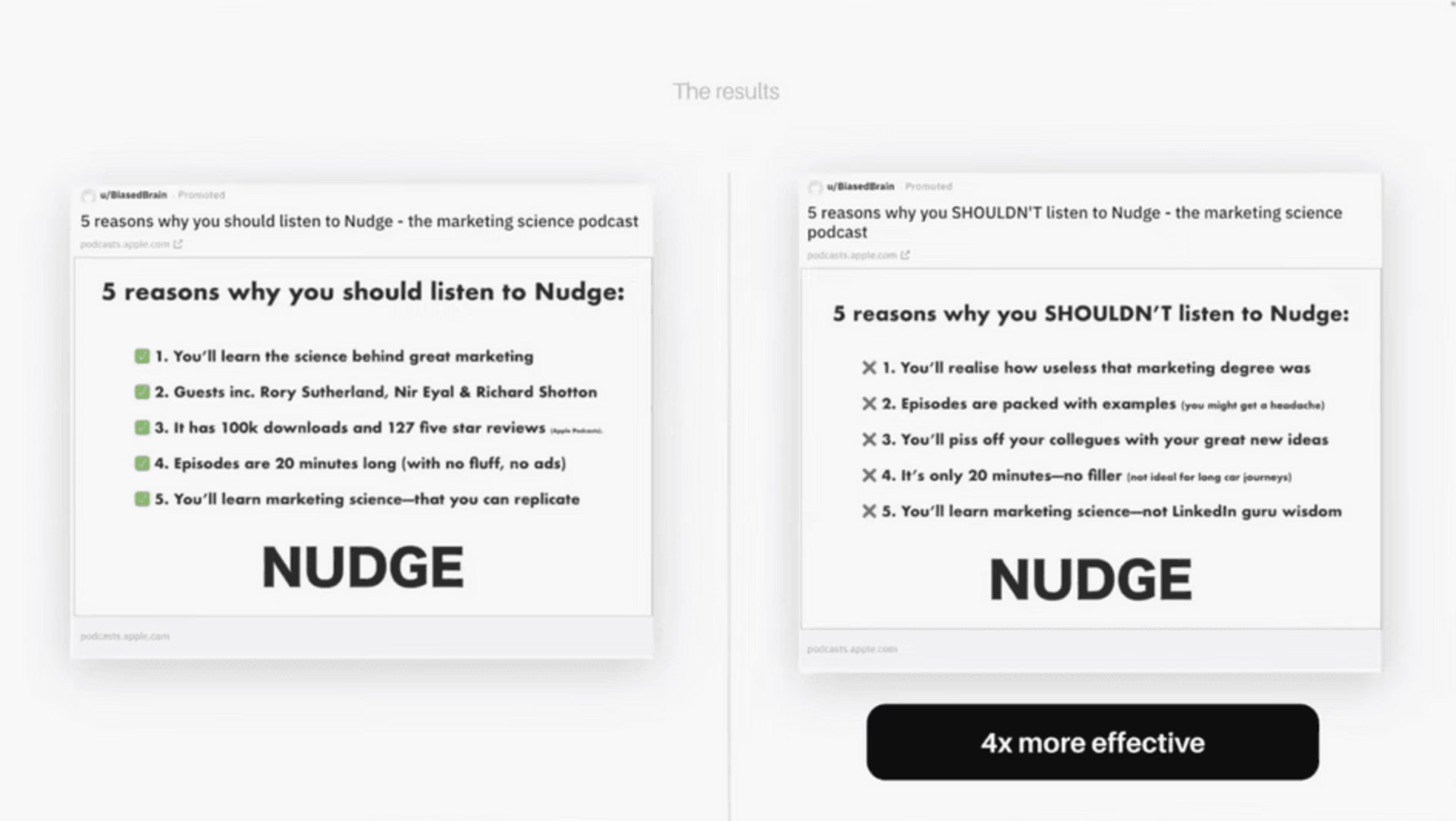
Phill created Reddit ads, one containing positive messaging and the other applying the Pratfall Effect—even without the visual cue, we’re sure you could guess which performed better.
What makes a great marketer? 4 must-have skills and a process tweak
As we said, great marketers are fearless in pushing the limits and trying new things. So, while a typical marketer's workflow consists of:
Planning → launching → reporting → optimizing
…the best marketers tweak things to achieve phenomenal results. As such, the steps now occur as follows:
Optimizing → reporting → fixing things → planning
This guide follows the modified order, with a chapter on each step. Here’s an overview.
1. Optimize and enhance marketing efforts
Skip the struggle of starting from scratch and optimize your existing marketing efforts. Figure out what already works and improve on it. For example, try the following to bolster your search engine rankings of any long-form content pages that are designed to bring traffic to your site via SEO:
Track page rankings with Ahrefs or Semrush, filtering pages that rank in positions 3 to 10 to spot opportunities
Enhance content with Clearscope reports to meet search intent
Use Contentsquare Heatmaps to see how users engage with your page and pinpoint any issues
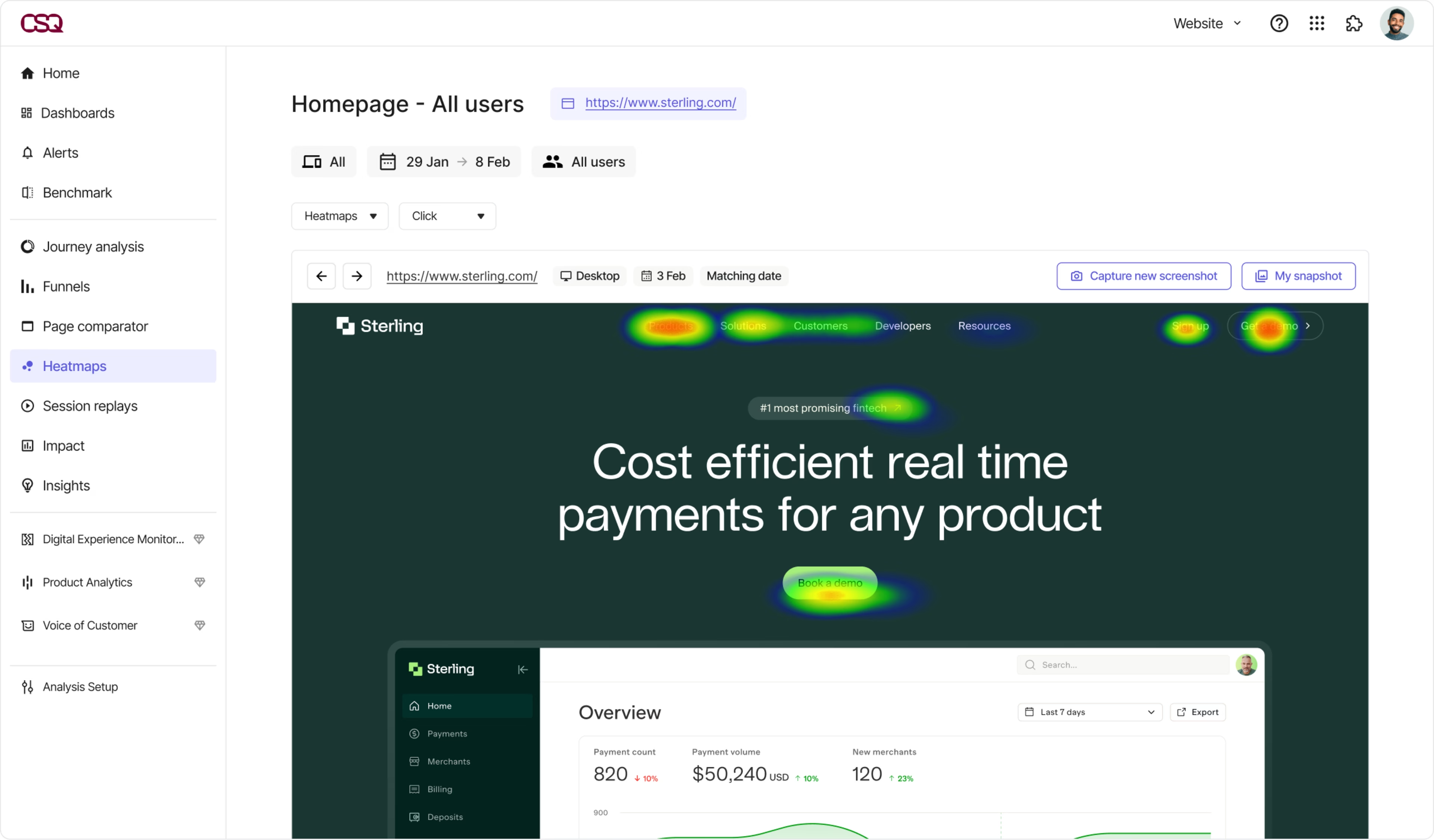
Use Contentsquare's heatmaps to visualize where users clicked, tapped, hovered, scrolled, or experienced frustration on any page
2. Create insightful reports and offer recommendations
A large part of any marketer’s job is helping the rest of the company understand how your initiatives are impacting the business—and why you’re making the marketing decisions you are.
Create marketing reports for your important stakeholders at regular intervals. To do this, use an analytics tool like Contentsquare Dashboards or Google Analytics to measure key metrics such as conversions, traffic, bounce rates, and customer lifetime value.
Then, add some data visualizations to your report to make your quantitative metrics more digestible. For example, Contentsquare’s Journey Analysis tool makes it easy to visualize which pages users pass through on their way to becoming customers.
Including an image from this tool in your marketing report will help your stakeholders understand the touchpoints users go through on their journey to conversion—and explain why you intend to focus your marketing efforts on these pages.

Journey Analysis visualizes your important customer flows, offering more context for the numbers in your marketing report
3. Spot and fix site issues
Bugs or errors in newly rolled-out features cause friction in the user experience. Though other teams should also look out for bugs, it’s part of a marketer’s duties to identify any site issues that need fixing. To stay on top of things, combine quantitative and qualitative data analysis using reliable software and platforms.
Gather the relevant numeric data on the size and reach of an error using tools like Mixpanel or Contentsquare’s Error Analysis
Find out the story behind the numbers with Contentsquare tools and features: watch session replays and view heatmaps to see where users drop off and why
Keep your teammates in the loop about any issues via collaboration and communication apps like Slack and Google Teams
4. Plan and outline new activities
Last but not least, learn how to conduct user research to plan your next great marketing initiative—and unlock new avenues of growth.
Google Keyword Planner and tools like Ahrefs and Semrush help with keyword research. But the real gold is in directly connecting with your audience through user feedback tools. For example:
Contentsquare Surveys capability allows you to set up surveys on your important pages and send them as links via email in seconds. You can target which user demographics they appear to, so the results are as useful as possible.
Contentsquare’s Interviews tool makes it easier to meet your users one-on-one to discuss your product. Use it to learn how users talk about your product and the pain points it addresses, then use this as inspiration for your marketing campaigns.
Including the customer's voice in your marketing planning not only illuminates how your marketing efforts influence UX but also enables more strategic planning.

Contentsquare’s Interviews makes it easy to turn conversations into actionable insights—it even automatically transcribes everything that was said in interviews
Be a data-driven, user-centric marketer
Becoming a marketing leader goes beyond mastering tools and tactics—it’s about putting the customer at the heart of everything. This comprehensive guide equips you with the habits, skills, and steps to become a full-fledged, customer-centric marketing wizard.
Leverage performance and behavioral data to optimize, report, fix issues, and plan marketing efforts anew. With this foundation, you're ready to create meaningful campaigns that nurture business-to-customer relationships.
FAQs on Marketers
Do you aspire to become a great marketer? Here are 5 habits to start cultivating today:
Clearly communicate your product’s value to customers
Understand the real reasons behind people’s actions
Support your customers during changes
Identify and connect with a specific audience
Combine the science of marketing with artful insights, to create memorable products, content, and campaigns
![[Visual] Contentsquare's Content Team](http://images.ctfassets.net/gwbpo1m641r7/3IVEUbRzFIoC9mf5EJ2qHY/f25ccd2131dfd63f5c63b5b92cc4ba20/Copy_of_Copy_of_BLOG-icp-8117438.jpeg?w=1920&q=100&fit=fill&fm=avif)
![[Visual] Stock image - credit card and computer](http://images.ctfassets.net/gwbpo1m641r7/fgRWLFtpeolNYGfjX1koC/876abf3db7c48c7c70abece4f584a49c/AdobeStock_879526171.png?w=1920&q=100&fit=fill&fm=avif)
![Visual - [Product-led growth] Marketing](http://images.ctfassets.net/gwbpo1m641r7/5zYNbRFzmJQd3XhmHHt137/f6ffebb187a70cf5ea0e876247aae0b2/5961638.jpg?w=1920&q=100&fit=fill&fm=avif)