![[Visual] stock woman with 2 computer screens](http://images.ctfassets.net/gwbpo1m641r7/6vPvGMnUXFrEYOQUzrQhiW/43c9f93a0d1772ff652e6e427ce1af2c/AdobeStock_899206281.png?w=3840&q=100&fit=fill&fm=avif)
This brings us to the critical importance of conversion rate optimization (CRO). For years, CRO has been a game of manual hypothesis, endless spreadsheet analysis, and hoping that a button color change might move the needle. But that era is ending.
We are witnessing a convergence of data analytics and artificial intelligence that is fundamentally changing how we optimize digital experiences. AI is not just a buzzword here; it is the engine that turns raw data into actionable strategy, allowing teams to move from "what happened?" to "what should we do next?" in seconds. This shift is especially visible in AI conversion rate optimization, where teams can streamline discovery, prioritize fixes, and test smarter faster.
Here is how AI is revolutionizing CRO, and how you can leverage it to turn visitors into loyal customers.
What is conversion rate optimization (CRO)?
Before we dive into the technology, let’s ground ourselves in the goal. CRO is the practice of increasing the percentage of users who perform a desired action on a website or app. These actions vary: purchasing a product, signing up for a demo, or downloading a guide but the objective remains the same: maximizing the value of every visit. For e-commerce teams in particular, even small improvements to checkout completion or product discovery can translate into significant revenue.
However, a purely numerical approach to CRO often fails. Looking at spreadsheets full of data points detaches you from the human behind the screen. A truly holistic, successful CRO strategy puts people front and center by trying to understand user behavior, what drives, stops, and persuades people to convert, and how each micro-moment of the user journey influences outcomes ultimately enabling higher conversion rates without compromising trust or usability.
This is where the challenge lies. Understanding human behavior at scale has historically required massive manual effort. This is exactly where AI enters the picture.
The convergence: where AI meets human insight
Artificial intelligence in marketing isn’t about replacing the human element; it’s about empowering it. Think of AI as the ultimate assistant—always present, processing vast amounts of data, and surfacing the insights you didn’t know you needed.
In the context of CRO, AI solves the problem of "analysis paralysis." Modern digital teams are drowning in data —click rates, bounce rates, session replays, and heatmaps. AI cuts through the noise. It connects the data dots, processing huge amounts of information across analytics tools and devices to give you a complete picture and actionable insights you can actually use for better decision-making.
By integrating AI into your CRO strategy, you aren't just automating tasks; you are augmenting your ability to empathize with your customers at scale. That’s the promise at the heart of ai conversion rate optimization: faster clarity, better prioritization, and more confident decisions.
5 key ways AI is revolutionizing CRO
The integration of AI into digital experience platforms is transforming five specific pillars of optimization.
1. Advanced data analysis and speed to insight
The traditional workflow for finding conversion blockers often looks like this: you notice a drop in conversion, you dig through dashboards, you segment traffic, and you spend hours hunting for the root cause.
AI flips this workflow. With tools like Sense (Contentsquare’s AI agent), understanding your customer’s digital experience becomes as simple as asking a question. You can ask, "Why is my conversion rate dropping this week?" or "What is the most important journey for mobile users?" and the AI translates natural language into the right events and analysis to answer you.
![[visual] Stop optimizing like it’s 1999: let Sense do the hard work for you](http://images.ctfassets.net/gwbpo1m641r7/42kBupuyNzRbz94S0WkZFa/a9f6808ef5786bbeeff7636895a54bb6/Smartlook-competitor-with-AI.png?w=1200&q=100&fit=fill&fm=avif)
This democratizes data access. You no longer need to be a data scientist to find answers. AI takes the guesswork out of analysis, building funnels and identifying correlations in minutes rather than days. This speed allows teams to pivot strategies in real-time, rather than waiting for end-of-month reports an advantage that matters whether you’re optimizing an e-commerce checkout flow or a lead-gen landing page.
In practice, modern AI conversion rate optimization blends behavioral data with machine learning and machine learning algorithms so ai analyzes large volumes of sessions, identifies drop-off risks, and surfaces behavior patterns that point to what’s most likely to increase conversions.
This is one of the most valuable typical uses of AI in CRO: turning raw signals from CRO tools into prioritized opportunities the whole business can act on.
2. Automated A/B testing and hypothesis generation
A/B testing is the backbone of CRO, but it comes with a dirty secret: many tests fail because the initial hypothesis was weak.
AI helps you generate stronger hypotheses by analyzing behavior before you even design a test. For example, by analyzing zone-based heatmaps, AI can identify elements that have high exposure but low attractiveness (users see them, but don't click), signaling a prime candidate for optimization often a misaligned CTA.
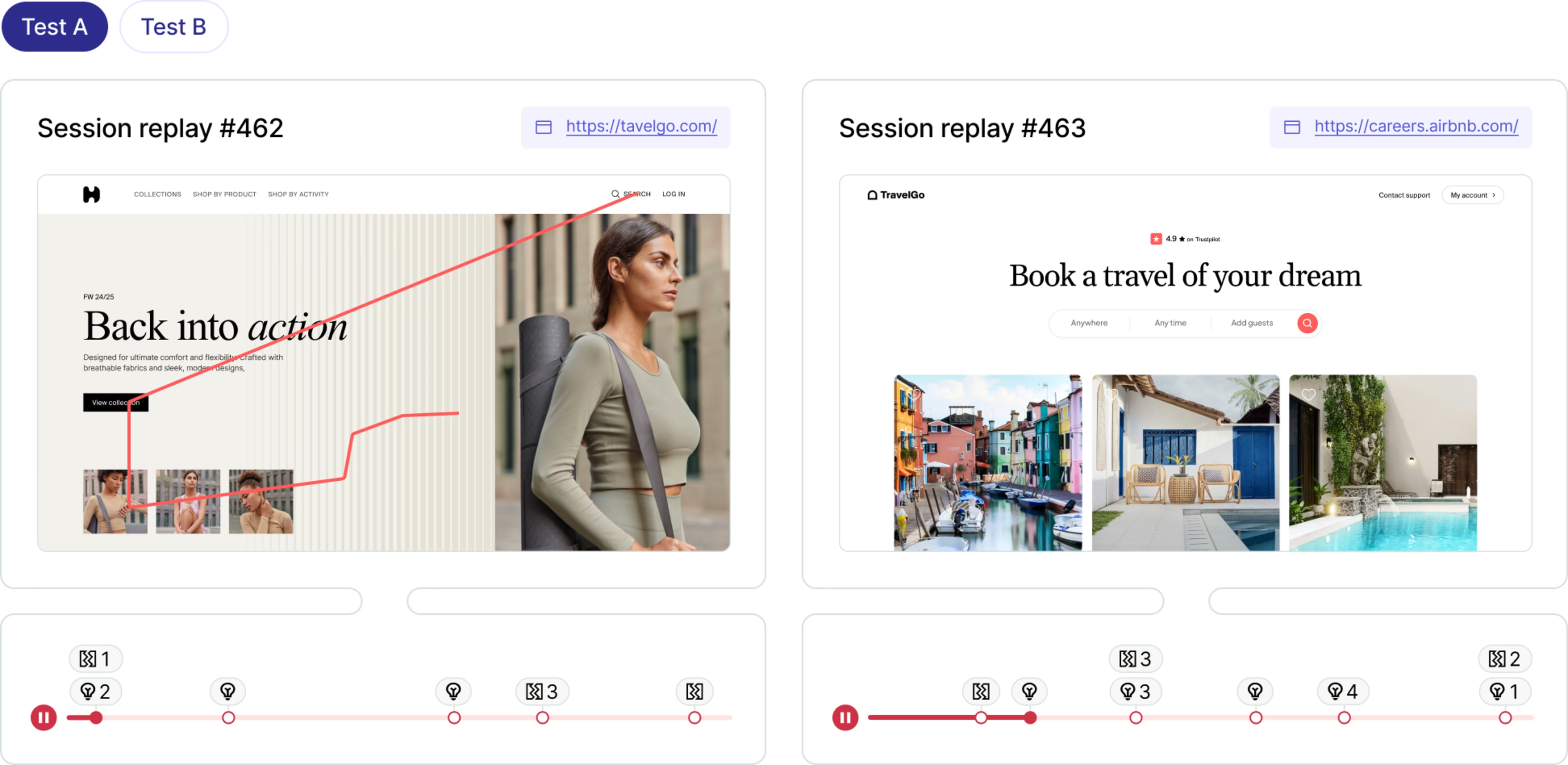
Furthermore, AI can help you understand why a test won or lost. Instead of just knowing "Variant B performed better," AI-driven session replay summaries can reveal that users in Variant B found the navigation more intuitive, while those in Variant A displayed "rage clicks" on a confusing button. This turns a simple A/B test into a learning engine for future designs and iterating on the details that boost conversion rates.
These are some typical uses of AI in experimentation: generating test ideas grounded in behavior, prioritizing tests by potential impact, and shortening the learning cycle so you can fine-tune experiences repeatedly—not once per quarter. It also helps teams validate whether new CTAs are being noticed, understood, and acted on across the user journey.
3. Enhanced user experience (UX) and friction hunting
Friction is the enemy of conversion. In 2023, frustration factors like rage clicks and slow page loads appeared in 40% of sessions. Identifying these friction points manually involves watching thousands of session recordings an impossible task.
AI revolutionizes this through automated friction detection powered by smarter algorithms.
Session replays: Instead of watching hours of video, AI generates concise text summaries of session replays, highlighting key behaviors, user frustrations, and journey details. It allows you to scan for issues like "User repeatedly clicked checkout button with no response" without hitting play.
![[Asset] Session replay summaries](http://images.ctfassets.net/gwbpo1m641r7/37Slb23dAdFsAgNItuUNPc/5ad533ecdc801e082aeef8bfaca324ce/sessionreplaysummary.webp?w=3840&q=100&fit=fill&fm=avif)
Error analysis: AI groups technical errors (like JavaScript crashes) and quantifies their impact on revenue. It can tell you, "This specific error on the checkout page is costing you $50k a week," helping you prioritize fixes based on business impact rather than just technical severity.
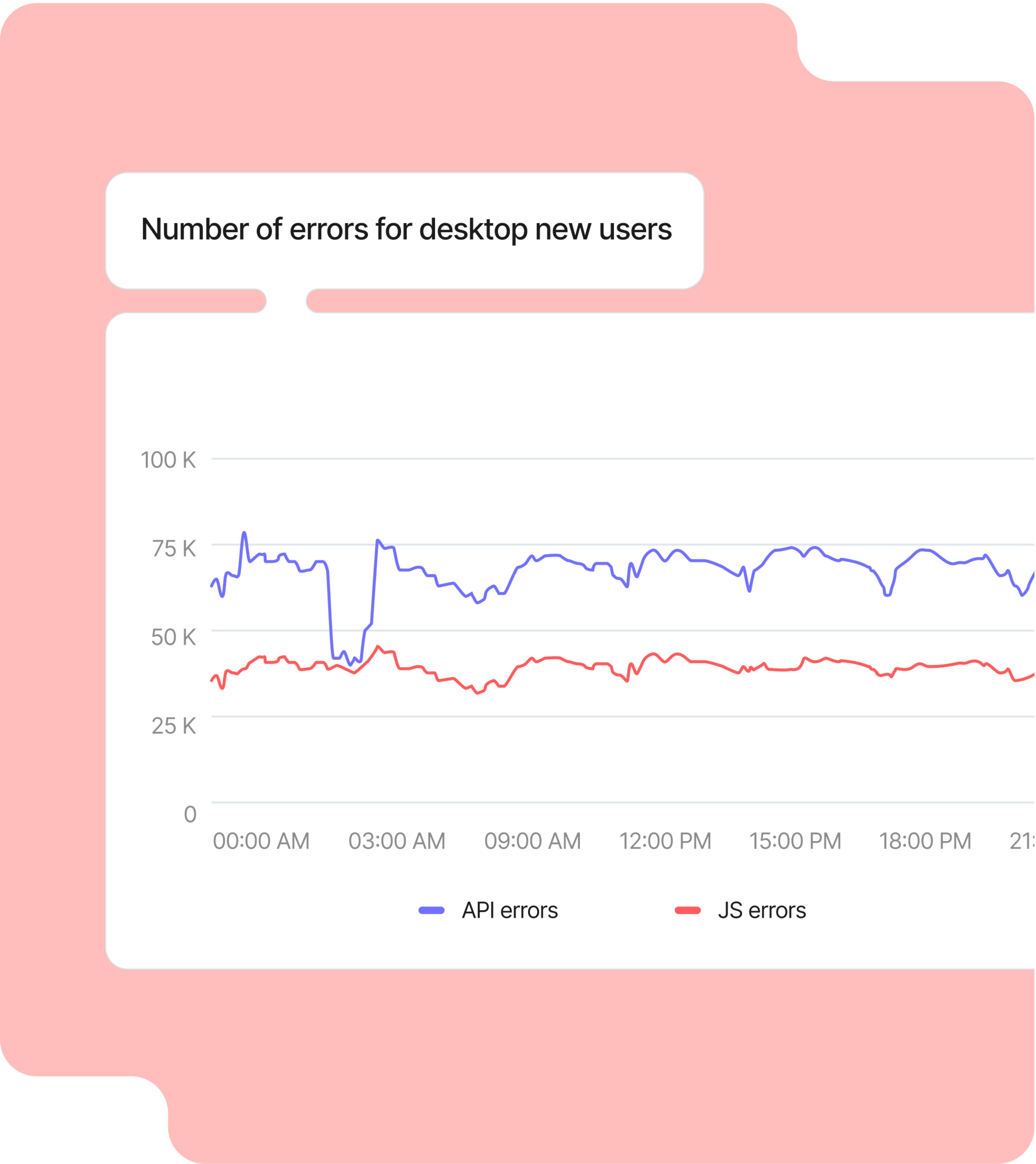
For e-commerce, this is especially powerful: friction often hides in places that look “fine” in a standard report like a promo-code field that derails checkout, or a shipping selector that fails silently on mobile. Removing these blockers is a direct path to higher conversion rates, and it gives your CRO efforts a clearer, faster route to impact.
This is another one of the typical uses of modern AI-driven CRO: letting AI scan at scale for frustration signals so teams can focus on fixes that drive conversions.
4. Improved copywriting and content relevance
Content is how we communicate value, but knowing what resonates is difficult. AI is reshaping this through sentiment analysis.
When collecting Voice of Customer (VoC) feedback via surveys, analyzing thousands of open-text responses is daunting. AI features can now automatically tag text answers as positive, neutral, or negative. It can also group responses by topic, such as "Pricing," "Bug," or "UX", allowing you to instantly see that 30% of your negative feedback relates to a specific confusing headline.
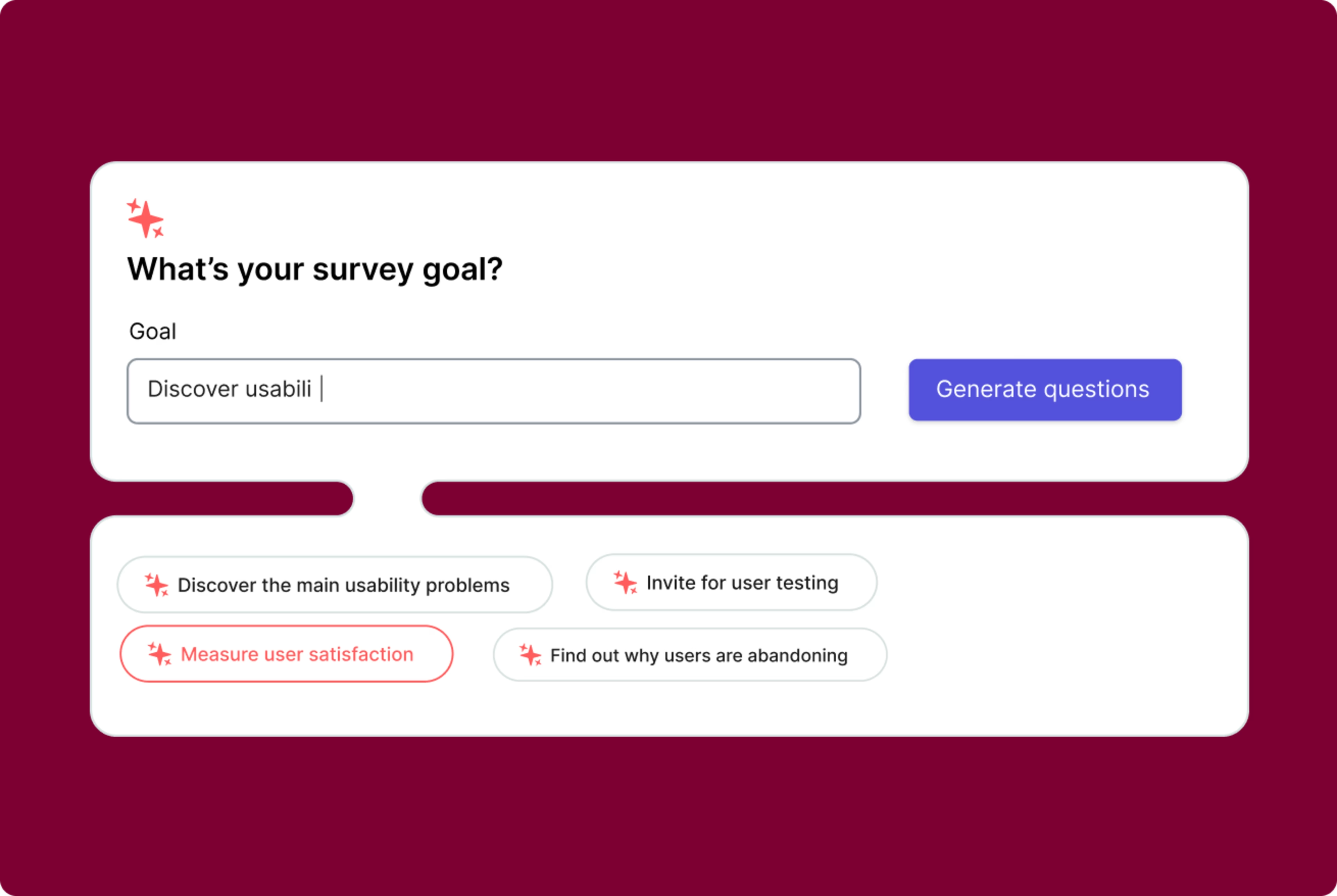
This insight allows copywriters to adjust messaging to directly address user concerns. If AI analysis reveals users are anxious about shipping costs on the product page, you can A/B test copy that clarifies free shipping thresholds earlier in the journey. It can also support product recommendations strategies by identifying which messages reduce decision anxiety especially on a high-intent landing page where clarity and relevance determine whether users proceed.
At its best, AI enables personalized content and personalized experiences that match intent: different value propositions for different demographics, and different CTAs for different contexts helping marketing teams and product teams increase conversions without adding noise.
These are typical uses of AI for content: summarizing open-text feedback, spotting themes at scale, and helping teams fine-tune messaging based on real customer language.
5. Proactive anomaly detection
Traditional analytics is reactive: you look at what happened yesterday. AI enables predictive alerting powered by predictive analytics.
AI-driven alerts monitor your metrics 24/7, learning your site's unique seasonality and growth trends. If your conversion rate dips unexpectedly on a Tuesday afternoon, the AI detects the anomaly immediately filtering out normal noise—and notifies you.
This is crucial for high-stakes periods like Black Friday or a product launch. AI alerts can calculate anticipated values for upcoming data points and trigger notifications only when real values deviate significantly. In other words, predictive analytics can help you forecast risk before it becomes a revenue problem so teams can respond to silent conversion killers (like a broken API on the payment gateway) before they drain the day's revenue.
![[Visual] API Error](http://images.ctfassets.net/gwbpo1m641r7/4fpTzbSPxtQvud8Fy3lRVR/8671529d1e6dcbddfe68f779b8dffbc2/Screenshot_2024-11-04_at_22.18.53.png?w=3840&q=100&fit=fill&fm=avif)
This proactive layer is a major leap forward for AI conversion rate optimization, because it shifts teams from “investigate later” to “fix now,” and can materially boost conversion rates during critical revenue windows.
Practical applications of AI in your CRO strategy
How do you move from theory to practice? Here is a step-by-step framework for integrating AI into your workflow.
Step 1: Data collection and integration
AI is only as good as the data it feeds on. You need a comprehensive view of the customer journey. This means integrating quantitative data (what they did) with qualitative data (what they said).
⚡️ Action: ensure your analytics platform captures "in-between" behaviors—swipes, hovers, and scrolls not just clicks. Use integrations to combine your behavioral data with voice of customer (VoC) feedback to give the AI a 360-degree view, especially if you’re running multiple marketing strategies across channels that land users on different entry points.
Step 2: AI-powered analysis and hypotheses generation
Don't start with a solution; start with a question.
⚡️ Action: use conversational AI tools like chat with sense. Ask, "Where are my users dropping off in the checkout funnel?" The AI will visualize the drop-off points. Then, use impact quantification to see how much revenue that drop-off is costing you and turn that into actionable insights for what to fix first.
⚡️ Action: use AI-generated surveys to ask users on those specific drop-off pages why they are leaving. Tools like the AI survey generator can build the questions for you based on your goal (e.g., "Find out why users are abandoning").
This is one of the most valuable typical uses of AI conversion rate optimization: quickly converting messy behavioral signals from CRO tools into clear hypotheses your team can test, and making cross-team decision-making easier.
Step 3: Experimentation and testing
Once AI has identified a high-value opportunity (e.g., "High friction on the mobile checkout form"), generate a hypothesis.
⚡️ Action: if the data shows users are refilling form fields often (a metric tracked in form analysis), your hypothesis might be "Simplifying the address field labels will reduce error rates." Run the A/B test.
For e-commerce teams, don’t limit tests to checkout: experiment with navigation, category filtering, and product recommendations placement to reduce time-to-product and increase conversions while still maintaining a clean, trustworthy experience. This is where AI-powered tools and modern CRO tools help you connect changes to outcomes across the full user journey.
Step 4: Continuous optimization and learning
CRO is circular, not linear.
⚡️ Action: after the test, use session replay summaries to watch how users interacted with the new variant. Did the frustration score go down? Did the "refill rate" drop? Use these insights to fuel the next round of testing on the same flow, another landing page, or a different device segment continuing to learn by iterating and refining what works.
Challenges and considerations
While AI offers immense power, it requires a deliberate approach to be effective.
Data privacy and ethical use As we rely more on data, privacy is paramount. AI tools must be compliant with regulations like GDPR and CCPA. Features like text search in session replays, which allow you to find specific error messages users saw, must be designed to mask personal identifiable information (PII) by default. Trust is the foundation of customer experience; compromising privacy to optimize conversion is a losing strategy long-term.
The need for human oversight AI is a tool for the insightful assistant, not the replacement for the strategist. AI can tell you that a conversion rate dropped, and even point to where, but it often takes a human to understand the nuance of why. We must treat AI recommendations as high-confidence leads, not absolute mandates. As the Contentsquare brand voice reminds us: "Our customer is the hero, not us." The same applies to AI; the human strategist remains the hero who makes the final call.
Integration complexities Siloed data leads to hallucinating AI. If your behavioral data sits in one tool and your customer feedback in another, the AI cannot see the full picture. Success requires a unified platform where product analytics, experience monitoring, and voice of customer data flow together. To implement AI effectively, teams need connected data plus consistent governance, so AI systems can surface reliable patterns rather than fragmented signals.
The future of AI in CRO: what's next?
We are just scratching the surface of what is possible. The future of CRO is agentic.
Agent-powered workflows We are moving toward a future where agent-powered workflows replace manual analysis. Imagine an AI partner that doesn't just answer questions but proactively audits your product pages and emails you a weekly summary of opportunities. This "Sense agent" could identify a drop in engagement on a key zone and suggest a fix before you even log into the dashboard—pushing AI conversion rate optimization from reactive analysis to proactive improvement.
Hyper-personalization As AI understands user intent more deeply, we will see a shift toward anticipatory CRO. Instead of static pages, AI could help tailor journeys in real-time based on the user's past behavior across sessions and devices making product recommendations more relevant and reducing the cognitive load that often causes abandonment. We’ll also see more use of AI chatbots to guide users to the right information quickly, helping maintain momentum in the user journey.
Smarter AI tools We will see a tighter integration of generative capabilities. Beyond generating survey questions, AI will likely assist in generating the actual code fixes for the errors it detects or suggesting copy variations based on the sentiment analysis of your most loyal customers. Behind the scenes, smarter algorithms and better machine learning algorithms will help prioritize what matters most so teams can focus their CRO efforts where they’ll have the biggest impact.
Conclusion: Embracing the AI-powered CRO revolution
The revolution in conversion rate optimization is not about machines taking over; it is about clarity. It is about removing the noise from the data so you can hear what your customers are trying to tell you.
AI allows us to return to the core mission of CRO: empathy. By automating the heavy lifting of data crunching, error detection, and pattern recognition, AI frees up your team to focus on creativity, strategy, and crafting experiences that genuinely help your customers achieve their goals.
The tools are here. We have session summaries to empathize with user struggle in seconds, AI alerts to protect revenue in real-time, and conversational analytics to make data accessible to everyone.
The businesses that win in the next era of digital experience won't be the ones with the most data; they will be the ones who can act on it the fastest. It’s time to implement AI and use AI-powered tools and modern CRO tools as your insightful assistants so you can keep improving, keep learning, and consistently increase conversions.
Frequently asked questions
AI conversion rate optimization is the use of AI-powered tools to analyze user behavior across the user journey, surface actionable insights, and help teams prioritize changes that increase conversions and boost conversion rates.
![[Visual] Contentsquare's Content Team](http://images.ctfassets.net/gwbpo1m641r7/3IVEUbRzFIoC9mf5EJ2qHY/f25ccd2131dfd63f5c63b5b92cc4ba20/Copy_of_Copy_of_BLOG-icp-8117438.jpeg?w=1920&q=100&fit=fill&fm=avif)