![[Visual] [Guide] Customer retention - Saas Stock image](http://images.ctfassets.net/gwbpo1m641r7/2Lmp9XhnD3Za2Q7fDglUJB/635404b1e617e2aa950703f719c0f0fa/Woman_with_Curly_Hair_Using_Tablet_on_Couch_Indoors.jpg?w=3840&q=100&fit=fill&fm=avif)
Retention is a crucial metric for any business—and one of the most impactful ways to analyze (and improve) it is through cohort analysis.
Cohort analysis is the examination of different groups of users based on how they interact with your product. It’s one of most powerful ways to use behavior data from your product or site, enabling you to create personalized experiences that increase engagement, boost conversions, and eliminate churn.
No matter what industry you’re in, read on to learn how cohort analysis can help your team create better products and customer experiences—and which tools you should use to get the best results.
What is cohort analysis?
Cohort analysis is a type of behavioral segmentation that analyzes user data to find differences between user groups based on their actions.
Some common user segments used in cohort analysis are acquisition cohorts, which group users by stage in the user journey, and behavioral cohorts, which group users by their actions in a product or site.
![[Visual][product illustrations] segments](http://images.ctfassets.net/gwbpo1m641r7/7cCsfkeWIrOft8oOb1jqDv/ababc2c7810f40146b64144565cfed05/Segment.svg?w=1920&q=100&fit=fill)
Segment users based on their behaviors or shared traits to perform insightful cohort analysis
3 ways product teams use cohort analysis
Cohort analysis lets you identify how well your product is meeting the needs of different groups of users. By digging deep into different cohorts’ behaviors, product teams can make data-driven changes that keep customers around for longer.
Here are 3 ways product teams can use it throughout the customer journey.
1. Increase adoption
Increase adoption by analyzing how different cohorts act in the first few days, weeks, or months of using your product or site.
Understand which groups of users respond best (and worst) to different features, marketing initiatives, and support efforts to uncover patterns. Use these learnings to guide you when figuring out when to provide support, send emails, or offer in-product tooltips.
2. Improve engagement
Use cohort analysis to monitor how long different groups of users stay engaged and when they’re likely to churn. See how often they performed a particular action, like logging in for a session or interacting with a feature, before their usage dropped off.
Find ways to replicate the behaviors of your highly engaged cohort with new users and proactively re-engage users at risk of churn before they leave. For example, if you find highly engaged users use a certain feature X amount of times every week, build that feature into your onboarding workflow so new users know how to get value from it right away.
3. Reduce churn
Identify user cohorts with low retention rates, then examine their traits and behaviors to find correlations. Combine quantitative data—like bounce rates—with qualitative data from capabilities like Session Replay and Heatmaps to explore the underlying reasons for their churn.
By empathizing with your users and seeing the problems through their (virtual) eyes, you’re better equipped to address said problems, whether that’s by improving the user experience (UX) to reduce friction or adding extra information to key pages.
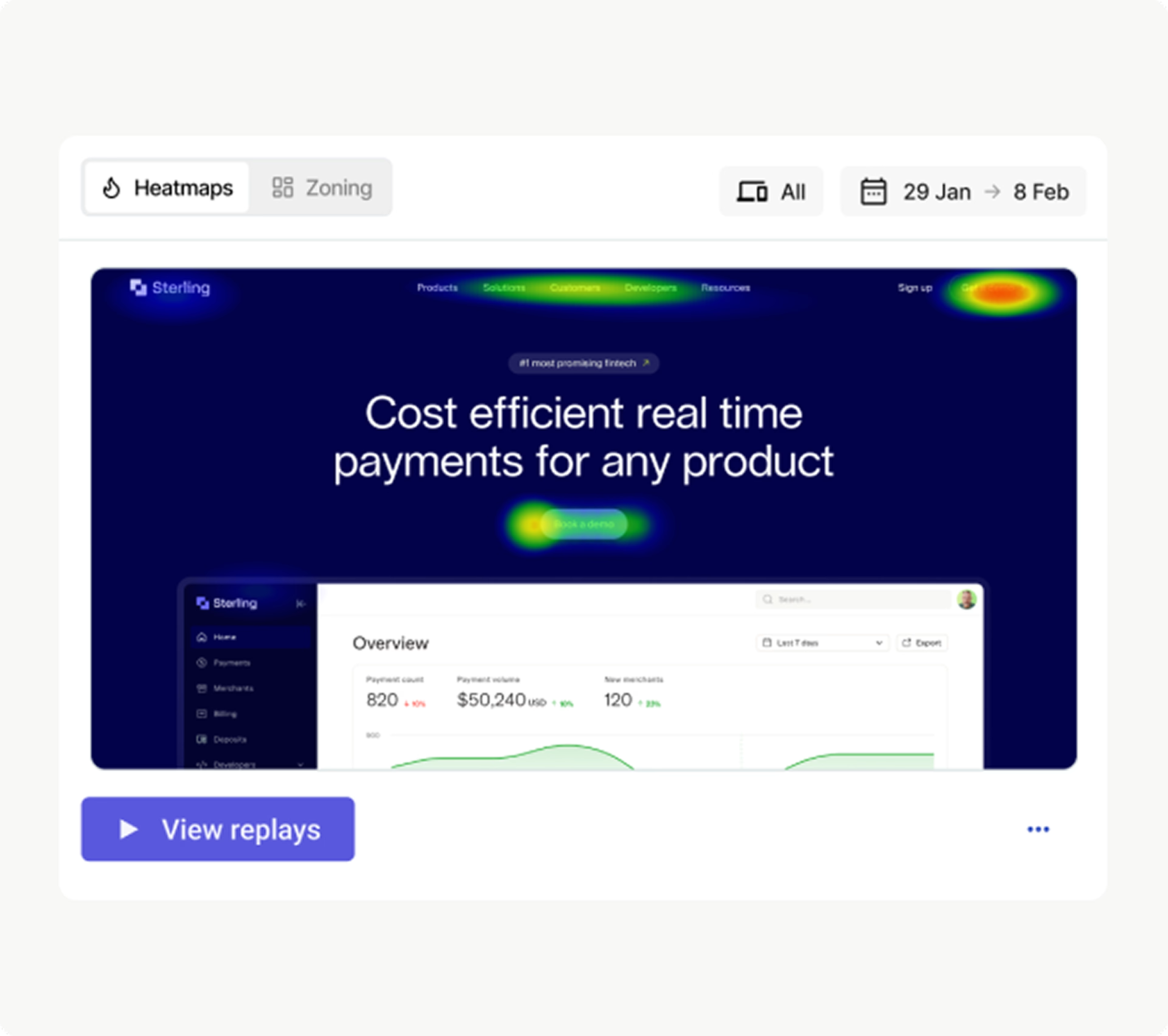
Watch replays of individual sessions to enrich your cohort analysis with in-depth insights about the user experience
How to get started with cohort analysis
The main goal of cohort analysis is to group users in a way that reveals actionable discrepancies between them.
For example, you can:
Compare the customer retention rate among different groups of users
Segment users based on simple demographics, like region or industry
Split users by referral channel to see which groups have the worst retention metrics
When you find an interesting datapoint, dig deeper. Say you discover users acquired through paid search drop off more and churn faster than other channels. To investigate further, segment the paid search cohort by key actions they take in the product.

Analyze retention for different user cohorts to find patterns worth investigating deeper
How to act on your cohort analysis
Once you analyze and interpret your data, you’re ready to start testing hypotheses about why the groups with the lowest retention rates churn faster than others.
Then, based on your findings, take action. Not sure where to begin? Here are some ideas to get you started:
Modify your marketing to target groups with lower churn rates, so you attract more right-fit customers from the start
See what actions high-performing groups take in your product, and nudge more users towards those behaviors
Identify the journey stage at which customers best respond to new feature emails, and rethink your engagement outreach accordingly
As you roll out these tests, use an experience intelligence platform with product analytics (like Contentsquare) to measure how successful they are by tracking your KPIs over time.
Cohort analysis for SaaS companies
For SaaS companies, improving customer retention can be the difference between business growth and stagnation.
When user engagement starts to trend downward, quickly running a cohort analysis can help you avoid churn. Your product team can pinpoint common characteristics and behaviors among less-active user groups, like their industry or the type of data they upload. You can then re-engage these users with new marketing campaigns, remarketing programs, or feature improvements based on specific customer behavior.
As a SaaS company, use cohort analysis to:
Understand the needs of your most devoted paying customers and adapt your product roadmap to prioritize their requirements
Direct your marketing resources to acquire the customers most likely to make repeat purchases or spend more (such as by investing more in their preferred channels or advertising at industry events)
Use insights from Contentsquare’s Journey Analysis to optimize adoption, onboarding, feature discoverability, and ongoing customer support
![[Customer story]](http://images.ctfassets.net/gwbpo1m641r7/1EBVc3VNWgha5ZRmeTHz1n/fb310c67dc08d024572322b469277415/segmentation.webp?w=1920&q=100&fit=fill&fm=avif)
Combine cohort analysis with customer journey analysis to see how different groups navigate your website
Cohort analysis for ecommerce companies
Cohort analysis helps ecommerce businesses discover which products, demographics, and seasonal patterns are linked with repeat purchases and large lifetime value.
By understanding which behaviors correlate to bigger or more frequent orders—like browsing specific pages, favoriting products, or reading reviews—you can unlock new opportunities to increase your ecommerce conversion rate.
As an ecommerce company, you can use cohort analysis to:
Improve the ROI of your marketing budget by focusing on the customer segments most likely to make repeat purchases
Tailor messaging to specific audiences based on different user groups’ preferences
Create better customer experiences by identifying user behaviors that lead to drop-off and removing these moments of friction from your site or app

Our merchandising team uses Contentsquare to look at the customer’s experience on the site and test, learn, and play around with what could be the optimal model to improve conversion and acquisition.

The best analytics tools for performing cohort analysis
The fastest, easiest, and most efficient way to get started with cohort analysis is with an experience intelligence platform like Contentsquare.
Using an all-in-one platform gives you comprehensive knowledge about how different groups interact with your product, app, or site, and uncovers invaluable insights around which behaviors correlate with long-term value and high retention.
Using product analytics for cohort analysis
Product analytics tools offer a range of functionalities to help you analyze, understand, and engage different cohorts. Here are some key features and tools—and how they work together to give you a 360-degree view of your customers.
Automatic data capture: effortlessly capture everything that happens on your site or app (like clicks, swipes, views, and form fills) in real time, and decide what to analyze later—giving you greater visibility and removing the need for pre-planned event tags that limit your insights
Session Replay: watch how individual users from different cohorts behave and follow them across their entire session. Quickly find pain points and compare their experience with other cohorts to find opportunities for improvement.
Heatmaps: get a color-coded visualization of which page elements capture or lose visitors’ attention for each user cohort
Journey Analysis: see which routes different cohorts take, and work backward from the most valuable customer journeys to optimize the path for new users
As the owner of a digital product, you never know which behaviors or activities will most correlate with retention or churn. For this reason, it’s crucial to invest in a solution that tracks every event on your site.
In most tools, you have to decide in advance which events matter. This seriously limits the amount of information you can gather, especially when it’s information that may reveal something unexpected.
Use cohort analysis to make user-centric improvements that increase retention
Using a modern product analytics tool lets teams analyze behavioral cohorts and break down acquisition data based on every activity.
Eliminate the need for manual event tracking that limits your analysis before it can even begin; instead, get a comprehensive understanding of what drives user behavior and leads to retention (or churn) so you can foster long-term loyalty in more users.

Anna is a freelance content writer and strategist specializing in B2B SaaS. She's written for industry-leading companies like Contentsquare, Hotjar, Intercom, DocuSign, HubSpot, and more. When she's not writing, she spends her time reading, drawing, and hanging out with her cat.