
Before your customers book a room or reserve a flight, they’re making emotional, high-stakes decisions—usually across several devices and sessions.
And all too often, valuable decision-making data is lost, with travel companies relying on generic analytics that can't go deeper than surface-level insights. That means not knowing why a booking wasn’t completed, struggling to predict travel demand patterns, and making uninformed decisions about where to invest in customer experience improvements.
This guide shows how travel analytics solutions like Contentsquare help you move beyond basic traffic data into experience insights that convert more, retain better, and ultimately, create travel journeys your customers will remember.
Key insights
Travel analytics tracks complex, emotional, and cross-device journeys. Unlike retail, travel journeys unfold over weeks or months, and require specialized analytics to track them effectively.
Standard metrics aren’t enough. Travel brands need deeper insight into abandonment points, conversion by source, seasonal research patterns, multi-touch attribution, and customer lifetime value (CLV) by segment.
Experience analytics reveals what traditional tools miss. Tools like Contentsquare Heatmaps, Journey Analysis, and Session Replay uncover friction, frustration, and drop-off risks—especially on mobile.
Personalization at scale requires smarter signals. AI tools like Contentsquare’s Sense detect behavioral intent and surface relevant content automatically.
Every insight should tie to business impact. The best teams connect behavioral data (like frustration or hesitation) directly to revenue metrics, so they can prioritize what really moves bookings.
What is travel analytics?
Travel analytics is the practice of measuring, analyzing, and interpreting how customers discover, research, and book travel experiences across your digital channels.
Modern travel analytics combines multiple data sources—from website behavior and social media engagement to booking patterns and customer demographics—to help travel companies understand travel trends and optimize their marketing strategies.
Why travel businesses need purpose-built analytics
Most data analytics tools weren’t designed for travel. They work fine for short, transactional journeys, but not for travelers juggling multiple tabs, researching destinations over weeks, and making emotionally driven decisions about once-a-year holidays or big family trips.
Travel isn’t an impulse buy. It’s a considered journey—one that spans devices, sessions, and shifting priorities.
Here’s what makes travel management uniquely complex:
What makes travel data unique | Why it matters |
|---|---|
Long, non-linear journeys | Travel decisions don’t happen overnight. Research can stretch across weeks or even months, and most of it happens before a user ever logs in. |
Seasonal spikes | Booking patterns change dramatically throughout the year. A single peak season can distort your metrics if you don’t account for it properly. |
Complex bookings | Unlike retail checkout, a travel booking includes multiple steps (such as dates, destinations, rooms, upgrades, or extras), making each one a potential drop-off point. |
High acquisition costs | Travel brands often invest heavily in paid search and social. Every unconverted session isn’t just a missed opportunity—it’s wasted budget. |
Multiple data sources | Travel analytics must integrate website data, social media signals, booking systems, and customer demographics to provide complete insights into travel patterns and demand forecasting. |
Cross-device behavior | Customers may start browsing on mobile, research on desktop, and complete the booking on a tablet. Tracking that journey requires more than last-click attribution. |
Emotional decisions | Travel is aspirational. You’re selling a feeling or a memory, not just a room. That makes intent harder to measure with traditional tools. |
Travel-specific analytics helps you
Track user behavior across time and devices, from inspiration to confirmation
Identify friction points in real booking paths, not just page flows
Spot opportunities to engage or recover before a user drops off, for good
Link user behavior to outcomes, like revenue, CLV, or even review scores
Automate routine analysis and identify emerging travel trends by using machine learning and predictive analytics
Whether it’s a business traveler booking 3 hours before departure or a couple comparing summer destinations for weeks, travel analytics helps you understand what they need, so you can deliver the experience they expect.
8 travel analytics metrics that drive booking success
Data analysis for marketers and digital teams in the travel industry needs to go deeper than clicks and bounce rates.
Here are the specific measurements that reveal how travelers actually behave, and where you can optimize for revenue:
Booking conversion rate by traffic source: track how different channels perform relative to their costs. Understanding which sources drive bookings (not just clicks) helps optimize marketing spend across paid search, organic, social, and referral traffic.
Multi-touch attribution across devices: most travelers research on mobile, compare options on desktop, and book on either device. Track these cross-session journeys to understand which touchpoints actually influence bookings versus just engagement.
Time to conversion by trip type: business travelers typically convert faster than leisure travelers, who often research for weeks before booking. Understanding these patterns helps you time remarketing campaigns and identify when to increase conversion pressure.
Booking abandonment analysis with revenue impact: track exactly where customers drop out—during date selection, room selection, or payment—and quantify the revenue lost at each step. This shows you which fixes will have the biggest business impact.
Destination and property performance: which locations, property types, and price points drive the most bookings? Track performance by geography and property characteristics to optimize inventory focus and content strategy.
Customer lifetime value (CLV) by acquisition channel: different traffic sources often produce customers with different long-term value. Calculate CLV by source to justify higher acquisition investments for channels that bring repeat bookers.
Seasonal research patterns: vacation bookings often begin months before travel dates. Track leading indicators like destination guide engagement to optimize content calendar timing and campaign launches.
Post-booking engagement correlation: monitor how booking experience connects to trip satisfaction. Customers who engage with pre-trip communications often have higher satisfaction scores and rebooking rates.
How to use travel analytics to optimize your digital experience
Every drop-off is a missed booking. But behind it is a moment—something that confused, frustrated, or overwhelmed your traveler.
Here’s how you can use travel analytics to spot those blockers, understand their impact, and remove the friction that’s costing you revenue.
1. See exactly where customers struggle to book
Most travelers start with a dream and end with a booking, but many drop off in between. They get confused by a calendar, distracted by too many options, or frustrated when something doesn’t work.
To fix that, you need more than just what happened. You need to understand the why.
Here’s how travel brands use Contentsquare capabilities to surface booking blockers and take action:
Heatmaps deliver visualizations that show where users focus their attention, hesitate, or click, including on non-interactive elements like car rental prices they expect to expand, or images they assume are clickable
Journey Analysis reveals the actual paths users take, not just the ideal funnel; for example, visitors who explore ‘Things to Do’ pages are more likely to book than those who jump straight to room selection
Session Replay lets you watch what really happened during key sessions: missed clicks, broken date pickers, or form errors that don’t show up in standard logs
![[Visual] Heatmaps types](http://images.ctfassets.net/gwbpo1m641r7/44qPX6Nyu2v2i9pGM8JdIE/e1ccfd573959295483bb4b867ca7e57f/Heatmaps___Engagements__3_.png?w=2048&q=100&fit=fill&fm=avif)
Each heatmap type reveals a different insight—clicks, scrolls, movement, engagement, and frustration—so you can pinpoint exactly where on a page the booking journey breaks down
These solutions leverage proven data analysis methods and techniques to track user behavior across time and devices, identify friction points in real booking paths, and spot opportunities to engage customers before they drop off for good.
Success story: how easyJet turned travel data into smoother journeys
As a fast-growing travel brand, easyJet Holidays used Contentsquare to understand why their shortlist feature wasn’t driving conversions, especially on mobile and app.
Standard analytics showed low engagement with the shortlist feature, but couldn't explain why users weren't converting after saving items.
With Contentsquare, the easyJet team were able to
Collect behavioral insights with Journey Analysis and Voice-of-Customer (VoC) surveys. They discovered app users were getting stuck in loops when accessing the shortlist, and mobile users struggled to find it altogether.
Prioritize the fix by quantifying its impact, which showed that improving the shortlist could drive major results
See measurable impact: +82.5% in conversions, +3.6% in cart value, and +7.3% revenue from that journey alone
By using real user behavior and feedback, the team found a friction point that standard analytics missed, and turned it into a revenue win.
2. Deliver relevant experiences at scale with AI
Travelers expect more than generic suggestions. They want experiences that feel personal, whether they’re planning a honeymoon, a solo adventure, or a family getaway.
Sense, Contentsquare’s AI agent, helps travel teams move faster by turning behavioral data into clear, actionable answers.
Instead of just tracking clicks, teams can ask questions, such as “Where are users dropping off on mobile?” or “Which content drives the most bookings for family travelers?”
Sense analyzes patterns behind the scenes and responds with insights and suggestions, so you can act without digging through dashboards.
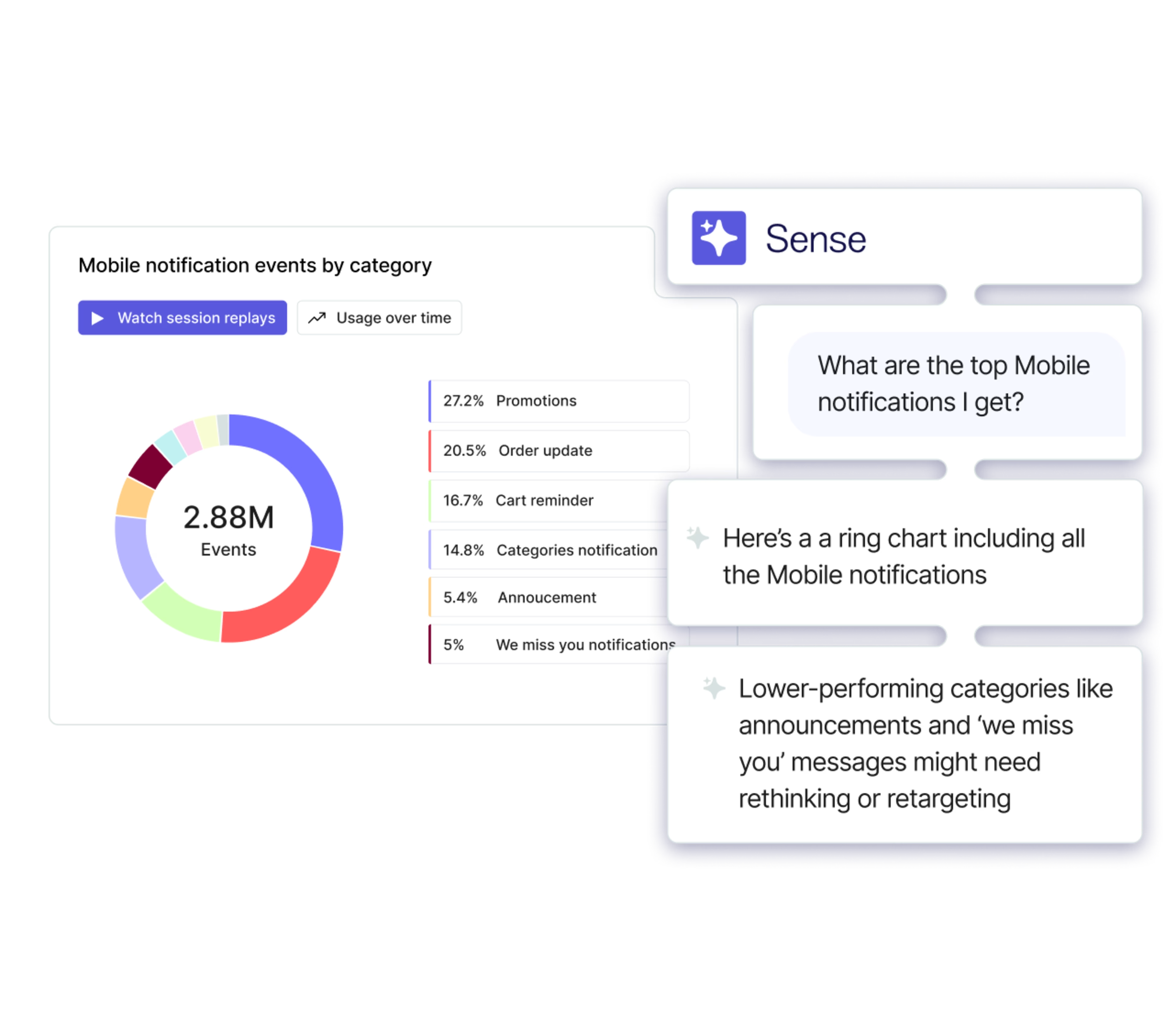
Contentsquare’s AI, Sense, helps you quickly surface behavior patterns, then ask why they’re happening
The AI agent also uses natural language processing and behavioral analysis to understand what travelers actually care about, then automatically suggests relevant optimizations.
Here are a few examples:
AI-detected behavior pattern | What it reveals about the user | How teams can act on it |
|---|---|---|
Lots of time on family listings + date searches all over the calendar | Family trip planning, but timing is flexible | Surface group-friendly deals, family packages, school holiday specials |
Jumping between price filters + comparing tons of options | Budget-conscious but definitely interested | Highlight value deals, payment options, and early-bird pricing |
Deep-diving into luxury content but taking forever to book | High intent but possibly hesitant to commit | Add trust signals, social proof, or targeted offers |
Researching on phone, laptop, tablet + coming back multiple times | Serious about booking, just taking time to decide | Trigger personalized follow-ups based on what they've already seen |
What makes AI-powered travel analytics different is the ability to continuously learn and improve. The system doesn't just apply static rules, it uses machine learning to:
Predict traveler intent before they complete actions, enabling proactive personalization
Automate content recommendations based on behavioral similarity to past successful bookings
Optimize timing of offers and communications using predictive analytics
Adapt in real time as user behavior evolves during their research journey
This helps teams move from browsing history to behavioral understanding, making personalization feel helpful, not robotic.
Success story: how Mr & Mrs Smith balances AI with human expertise
Mr & Mrs Smith is known for its highly curated collection of boutique hotels. As Founder and Chair Tamara Lohan explained in our recent CX Circle session, they've found ways to use AI that enhance rather than replace human expertise.
"We're using AI to let our humans in our business be more human," Tamara said. She shared a recent example of a team leader who used to listen to a random sample of customer support calls each week for training purposes. "The AI now can listen in to every single call that we've done that week and pick out the calls for her that she should listen to,” she said.
This approach—using AI to make humans more effective rather than replacing them—reflects how travel brands can scale personalization while maintaining authentic experiences.
The technology handles the time-consuming analysis work so teams can focus on what they do best: creating memorable travel moments.
3. Run A/B tests where they actually matter
A/B testing should be a systematic part of your optimization strategy, not an afterthought.
For travel brands, where customer journeys are long and the stakes are high, experimentation needs to be focused, evidence-based, and tied to business outcomes.
Here’s a simple framework travel teams can use.
Identify high-impact areas to test
Start by identifying high-friction points in the journey. Behavioral analytics use real-time data to reveal where users hesitate, loop, or drop off, especially in key flows like search results, room selection, or checkout.
These valuable insights give you ideas on where to focus your tests:
Test focus | Why it matters |
|---|---|
Booking form layout & field order | Small adjustments here can significantly boost completion rates |
Payment page design & trust signals | Clarity and credibility at this step directly impact conversions |
Search results & filtering logic | Helping users find what they want leads to faster bookings |
Mobile booking flow optimization | A smoother mobile journey can reduce drop-offs |
Pricing presentation & promo messaging | Clear offers reduce abandonment and nudge conversions |
💡 Pro tip: use Contentsquare to align testing strategies with seasonal behavior.
Experienced travel teams optimize for dramatically different customer behaviors across seasons:
During peak season, they focus on high-impact A/B tests, like streamlining booking flows or improving mobile load times, and use zone-based heatmaps and frustration scores to validate those fixes under real traffic pressure
In the off-season, they shift their focus to inspiration-driven tests, analyzing engagement depth on editorial content, destination guides, or early bird offers
And during shoulder seasons, they test both: conversion paths for last-minute bookers and content positioning for longer-term planners
By pairing behavioral insights with test results, teams not only measure what works; they know why it works and when to apply it.
Form your hypothesis based on user behavior
Before you run a test, make sure it's solving a real problem.
The most effective travel optimization follows a user-centric data analysis process that focuses on patterns, rather than testing ideas at random.
Look at the behavioral data—where travelers hesitate, rage-click, or drop off—and use that to shape your hypothesis. For example,
If users rage-click on static elements, your hypothesis might be: they think it should do something → test a clearer or interactive design
If most drop-offs happen after room selection, your hypothesis might be: the extras or pricing are too confusing → test a simplified flow
If corporate bookings show different patterns from leisure, your hypothesis might be: they need a faster, policy-friendly path → test a tailored booking flow
If social media traffic converts differently than direct visits, your hypothesis might be: the messaging doesn’t match the platform → test creative assets that better fit the channel
Prioritize your experiments by business impact
Not every test is worth your time. Some cost-saving changes feel important but won’t move the needle. Others look small but can have a huge impact on bookings or revenue. The key is knowing the difference before you start.
Use behavioral and performance data to estimate the potential impact of your experiments:
Is this a high-traffic page? Even a small improvement can pay off quickly.
Is this a high-abandonment step? Fixing it could unlock bookings that are currently slipping away.
Is this issue tied to revenue? For example, if users abandon after seeing the full price breakdown, testing how pricing is displayed could drive measurable uplift.
Teams using Contentsquare’s Impact Quantification capability can go a step further, getting a data-backed forecast of what a change might be worth before they commit to testing it. This makes it easier to justify the time and resources, and to get buy-in across teams.
![[Visual] impact quantification at Contentsquare](http://images.ctfassets.net/gwbpo1m641r7/5LEALEky77QcrDsm85VgW0/5d17d7815d304382149959dbd2c65a46/impact-quantification.png?w=1920&q=100&fit=fill&fm=avif)
Impact Quantification helps you prioritize what actually matters, not just what feels new or exciting
Run your tests
Once you've identified a high-impact opportunity and formed a clear hypothesis, it's time to test it—intentionally.
Remember: structure matters more than speed. Use consistent testing criteria, define what success looks like, and run only one variable at a time when possible.
This structured testing helps ensure you're not just experimenting, but learning and scaling what works with confidence.
If you’re already using an A/B testing platform like Optimizely, AB Tasty, Kameleoon, or Dynamic Yield, good news: they’re all within Contentsquare’s partner ecosystem.
That means you can integrate Contentsquare’s behavioral analytics—like hesitation, frustration, or navigation loops—directly into your testing platform to inform what you test, who you target, and how you measure success.
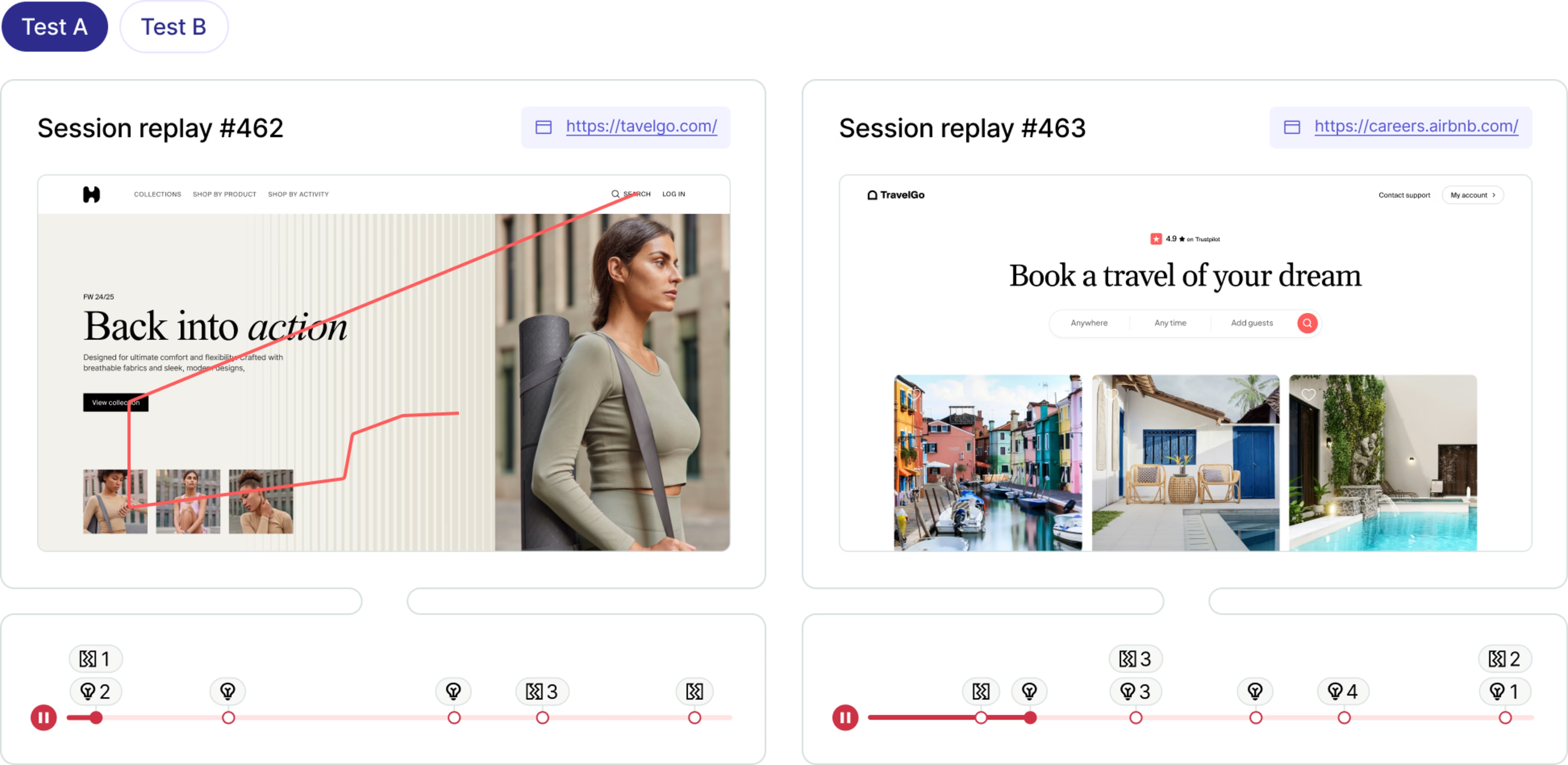
Using Contentsquare’s Session Replay capability on A/B tests helps teams move faster without sacrificing focus by testing to fix real problems travelers run into
The good old days of like fingers crossed, just deploy and pray, are no longer. We're trying to A/B test as much as possible.
4. Measure outcomes and close the loop
It’s easy to stop at surface-level key metrics like click-through rate or form completions, but those don’t always reflect real success. That’s why it’s important to tie test outcomes back to business key performance indicators (KPIs)—like conversion rate, average booking value, or even rebooking likelihood.
This helps you understand why something worked (or didn’t), so you can build on what’s effective—and avoid repeating what isn’t.
Closing the loop makes every experiment part of a bigger learning cycle. You’re not just collecting wins—you’re building a smarter, faster path to better experiences.
💡 Pro tip: don’t just collect travel data—connect it to your bottom line.
When you integrate multiple data sources, you unlock real-time insights that show not just what’s happening in the booking journey, but how it’s affecting revenue management.
With Contentsquare’s data analysis reporting capabilities, you can build dashboards that link experience metrics (like frustration signals, technical errors, abandonment rates, or time to convert) directly to revenue outcomes.
This helps you see not just where users drop off, but how much each friction point is costing your business, and prioritize the strategic initiatives that actually drive profitability.
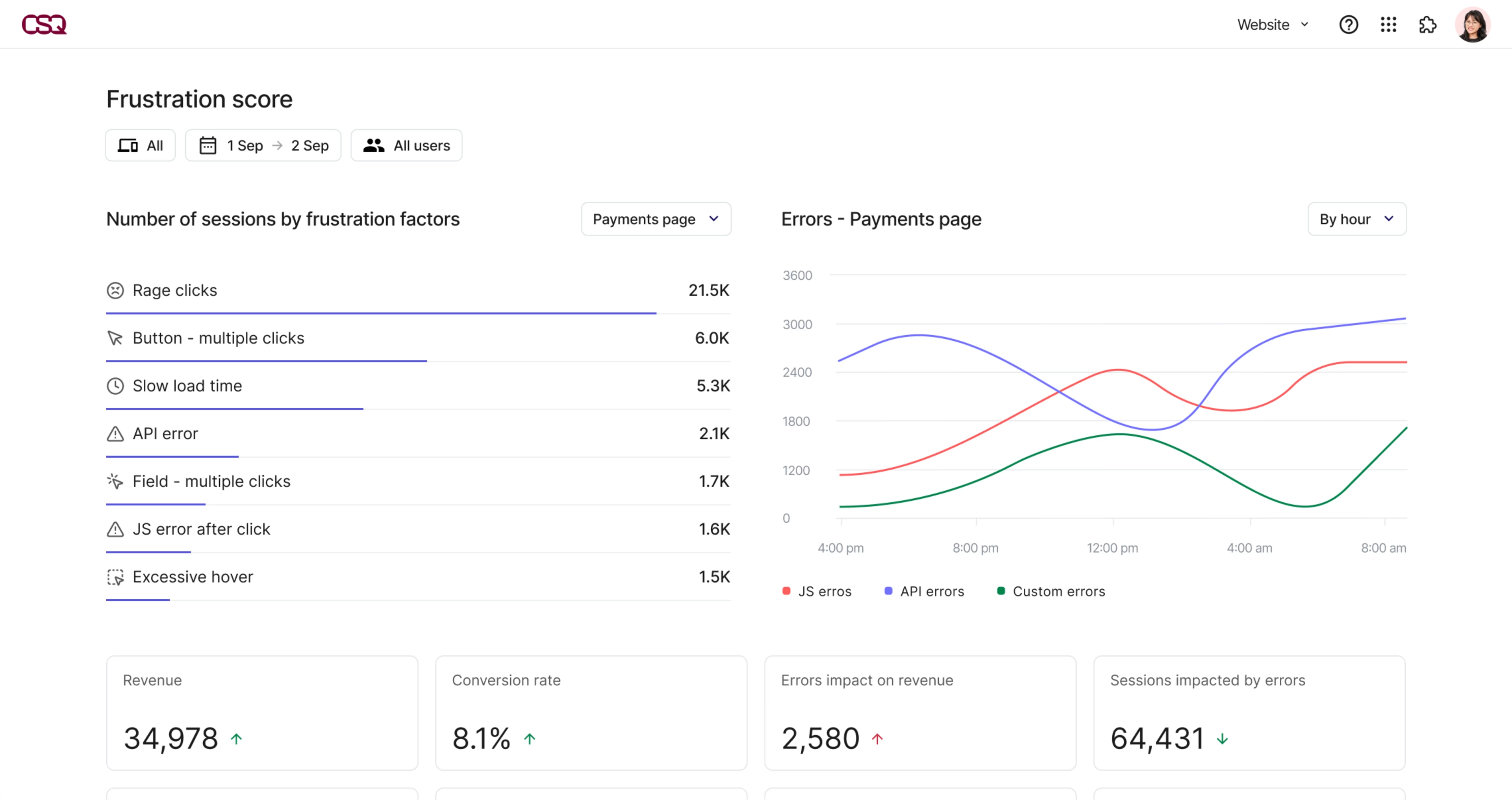
Contentsquare dashboards help you see where money is lost, and where real-time optimization will make a measurable impact
Start creating better travel experiences with Contentsquare
Travel is personal. Every scroll, click, and hesitation tells a story, and your data should help you listen.
Contentsquare gives travel brands the visibility to go beyond surface-level analytics and uncover the real reasons travelers convert, drop off, or come back.
From spotting booking barriers to running smarter tests and delivering intent-based experiences, Contentsquare helps you turn behavior into better journeys, at scale, and with confidence.
Because when you understand how people book, you can build experiences they’ll want to return to.
FAQs about travel data analytics
General web analytics gives you the basics like page views, bounce rates, and conversion goals.
Travel analytics accounts for the unique complexity of travel purchasing: long consideration periods, emotional decision-making, seasonal variations, and complex multi-step booking flows.
Where general tools stop at session-level data, travel analytics helps you connect the dots across time, devices, and behavior. That’s essential for spotting drop-off points, understanding conversion paths, and optimizing for different types of travelers.
![[Visual] Contentsquare's Content Team](http://images.ctfassets.net/gwbpo1m641r7/3IVEUbRzFIoC9mf5EJ2qHY/f25ccd2131dfd63f5c63b5b92cc4ba20/Copy_of_Copy_of_BLOG-icp-8117438.jpeg?w=1920&q=100&fit=fill&fm=avif)