![[Visual] Frustration Stock image](http://images.ctfassets.net/gwbpo1m641r7/11k60xS0jdvC5YUIGri69k/cb9c99860c58d5459fd2d9d00f5f167a/Defensiveness__one_of_the_greatest_inhibitors_to_true_collaboration.png?w=3840&q=100&fit=fill&fm=avif)
Companies love to highlight metrics like CSAT and Net Promoter Score®—the feel-good signs of customer happiness. But this focus often overlooks the flip side of the experience: dissatisfaction.
Customer dissatisfaction (DSAT) is easy enough to recognize: repeat contacts climb, escalations spike, and frustration seeps into customer conversations. Yet turning these scattered signals into clear, actionable insights at scale remains a real challenge.
This article shows you how to close that gap—so you can identify, measure, and act on customer dissatisfaction with confidence, prioritize the right fixes, and resolve issues faster.
Key insights
DSAT metrics bring clarity to customer dissatisfaction, helping teams find and prioritize issues with the greatest impact across channels
The most effective DSAT tools link what customers say with what they do, by combining responses with behavioral data
DSAT-driven actions have the greatest impact when shared across product, digital, and customer experience teams. These insights improve journey optimizations, roadmap planning, and customer satisfaction.
What is DSAT?
DSAT is a metric that measures where customer experiences fall short of expectations. Instead of tracking how happy customers are, DSAT highlights where frustration shows up and where expectations aren’t met.
It helps teams spot when customers feel let down after reaching out to your company, leaving feedback, or using your product or service, revealing where friction points might’ve otherwise gone unnoticed.
How to measure DSAT
Teams measure DSAT by identifying negative sentiment across all customer interactions, including surveys and customer conversations, across channels like sales calls and chatbots. Traditionally, DSAT is calculated as the percentage of dissatisfied responses to a survey. For example, if 140 out of 1,000 survey responses indicate a poor experience, the DSAT score would be 14%.
Platforms like Contentsquare and Loris extend this approach beyond surveys alone. With Contentsquare’s voice-of-customer (VoC) product, teams can trigger surveys at critical moments in the customer journey and use AI-powered sentiment analysis to not only quickly summarize and categorize responses, but also surface what’s driving this dissatisfaction.
![[Visual] DSAT](http://images.ctfassets.net/gwbpo1m641r7/7LRmrvF8VZ1h3AXyCz8mNf/398ccfde840abf42103c630c5c148207/DSAT.png?w=3840&q=100&fit=fill&fm=avif)
Create a DSAT survey with Contentsquare
Loris, an AI-first technology that specializes in conversation intelligence, turns customer conversations (from chatbots and call centers, for example) into valuable insights such as drivers, sentiment, and root cause.
The company was recently acquired by Contentsquare and now powers its Conversation Intelligence product, enabling teams to map these insights across digital journeys to take action and fix these issues fast.
Why DSAT matters for your customer experience (CX)
Understanding how dissatisfied your customers feel might not be at the top of your to-do list, but keeping an eye on DSAT trends—and acting fast to address what’s behind the dissatisfaction—builds genuine, long-term relationships with customers.
Here are 3 ways teams incorporate DSAT scores in their CX analyses:
1. Add context to customer satisfaction (CSAT) measurements
Picture DSAT as the flip side of CSAT. CSAT tracks how delighted your customers are (often on a simple 5-point scale), whereas DSAT pinpoints exactly where and why things go wrong.
You track CSAT with customer satisfaction surveys, which are designed to understand how satisfied customers are with your product, services, brand, and/or customer support. With Contentsquare, you get access to a range of CSAT survey templates you can modify and add to key moments in the customer journey.
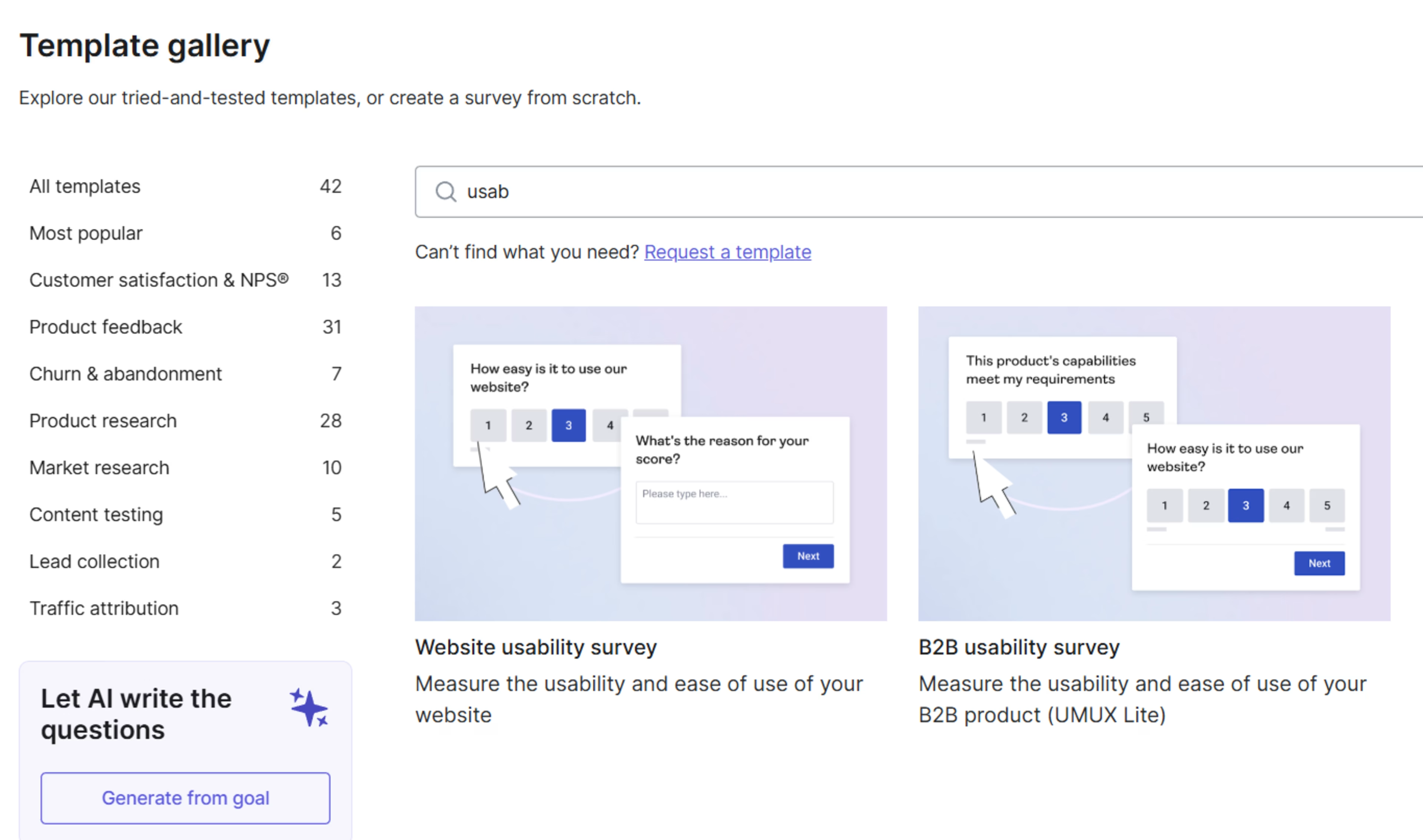
Browse Contentsquare’s template gallery to create different surveys, including CSAT
By tracking both DSAT and CSAT, you’re not just celebrating the highs, you’re also uncovering the root causes behind the lows.
2. Highlight experience gaps
A small pocket of dissatisfied customers can reveal bigger issues. Since more than half of consumers favor a better customer experience over price, addressing negative experiences early—before they escalate—can lead to fewer repeat contacts, happier callers, and better business outcomes.
💡 Pro tip: get instant context behind your surveys with Contentsquare’s AI, Sense, which summarizes responses and creates a sentiment analysis report that informs where to prioritize fixes or optimizations.
Drill down deeper with Contentsquare’s Session Replay capability, which uses event-triggered recordings to capture sessions in the digital journey. Understand what users were doing before and after leaving feedback to get a better sense of why they responded to your survey in such a way.
3. Fuel loyalty-centric improvements
A high DSAT score leads to negative word-of-mouth, damaging both brand reputation and revenue. When measured alongside customer loyalty metrics like Net Promoter Score® (NPS®), DSAT helps teams identify opportunities to turn frustration into customer loyalty across the entire customer journey.
Paying attention to DSAT isn’t about dwelling on negatives, it’s about staying proactive. By understanding what’s driving dissatisfaction across support interactions, digital experiences, and product usage, teams can continuously improve experiences that keep customers engaged and coming back.
5 steps to identify, quantify, and improve DSAT score
Successful customer experience, support, and product teams understand that DSAT scores help them reduce churn rates and improve retention metrics. Here’s how to improve your DSAT score:
1. Identify and tag DSAT scores in your CRM
Identifying and categorizing DSAT signals is difficult when you only have the capacity to review a fraction of customer conversations. That’s why teams turn to experience intelligence platforms like Contentsquare to help.
The platform’s Conversation Intelligence features a scalable mechanism that detects DSAT signals across 100% of customer conversations, from voice and chat through to email.
Using built-in AI, teams then work to uncover sentiment signals across these conversations that can be grouped into DSAT categories that reflect common pain points.
Integrate data
With Conversation Intelligence, you can connect what your customers say across voice and text-based interactions to how they act across their digital journey using Contentsquare’s behavioral analytics.
Connect the dots by combining customer responses with tools like Journey Analysis to see where in the user journey negative sentiment occurs and then jump into related session replays to see what actions informed their response.
This gives you a more holistic view of the impact of customer dissatisfaction on their overall journey, so you can highlight the biggest drivers, based on real impact.
Set up a workflow to address customer issues
Once you have a holistic view of your DSAT, you need to operationalize how you address any issues. Contentsquare’s platform gives teams across product, support, and digital access to the same data to collaborate and resolve issues faster.
Tips
Add tags to responses manually (or let Contentsquare’s AI for Surveys do this for you) to make analysis easier
Regularly reassess your categories. Dissatisfaction drivers can shift over time.
Use dashboards to spot trends and pivot quickly. A +1% improvement in customer experience can lead to standout gains in customer retention, loyalty, and revenue.
2. Conduct experience audits on DSAT signals
Experience audits focus on identifying patterns in product and digital journeys and customer interactions. Here’s how you can understand where experiences as a whole fall a little short.
Identify recurring DSAT patterns: use conversation intelligence to surface recurring dissatisfaction drivers, such as checkout errors or billing issues, across voice, chat, email, and digital interactions. This helps narrow the focus on systemic, rather than one-off, complaints.
Define what a ‘good’ experience looks like: establish clear experience standards by analyzing behavior. Platforms like Contentsquare help teams understand how customers move through their digital journey, where they hesitate, and where frustration builds. These insights create a shared baseline for product and CX teams to align on what success looks like.
Evaluate DSAT in context with quality assurance: rather than scoring individual interactions, assess and monitor DSAT within the context of the entire journey. Contentsquare’s Sense capability enables automated analysis across customer interactions and digital behavior, flagging where dissatisfaction moments occur to compare with positive journeys.
Tips
Share DSAT insights across teams to build alignment and accountability
Celebrate small wins, like a noticeable drop in negative feedback or a spike in positive interactions
By following these steps, you turn DSAT signals into shared insights, creating a clear foundation for root cause analysis and meaningful improvements across the entire digital journey.
3. Perform a root cause analysis
When teams work to quickly fix issues, they’re often addressing the symptoms without looking into the root cause. And while this helps in the short-term, not knowing why the issue occurred could lead to it resurfacing again, eroding trust, conversion opportunities, and loyalty.
Another challenge is perception. What customers think caused the issue may be separate from the true root cause. A customer might blame your product or service, when the real issue could be missing information or unclear messaging. Let’s take a look at how to resolve this.
Traditional root cause analysis frameworks include
The ‘5 whys’, where you repeatedly ask why a problem occurred until you uncover its source
The ‘Fishbone (Ishikawa) diagram’, where you generate as many possible causes as you can and sort them into useful categories.
While these methods are effective, they take time to apply at scale. Contentsquare’s Conversation Intelligence, powered by Loris, accelerates this process, automatically identifying
The reason a customer gave for their frustration and
The underlying root cause driving dissatisfaction
Contentsquare then connects customer signals with behavior data, enabling you to see what customers say and what they do, so you can pinpoint systemic issues faster.
4. Apply DSAT insights to improve future experiences
Once you understand what’s driving a bad experience, you can make targeted improvements to experiences, messaging, and workflows to prevent the issues from recurring.
Here’s how to turn DSAT data into positive outcomes:
Integrate DSAT findings
DSAT signals are only effective when actioned, not just reviewed in isolation. Instead of living on dashboards or reports, integrate DSAT signals directly into the tools and processes teams use to plan, build, and improve experiences.
Product teams use DSAT signals to inform prioritization fixes and roadmap decisions
Digital and growth teams use DSAT metrics to flag friction in key journeys and test improvements
CX leaders track dissatisfaction signals over time to find trends in experiences
Strengthen self-service and content
Missing or unclear information is a key driver of customer dissatisfaction. Use DSAT signals to inform FAQs updates, in-product guidance, help center articles, and onboarding documentation.
Keeping self-service content aligned with what customers ask for or get frustrated by reduces friction and lowers repeat interactions, without needing to overhaul product or service offerings.
Tips
Review DSAT trends regularly and spot emerging friction points early on
Prioritize fixes by customer impact, not by the frequency of the issue
Use A/B testing to trial updates or fixes on a smaller cohort first to confirm you’re addressing the right issue
5. Track the impact of DSAT-guided adjustments
Making changes based on DSAT signals isn’t the endpoint. You also need to ensure those changes are working to reduce customer dissatisfaction over time. Tracking impact ensures improvements aren’t just one-off fixes.
Here’s how to measure what’s working:
1. Monitor key CX metrics tied to dissatisfaction, such as customer satisfaction (CSAT) scores, NPS®, drop-off points, or repeat site visits. Improvements in these metrics indicate DSAT-driven changes are addressing real customer concerns.
2. Review performance trends over time. If monthly reports reveal a dip, you’ll know it’s time to investigate. This helps your team spot issues before they spread.
3. Connect changes to journeys. When metrics improve, trace those gains back to the exact journeys, features, or updates that changed. This helps you understand which adjustments had the biggest impact.
4. Create a shared, living document of DSAT-driven improvements. Highlighting what worked builds momentum and encourages teams to incorporate DSAT signals in their decision-making.
Putting DSAT insights into practice
When teams detect dissatisfaction across every conversation—not just surveys or samples—they move from reactive fixes to proactive experience improvement.
The result? Smoother customer interactions, a returning customer base, and improvements in revenue.
FAQs about DSAT
DSAT is a metric that measures where customer experiences fall short of expectations. Instead of tracking how happy customers are, DSAT highlights where frustration shows up and where expectations aren’t met.
![[Visual] Contentsquare's Content Team](http://images.ctfassets.net/gwbpo1m641r7/3IVEUbRzFIoC9mf5EJ2qHY/f25ccd2131dfd63f5c63b5b92cc4ba20/Copy_of_Copy_of_BLOG-icp-8117438.jpeg?w=1920&q=100&fit=fill&fm=avif)