![[Visual] Wesbite usability and B2B - stock image](http://images.ctfassets.net/gwbpo1m641r7/6f58ikhwJpzoO9Eyd16Mnf/558dc3756f3ef9a0fdbaea70d94280d2/AdobeStock_664400008.jpeg?w=3840&q=100&fit=fill&fm=avif)
In the competitive world of mobile applications, understanding your users isn't just an advantage, it's a necessity. Mobile app analytics tools help you understand what users love, what frustrates them, and why they stop using your app. They transform raw product and performance data into actionable insights that guide strategy and fuel growth.
This blog covers what mobile app analytics tools are, why they matter, which features to prioritize, and a detailed list of the top platforms for 2026.
What are mobile app analytics tools?
Mobile app analytics tools are software platforms designed to collect, process, and analyze data about user behavior and app performance. They go far beyond download counts to help you understand user journeys, engagement patterns, retention, conversion funnels, and technical issues like crashes and performance bottlenecks. By centralizing these insights, they empower teams to make informed, data-driven decisions across product, engineering, and marketing.
Why are mobile app analytics tools essential?
Mobile app analytics tools help you understand how users interact with your app, which features drive value, and where friction causes drop-off. They also support smarter acquisition decisions by showing which channels deliver the best users, improve retention by identifying churn drivers, and protect user experience by detecting stability and performance issues. Ultimately, analytics reduces guesswork and helps teams prioritize improvements that have measurable impact.
Key features to look for in a mobile app analytics tool
When evaluating mobile app analytics tools, focus on the capabilities that align with your goals and how your team operates. Not every team needs every feature, but the best tools will cover the fundamentals well and scale with your app.
User acquisition tracking Tracks where installs come from and how acquisition channels perform.
Key metrics: cost per install (cpi), return on ad spend (roas), install source attribution
Benefit: helps optimize marketing spend and focus on the highest-quality channels
User engagement analysis Measures how users interact with the app, including key actions and feature adoption.
Key metrics: daily active users (dau), monthly active users (mau), session length, feature adoption
Benefit: highlights what users value and where they struggle
Retention and churn rate monitoring Shows how many users come back over time and where churn increases.
Key metrics: n-day retention, weekly retention, monthly retention, churn rate
Benefit: supports long-term growth by identifying why users leave and what keeps them
Funnel analysis Maps user journeys and pinpoints drop-offs in critical flows (onboarding, purchase, subscription).
Key metrics: step conversion rates, drop-off rates
Benefit: helps optimize key paths that drive conversion and revenue
Crash reporting and performance monitoring Tracks crashes, slowdowns, and technical issues that impact experience
Key metrics: crash-free users, average load time, api error rates
Benefit: protects stability and speed, which are essential for satisfaction and retention
A/B Testing capabilities Enables experimentation to compare variants of onboarding, ux elements, or offers.
Benefit: supports data-driven optimization and reduces subjective decision-making
Real-time analytics Provides visibility into what’s happening now (new releases, campaigns, incidents).
Benefit: helps teams respond quickly to changes and issues
Customizable dashboards and reporting Lets stakeholders view and share key metrics in clear, relevant dashboards.
Benefit: accelerates decision-making and improves alignment across teams
Data export and API access
Enables deeper analysis and integration with bi tools, warehouses, or internal systems.
Benefit: supports advanced use cases and long-term scalability
Cross-platform support Unifies iOS and Android analytics into one view.
Benefit: simplifies analysis and ensures consistent measurement across platforms
💡 Pro tip: don’t just check whether a feature exists—evaluate how well it’s implemented, especially for funnel flexibility, crash context, and data accessibility.
The 10 best mobile app analytics tools for 2026
Now that you know what to look for, here are some of the leading mobile app analytics tools for 2026. This list includes a mix of comprehensive platforms and specialized solutions, each with its unique strengths.
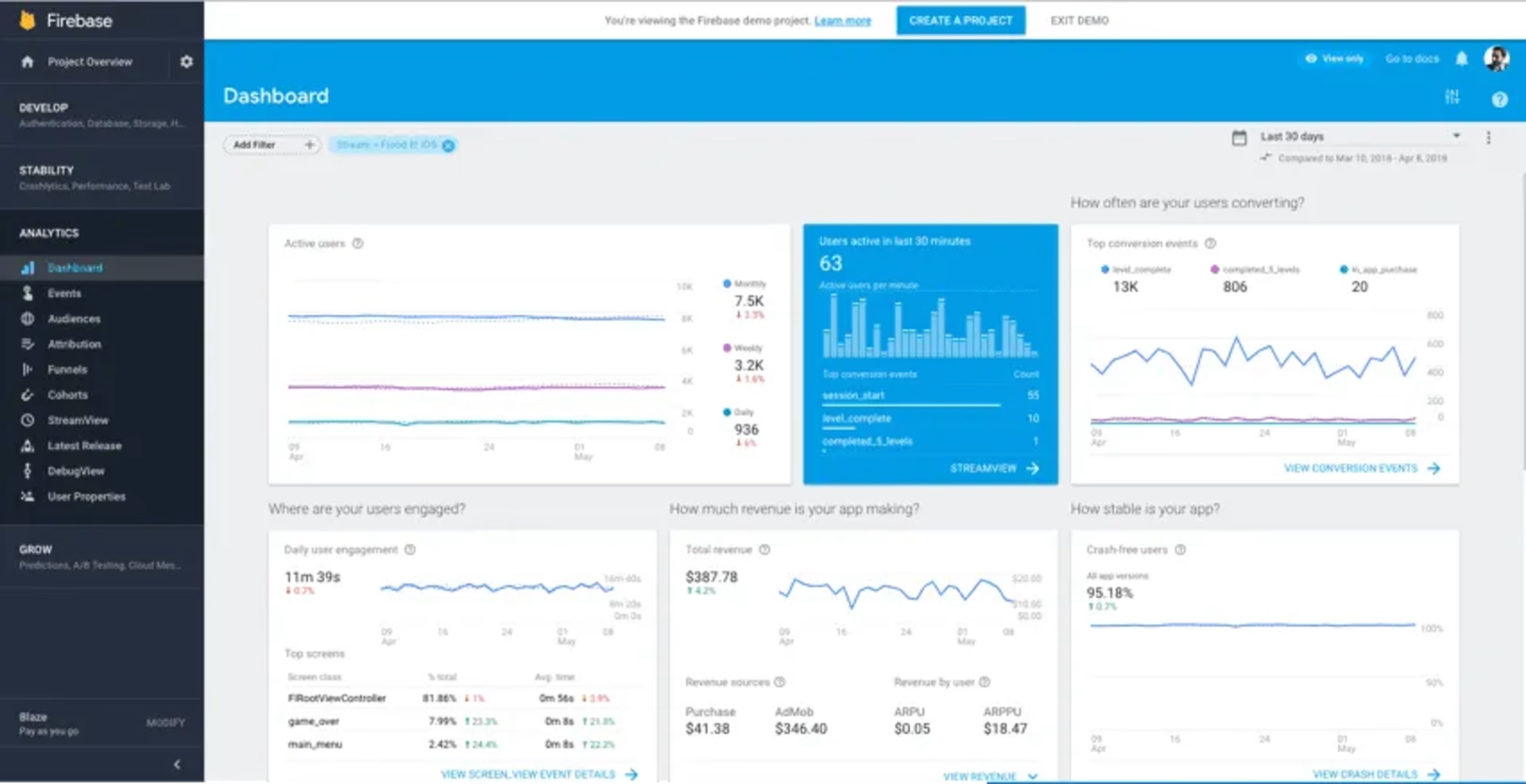
1. Google Analytics for Firebase
Google Analytics for Firebase is Google's comprehensive app development platform that provides a powerful, free, and unlimited analytics solution specifically built for mobile and web apps. It's often the first choice for many developers due to its integration with other Google services.
Key features:
Unlimited reporting for up to 500 different event types
User properties for segmenting audiences
Audience segmentation for targeted messaging (via Firebase Cloud Messaging) and A/B testing (via Firebase Remote Config)
Crash Reporting (via Crashlytics integration)
Prediction capabilities (identifying users likely to churn or spend)
Deep integration with Google Ads, Google Play, and other Firebase services
BigQuery export for raw data analysis
Pricing: Free for core analytics, with costs for additional Firebase services (e.g., Cloud Functions, database storage) or enhanced BigQuery usage beyond free tiers.
Best for: Startups, small to medium-sized businesses, and developers already within the Google ecosystem looking for a powerful, free, and scalable analytics solution.
2. Mixpanel
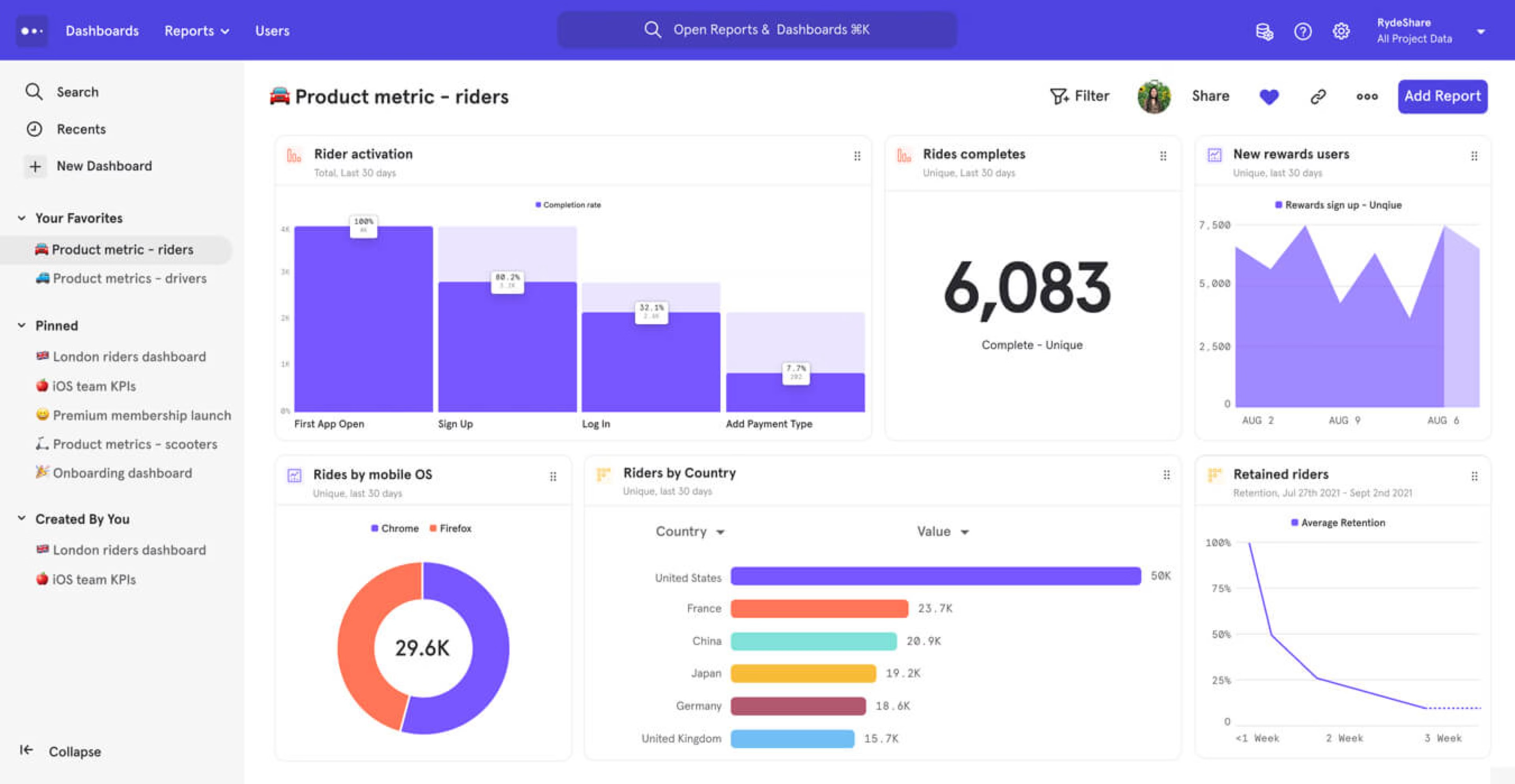
Mixpanel is a leading product analytics platform focused on event-based tracking. It helps companies understand why users engage or churn by tracking every action within the app, rather than just page views.
Key features:
Event-based tracking for granular user behavior analysis
Funnel analysis to identify drop-off points
Retention analysis to measure user loyalty over time
User journey mapping and path analysis
Powerful segmentation for deep audience insights
Flows to visualize common user paths
A/B Testing integration
Pricing: Offers a Free plan (up to 100K monthly tracked users), Growth plan (custom pricing based on tracked users and features), and Enterprise plan.
Best For: Product managers, growth hackers, and teams focused on understanding detailed user behavior, optimizing conversion funnels, and improving retention.
💡Connect the what to the why with the Contentsquare and Mixpanel integration: filter recordings, heatmaps, trends, funnels, and dashboard data by specific Mixpanel events—or trigger surveys when they happen.
3. Contentsquare
Contentsquare (hi, it’s us 👋🏼) is an experience analytics platform that helps businesses understand why users behave the way they do by visualizing their interactions. While traditionally strong in web, its mobile capabilities are increasingly robust, focusing on quantitative and qualitative insights.
Key features:
Session Replay: Watch actual user sessions to see their journey firsthand
Heatmaps: Visualize taps, scrolls, and engagement areas on app screens
Zone Analysis: Break down screen performance by specific UI elements
Journey Mapping: Understand user flows across multiple screens
Impact Analysis: Quantify the business impact of UX issues
AI-powered insights to detect friction points automatically
Pricing: Enterprise-level, custom pricing.
Best for: Larger enterprises and teams deeply invested in optimizing the mobile app UX, requiring visual and qualitative insights alongside quantitative data.
![[Visual] Contentsquare Dashboard Bounce Rate](http://images.ctfassets.net/gwbpo1m641r7/5UF7OItGCKcmx96yXitvAG/a273cceaad47e2baedf119ec7ffa1ca7/platform-overview-dashboard-2.svg?w=3840&q=100&fit=fill)
4. Amplitude
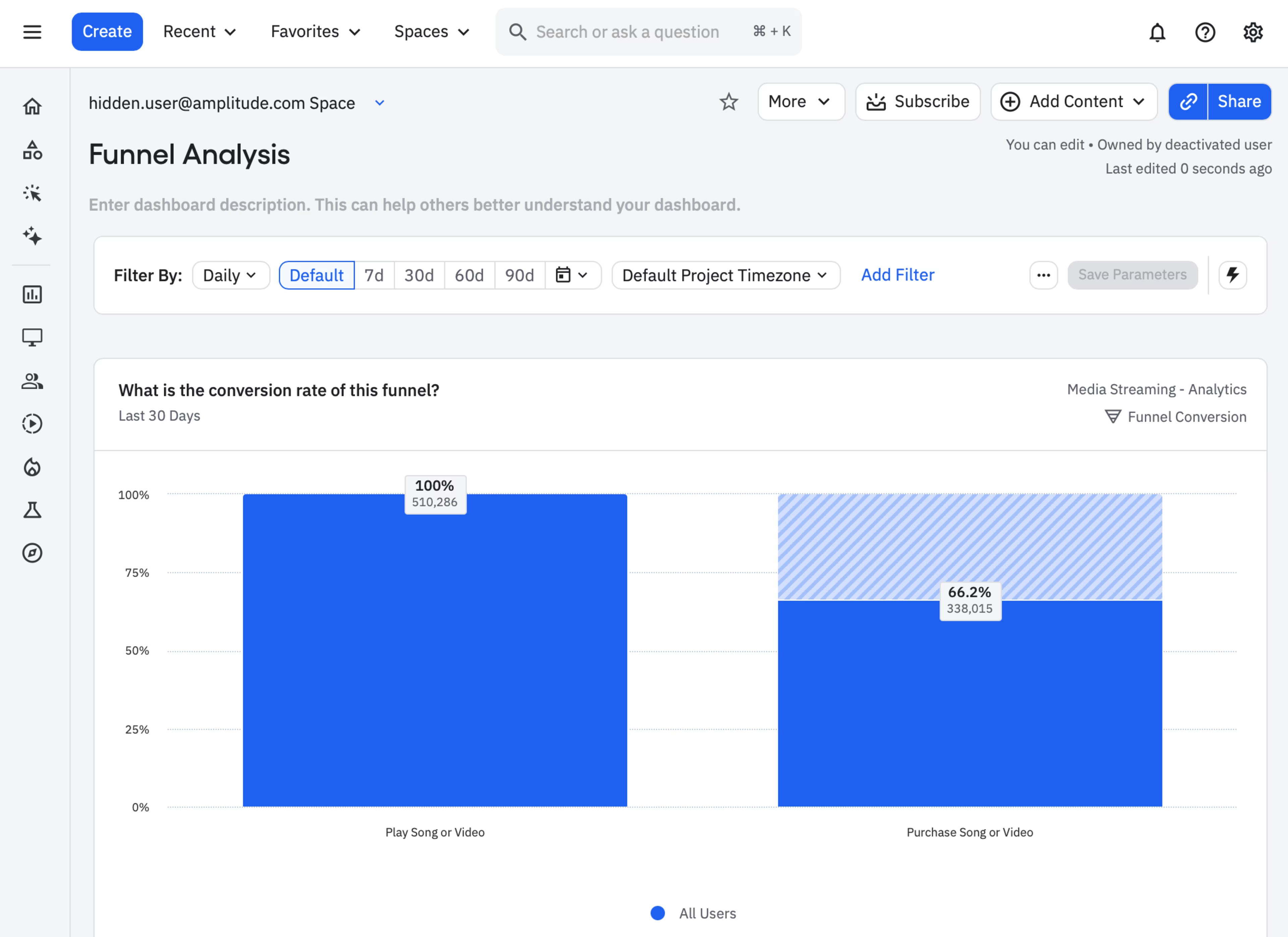
Amplitude is a product intelligence platform that helps teams understand and predict customer behavior. Similar to Mixpanel, it excels at event-based analytics, offering powerful tools for understanding user engagement and retention.
Key features:
Behavioral Cohorting: Analyze groups of users based on their actions
Funnel Analysis with advanced segmentation
Retention Analysis to track user stickiness
User Journeys and pathfinder reports
Collaboration features for team sharing
Experimentation integration for A/B testing
Anomaly detection
Data warehousing capabilities
Pricing: Offers a Starter plan (free, up to 10M events per month), Growth plan (custom pricing), and Enterprise plan.
Best for: Product teams, data scientists, and growth marketers who need deep behavioral analytics to drive product strategy and user engagement.
5. AppsFlyer
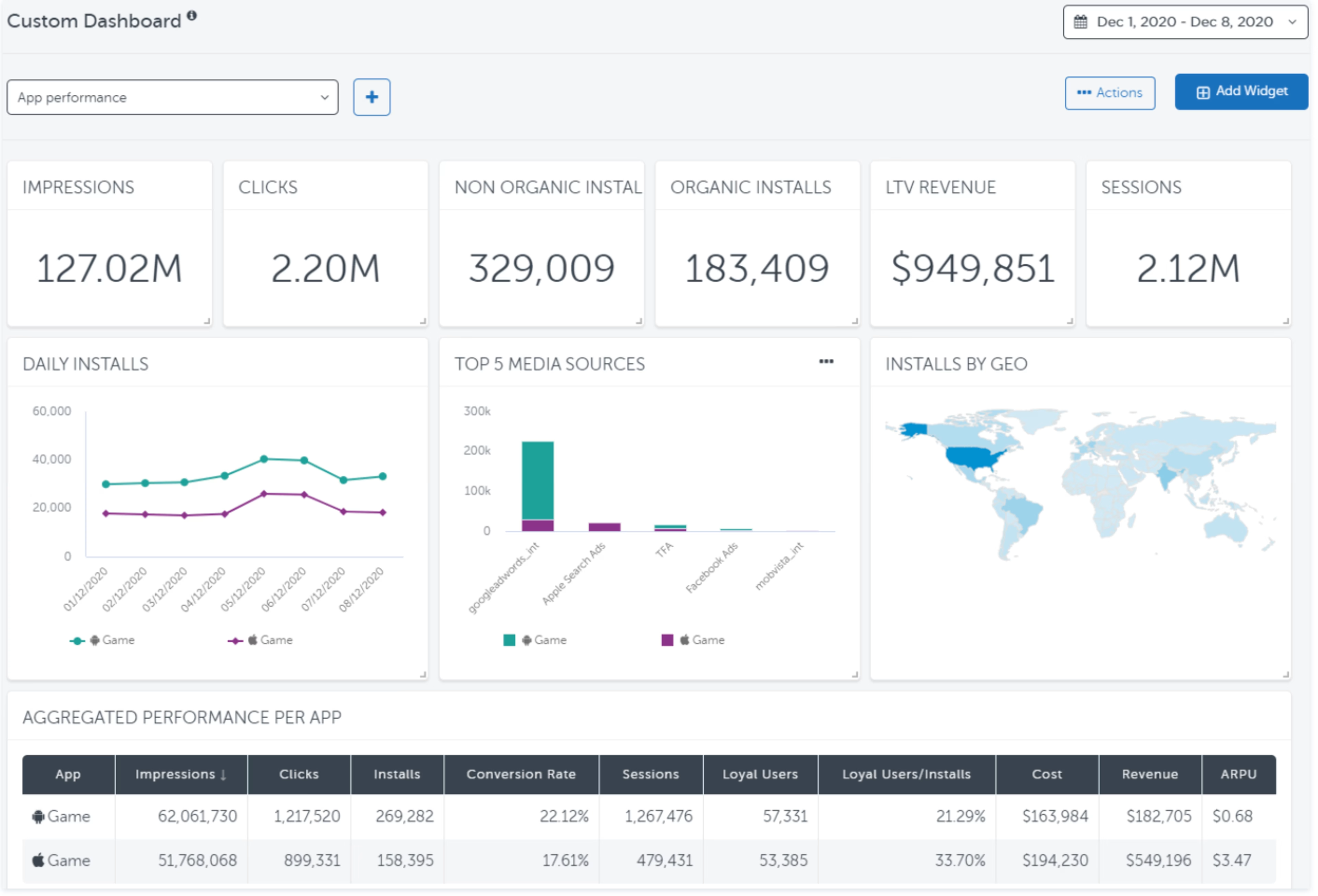
AppsFlyer is a global leader in mobile attribution and marketing analytics. Its primary strength lies in helping app marketers understand the performance of their user acquisition campaigns across various channels.
Key features:
Mobile Attribution: Accurately attribute app installs and in-app events to specific marketing sources
Fraud Protection: Advanced tools to detect and prevent mobile ad fraud
Deep Linking: Create seamless user experiences from ads to specific in-app content
Cohort Analysis: Analyze the long-term value of users from different acquisition sources
Audiences: Create segments for retargeting and personalized campaigns
Integrations: Connects with thousands of ad networks and marketing platforms
Pricing: Generally based on attributed installs, with various plans from starter to enterprise; custom pricing.
Best for: Mobile marketers, user acquisition teams, and anyone focused on optimizing ad spend, improving campaign ROI, and combating ad fraud.
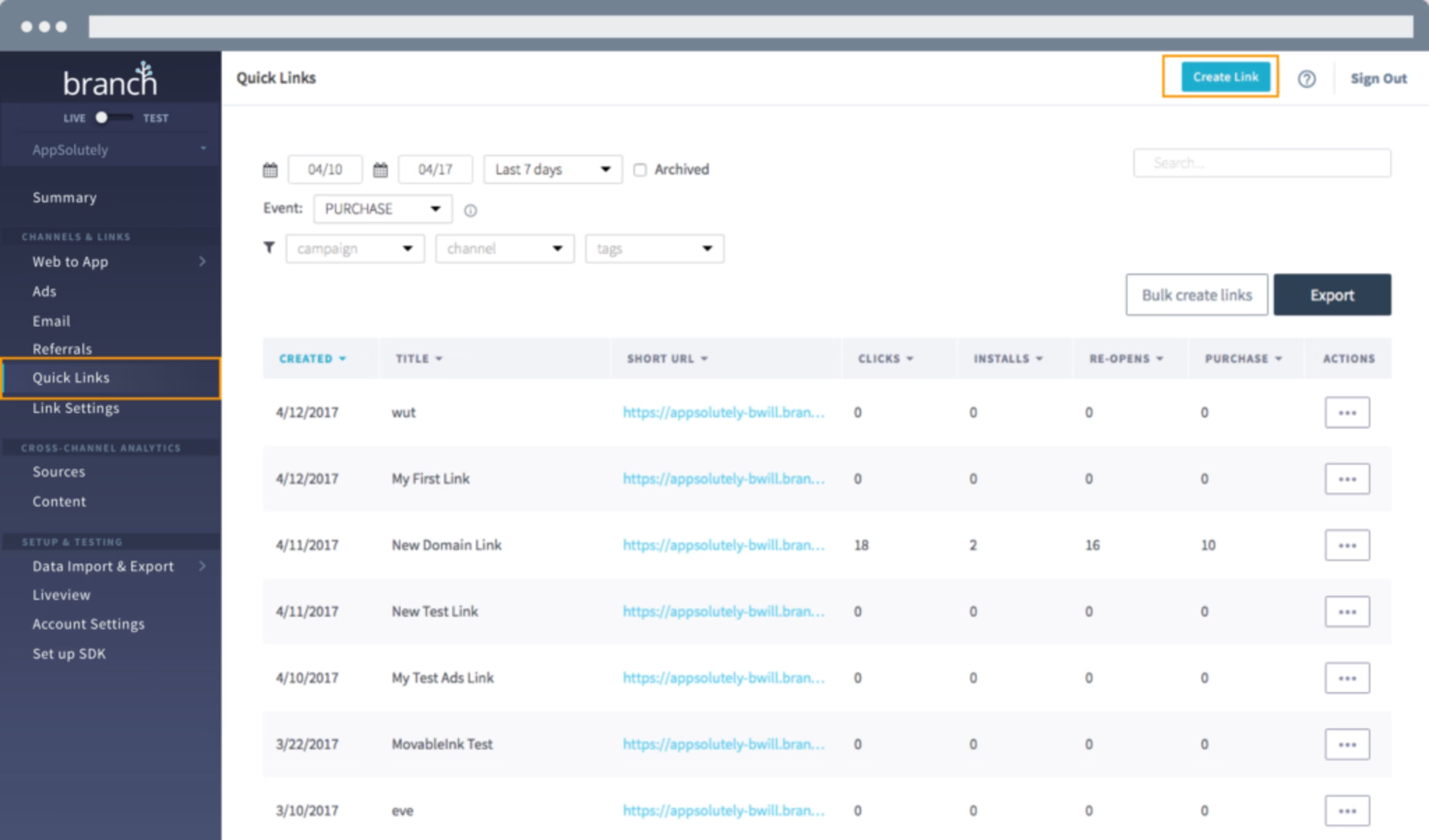
6. Branch
Branch provides industry-leading deep linking and attribution solutions. While it offers analytics, its core strength lies in its ability to create seamless user experiences and accurately attribute installs across different channels, including organic, paid, and owned media.
Key features:
Universal Deep Links: Create links that reliably take users to specific content within your app, even if they don't have it installed yet
Attribution: Measure the impact of every touchpoint on installs and downstream conversions
Deferred Deep Linking: Direct new users to specific content after they install the app
Fraud Prevention
Personalized Onboarding: Tailor user experiences based on the source of their install
Cross-platform measurement
Pricing: Offers a Free tier (up to 10k monthly active users), as well as Startup, Business, and Enterprise plans with custom pricing.
Best for: Marketers and product teams prioritizing deep linking, personalized user journeys, and accurate attribution across all their marketing efforts, especially for viral loops and referrals.
7. Adjust
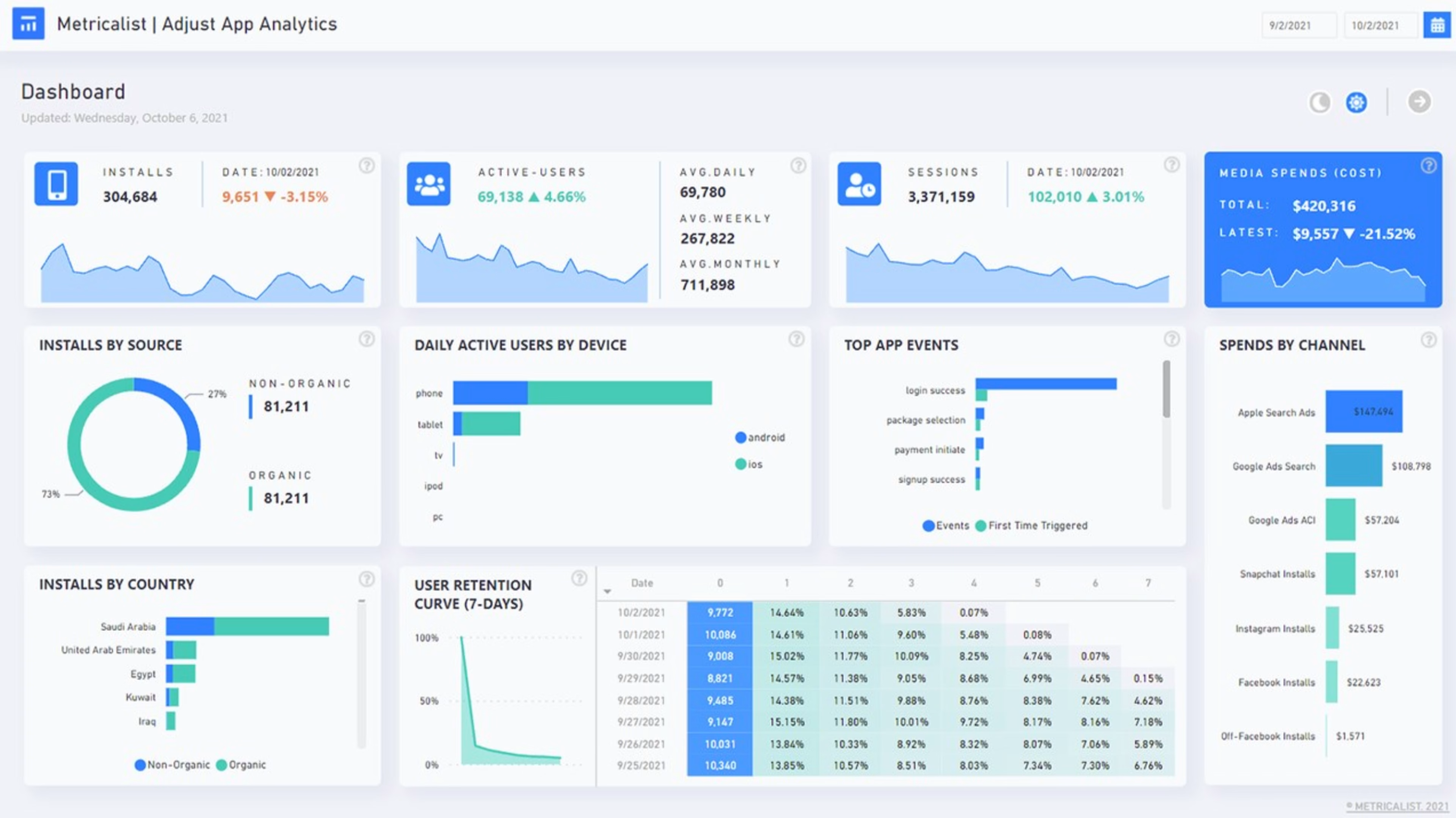
Adjust is another prominent mobile measurement and fraud prevention platform, similar to AppsFlyer. It provides comprehensive tools for attribution, analytics, and combating ad fraud, helping marketers optimize their campaigns.
Key features:
Mobile Attribution: Track installs, reattributions, and in-app events from various sources
Fraud Prevention: Robust suite of tools to identify and block fraudulent activity
Audience Builder: Segment users based on their behavior and characteristics
Customizable Reporting: Tailor reports to your specific KPIs
Uninstalls & Reinstalls: Track user churn and re-engagement
Server-to-Server Integration: For secure data transfer
Pricing: Custom pricing based on features and attributed installs.
Best for: Mobile marketing teams, user acquisition managers, and businesses that need reliable attribution, detailed analytics, and strong fraud prevention capabilities to maximize their ad spend ROI.
8. Singular
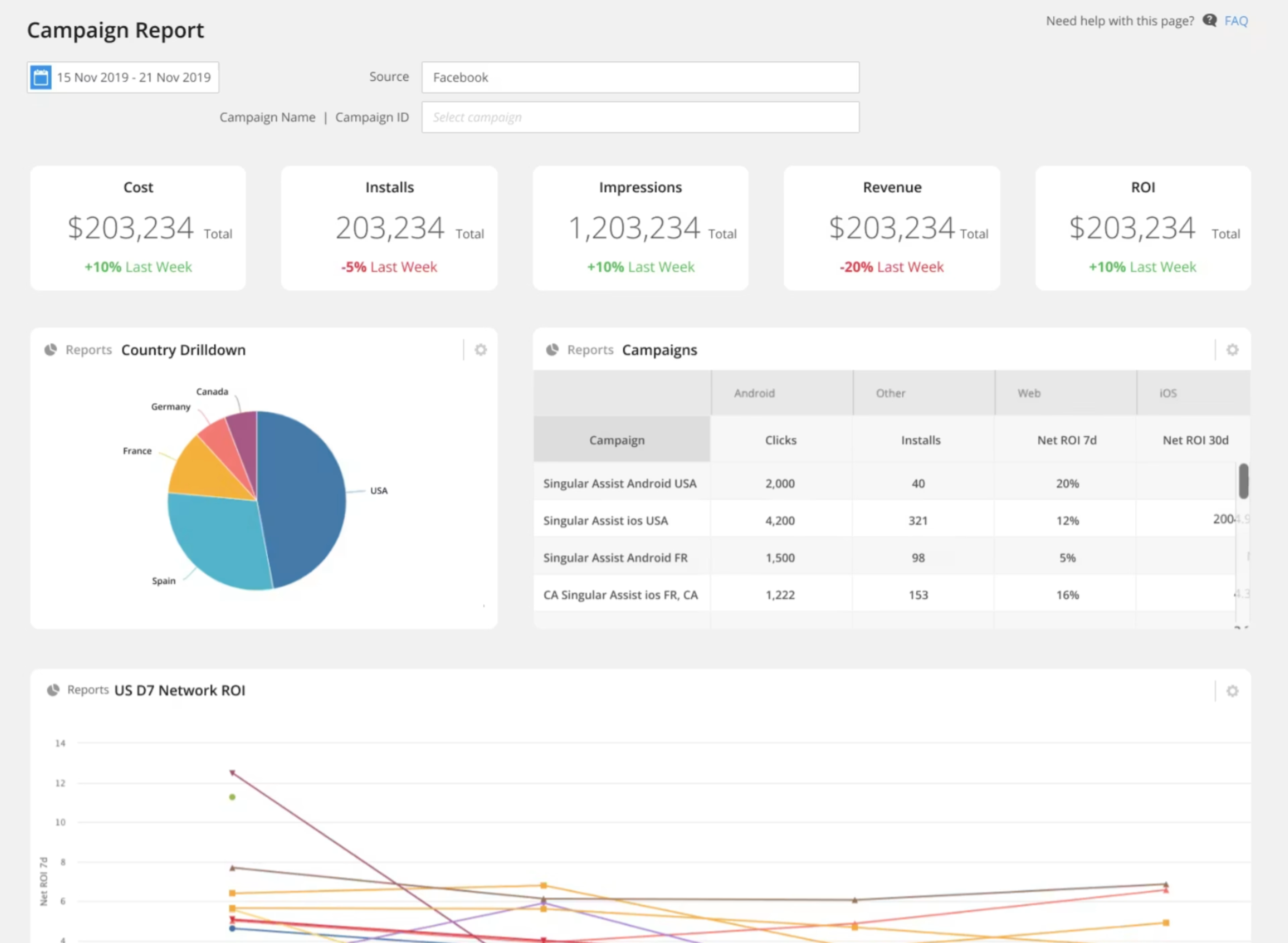
Singular offers a unified marketing intelligence platform, combining attribution, cost aggregation, and advanced analytics into one solution. It aims to provide marketers with a holistic view of their marketing performance.
Key features:
Attribution: Measure the impact of all marketing touchpoints
Cost Aggregation: Automatically pull cost data from all your ad networks
ROI Analytics: Connect attribution and cost data to calculate true return on investment
Fraud Prevention: Identify and block fraudulent installs and clicks
Deep Linking
Campaign Optimization: Tools to help manage and optimize campaigns
Data Export and API
Pricing: Enterprise-level, custom pricing based on attributed installs and features.
Best for: Mobile marketing teams and growth leaders who need a single source of truth for all their marketing data, focusing on holistic ROI analysis and campaign optimization.
9. Localytics
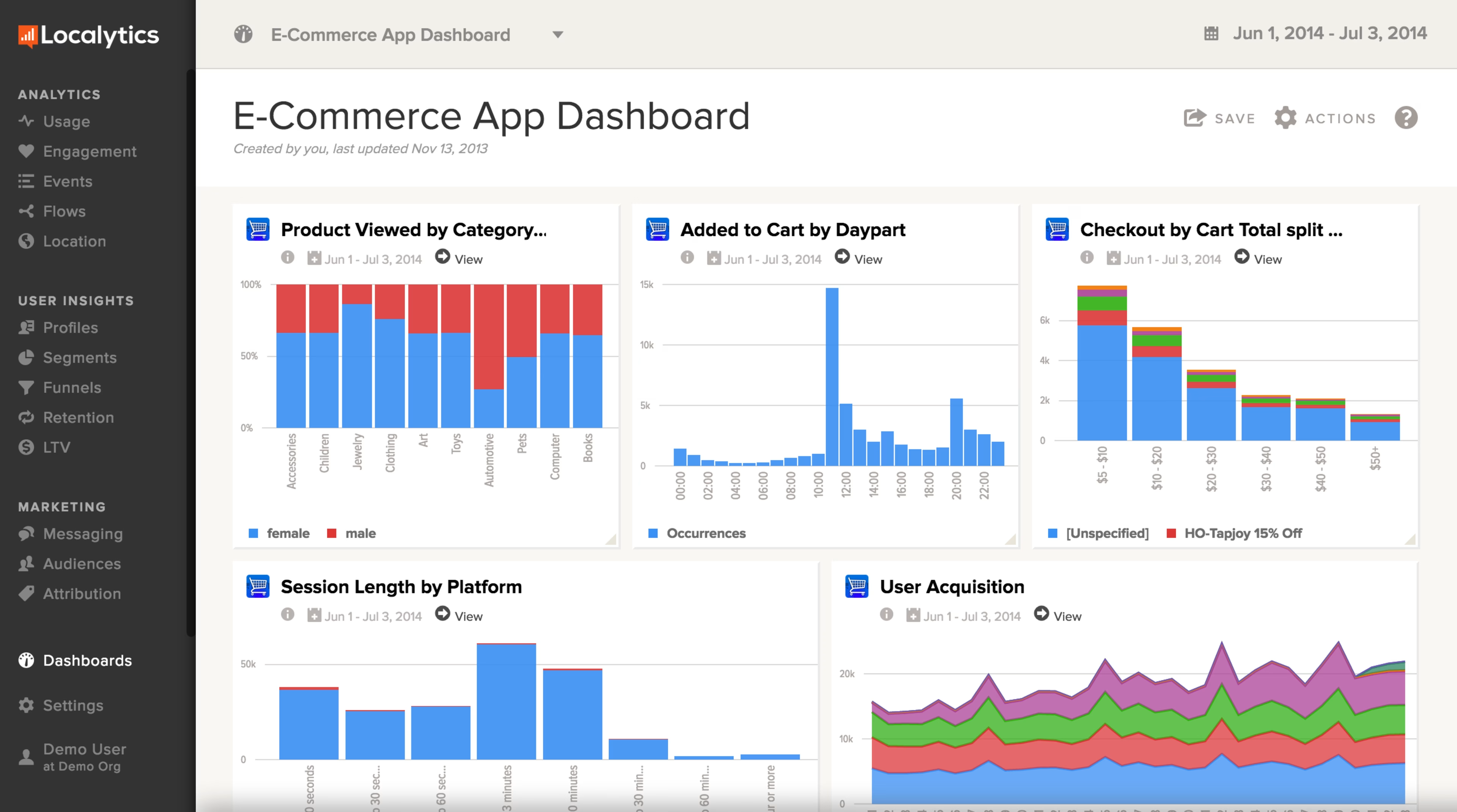
Localytics is a comprehensive mobile engagement platform that combines analytics, marketing automation, and personalization. It aims to help businesses understand, engage, and retain their mobile app users.
Key features:
User & Session Analytics: Track key metrics like DAU/MAU, session length, and feature usage
Retention Analysis: Understand why users stay or leave
Funnel Management: Optimize conversion paths
Audience Segmentation: Create highly targeted user groups
In-App Messaging & Push Notifications: Deliver personalized messages based on user behavior
A/B Testing: Optimize engagement campaigns
Pricing: Custom pricing based on Monthly Active Users (MAU) and chosen features.
Best For: Companies looking for a combined analytics and engagement platform to understand user behavior and then act on those insights through targeted messaging and personalization.
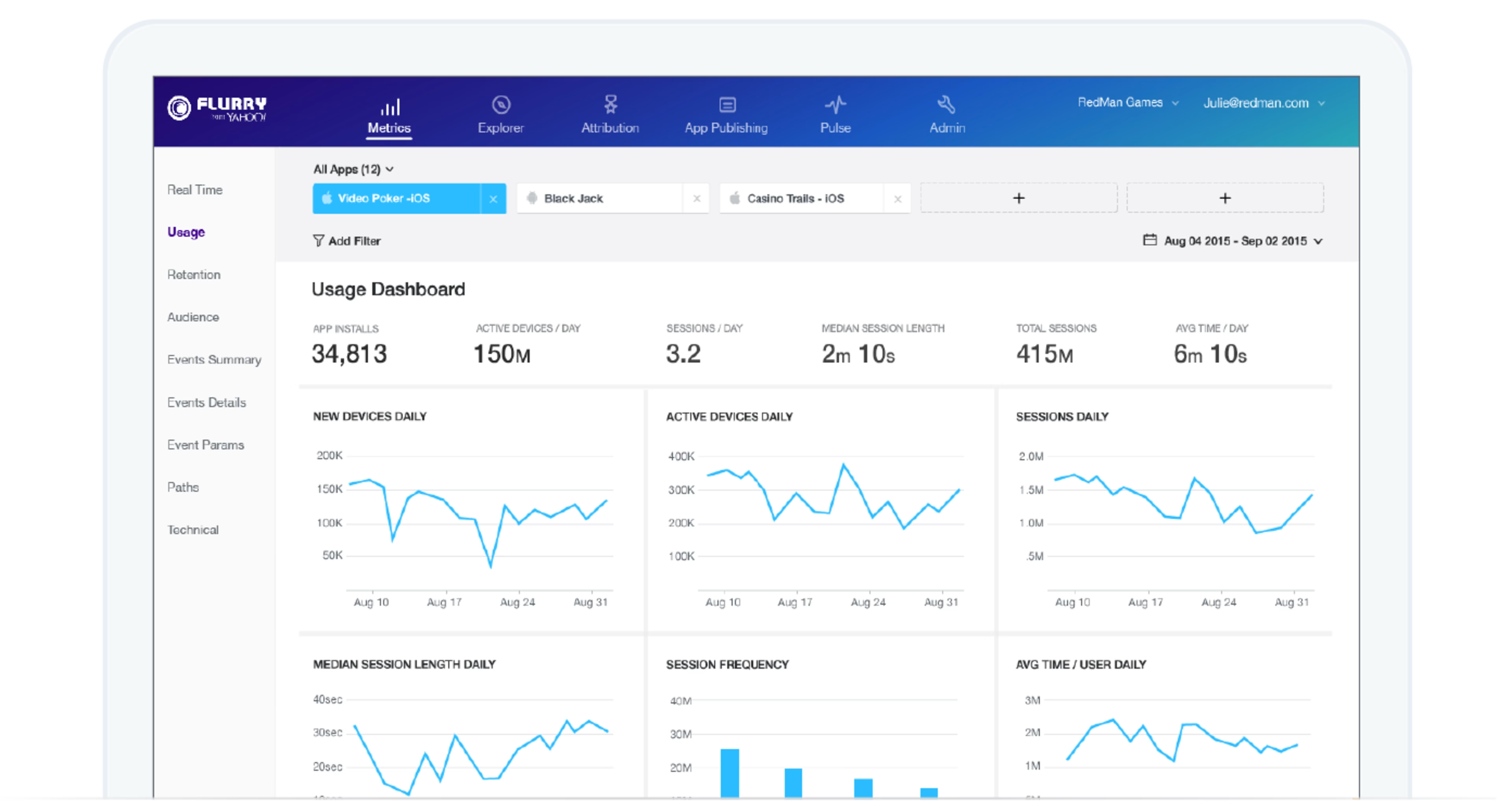
10. Flurry Analytics
Flurry Analytics, powered by Verizon Media, is one of the longest-standing free mobile analytics tools. It provides essential insights into app usage, user behavior, and monetization.
Key features:
Session & User Metrics: Basic DAU/MAU, session count, duration
Event Tracking: Monitor custom events within your app
Funnel Analysis: Track user progression through defined steps
Audience Segmentation: Basic demographic and behavioral segmentation
Crash Reporting: Basic crash monitoring.Retention Analysis
Free to use.
Pricing: Free.
Best for: Small developers, startups, or those with limited budgets who need basic but reliable analytics to get started without significant investment.
How to choose the right mobile app analytics tool for you
With so many options, the right choice depends on your goals and constraints. Start by clarifying whether your priority is acquisition performance, product behavior and retention, ux optimization, or technical stability. Then evaluate budget and pricing drivers (events, mau, attributed installs), required integrations (ad networks, crm, data warehouse/bi), ease of sdk implementation, scalability as volume grows, and data privacy/security requirements. Whenever possible, validate your shortlist through a demo or trial and test implementation before committing.
What's next for mobile app analytics?
Mobile analytics will continue to shift toward more automated, ai-driven insights (prediction, anomaly detection, and recommendations), stronger privacy-first approaches as regulations evolve, and faster real-time monitoring. Many teams will also prioritize unifying mobile with web and crm data to understand the full customer journey, while interfaces become more accessible through low-code and guided workflows.
Final thoughts
Choosing the right mobile app analytics tool is about more than collecting data—it’s about using it to drive better decisions. By focusing on the features that match your goals and selecting a platform your team will actually adopt, you can improve experience, retention, and growth in a sustainable way.
Top options include Google Analytics for Firebase, Mixpanel, Contentsquare, Amplitude, AppsFlyer, Branch, Adjust, Singular, Localytics and Flurry Analytics.
![[Visual] Contentsquare's Content Team](http://images.ctfassets.net/gwbpo1m641r7/3IVEUbRzFIoC9mf5EJ2qHY/f25ccd2131dfd63f5c63b5b92cc4ba20/Copy_of_Copy_of_BLOG-icp-8117438.jpeg?w=1920&q=100&fit=fill&fm=avif)
We’re an international team of content experts and writers with a passion for all things customer experience (CX). From best practices to the hottest trends in digital, we’ve got it covered. Explore our guides to learn everything you need to know to create experiences that your customers will love. Happy reading!